

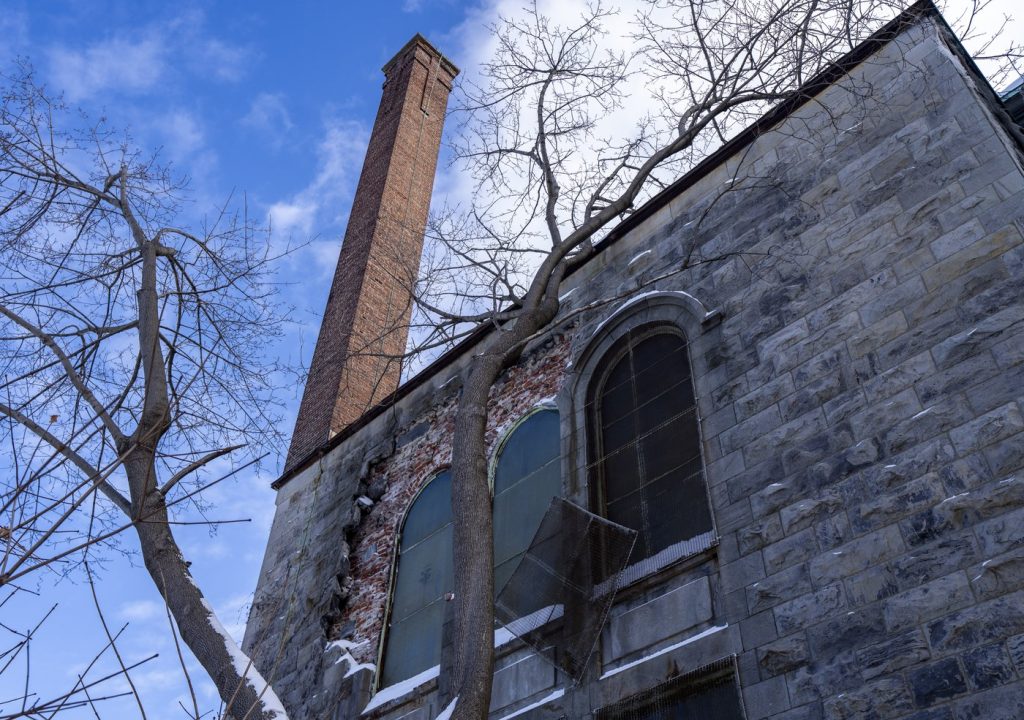
MONTREAL — In 2023, the Ste-Marie-de-l’Isle Maligne church in Alma, Quebec, completed its transformation into the St-Crémie, an innovative establishment combining a hotel, ice cream shop, and event space. This is just one example among numerous churches that have undergone restoration in recent years. Many have been repurposed as climbing gyms, residential spaces, and distilleries, while others continue to serve their original function as places of worship and community hubs.
However, there is growing concern among experts regarding the Quebec government’s decision to suspend financial aid programs that previously facilitated church renovations and transformations. This suspension coincides with increasing renovation costs, prompting more churches to close. Cameron Piper, an adviser with the Conseil du patrimoine religieux du Québec, highlights that church closures have been a significant issue since his organization began tracking them in 2003. He anticipates an acceleration of this trend as attendance continues to decline and repair costs soar.
According to Piper’s group, the most recent tally indicated that out of 2,751 places of worship across various denominations in the province, approximately 965, or 35%, were categorized as being “in mutation.” This term refers to churches that have been closed, demolished, sold, or have found new usages. The Quebec government's Culture Department confirmed via email that the renovation programs, which amounted to a total of $25 million in the most recent year, would not be renewed after their expiration in March 2025. A report commissioned by the province emphasized that maintaining the status quo was not viable and that sustainable solutions must be sought in consultation with stakeholders.
In lieu of renewing funding, Culture Minister Mathieu Lacombe announced in July 2025 the formation of a committee tasked with modernizing the province’s approach to heritage preservation. This committee is expected to present its recommendations by October 2026. Meanwhile, financial assistance remains available for urgent situations. Piper pointed out that the suspended funding included a program that provided grants aimed at helping religious groups develop business plans for transforming their places of worship, as well as another program designated for crucial restoration projects.
Solange Lefebvre, who holds a chair in cultural and religious diversity at Université de Montréal, expressed that the cessation of these grants could have “catastrophic” effects, especially on small towns lacking the financial resources to renovate or repurpose their buildings. She remarked on the modest nature of the budget cuts relative to the significant cultural value of this heritage. Lefebvre fears that these changes could jeopardize Quebec's leadership role in repurposing church buildings while highlighting a pragmatic approach compared to other countries.
Both Lefebvre and Piper believe that the provincial government’s rigorous secularism initiatives are complicating church conversions, similar to the transformation of a church in St-Modeste into a multifunctional space that still accommodates services while also hosting the town library and municipal meetings. They argue that even though secularism was not directly cited as a reason for cancelling funding, the government’s stringent policies have made municipalities hesitant to collaborate with religious communities wishing to maintain a presence in converted buildings.
In regions like Montreal, efforts are being made to seek alternative funding sources. The Montreal archdiocese has established a non-profit real estate arm aimed at managing the sale and redevelopment of church properties deemed no longer necessary. Stefano Marrone, the CEO of this initiative, reports several properties requiring urgent attention. In one case, the parish of Saint-Eusèbe-de-Verceil is pursuing legal action for permission to demolish a fire-damaged, long-closed church, hoping to attract a developer to construct housing on the site. Other options include potential sales to non-Catholic religious organizations or municipalities, with specific conditions to ensure continued community use of the buildings.
Marrone remains hopeful that the provincial renovation grants may be reinstated, but in the interim, the diocese is focused on establishing its own funding sources. He noted that achieving self-financing would benefit not just the Catholic Church but society as a whole, enhancing community resources and preserving heritage in Quebec.








