

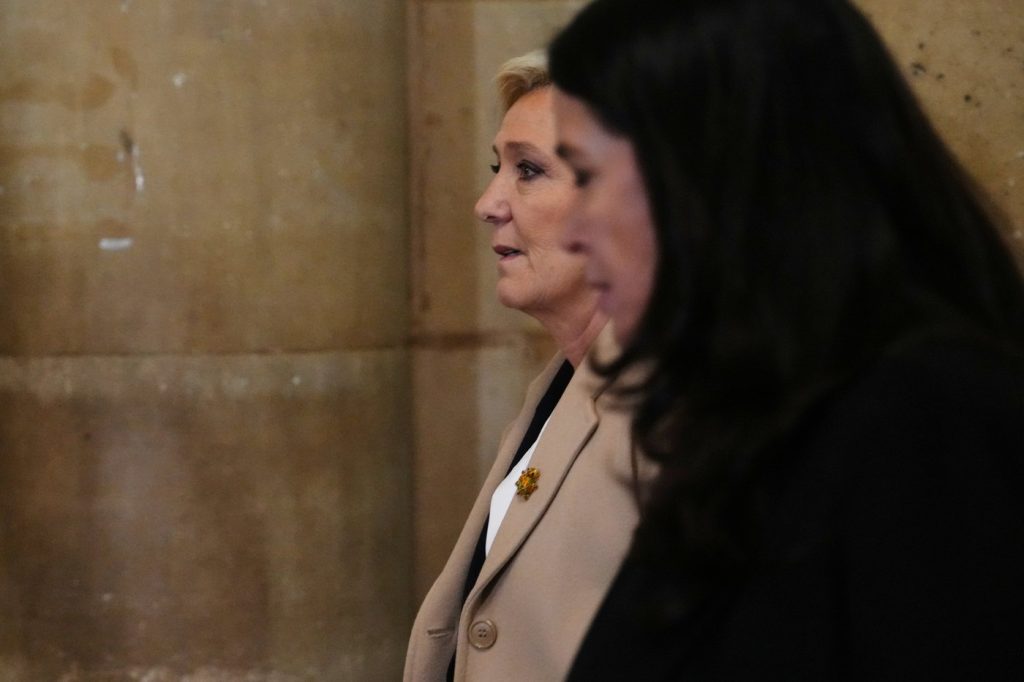
PARIS (AP) – The appeal trial of Marine Le Pen, the leader of France's far-right National Rally party, regarding alleged misuse of European Parliament funds is concluding, raising critical questions about her political future. Observers are particularly focused on whether Le Pen, 57, will be able to vie for the presidency in the upcoming 2027 election.
Le Pen is appealing a March 2025 ruling that condemned her and more than 20 other members of her party for misappropriating European Parliament funds between 2004 and 2016. The court found them guilty of using taxpayer money to subsidize party aides while banning Le Pen from holding any elected office for five years. Le Pen has consistently denied that she was part of a fraudulent scheme aimed at misappropriating EU funds.
The outcome of this appeal has the potential to reshape the political landscape ahead of the 2027 presidential election. Le Pen was viewed as a significant contender capable of challenging centrist President Emmanuel Macron, but her legal troubles could derail her ambitions. If she is convicted, she has indicated that her protégé, Jordan Bardella, would stand in her place as a presidential candidate. While Bardella has gained popularity, concerns about his inexperience in international and economic matters may undermine his bid.
The appeal, which involves Le Pen and ten other convicted officials, seeks to overturn the 2025 convictions tied to the alleged misuse of European Parliament funds meant for aides. Prosecutors allege that Le Pen employed individuals as parliamentary aides who effectively worked for the party instead, with some having no interaction whatsoever with the European Parliament. One aide reportedly served as Le Pen's bodyguard, in direct violation of parliamentary regulations.
During the trial, which commenced afresh with the Paris appeals court, Le Pen conceded that some aides billed as EU parliamentary staff in fact performed duties for the party, but she claimed this practice was permissible and not hidden. "The mistake lies here: there were certainly some aides, on a case-by-case basis, who must have worked either marginally, more substantially, or entirely for the benefit of the party," she explained before the three-judge panel. Le Pen further criticized EU Parliament officials for not informing her party that its hiring methods might have been in violation of rules.
In contrast, prosecutors argued that Le Pen, given her legal background, must have recognized the inappropriateness of hiring practices that disproportionately affected other political parties. One prosecutor, Stéphane Madoz-Blanchet, described the misuse of public funds as a systematic effort led by Le Pen, emphasizing that it constituted a "very serious breach of probity." The prosecution is seeking a five-year ban on Le Pen's ability to hold office and has called for a one-year house arrest sentence enforced with an electronic tag.
Le Pen's situation highlights the ongoing legal scrutiny of her party's financial practices. Following a lengthy investigation, the Paris court ruled that Le Pen was a central figure in a deliberate effort to misappropriate approximately 2.9 million euros ($3.4 million) in EU funds. Alongside her five-year ban from public office, she was sentenced to two years of house arrest with an electronic bracelet and an additional two-year suspended sentence, although these penalties are on hold pending the outcome of her appeal.
The final decision from the appeals court is anticipated before the summer, and it could play a pivotal role in the dynamics of the 2027 presidential race, particularly in light of Le Pen’s previously established political significance. Should she secure an acquittal, it could reinvigorate her candidacy efforts; conversely, a conviction would not only incapacitate her ambitions but also pose challenges to her party's political strategy in the near future.








