

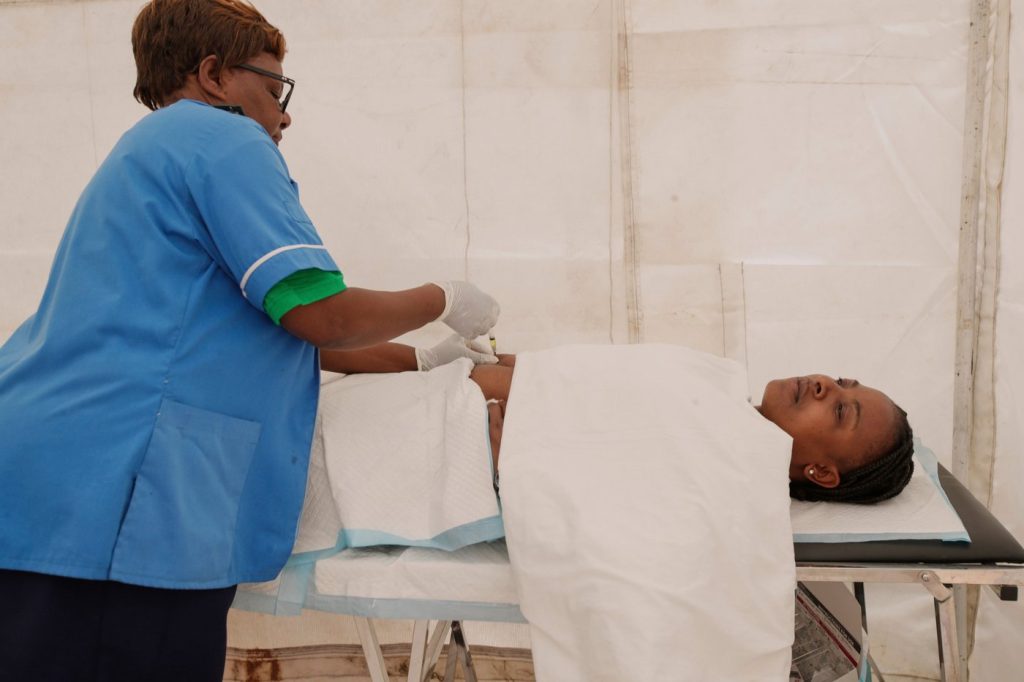
HARARE, Zimbabwe (AP) — On the outskirts of Harare, Zimbabwe's capital, young women, mothers with babies, and some men lined up in a dusty field for injections of a new HIV prevention drug, lenacapavir, launched in the country on Thursday. This innovative drug only requires administration twice a year, a substantial shift in preventive strategies against HIV.
Zimbabwe, grappling with a high prevalence of HIV that has resulted in tens of thousands of deaths over the past two decades, is among the first nations to implement lenacapavir. Health authorities and experts anticipate this long-acting drug will significantly reduce new infections, especially within high-risk groups. Clinical studies suggest near-total protection, marking a potential turning point in HIV prevention efforts.
During the launch event, Constance Mukoloka, a 27-year-old sex worker, emerged from a mobile clinic, expressing her relief after receiving one of the early doses. Mukoloka highlighted the challenges of adhering to daily preventive pre-exposure prophylaxis (PrEP) pills, which often led to tension with clients and increased vulnerability. The introduction of lenacapavir promises not only increased convenience but also improved safety for high-risk populations.
Mukoloka is one of the initial beneficiaries of the donor-supported rollout of lenacapavir across ten African countries. Health officials assert that the drug has the potential to reshape HIV prevention strategies if funding challenges and infrastructure deficits can be addressed. Developed by Gilead Sciences, lenacapavir’s deployment in select high-risk countries is backed by the United States President’s Emergency Plan for AIDS Relief (PEPFAR), in partnership with the Global Fund.
In Zimbabwe, lenacapavir injections are provided free of charge to high-risk individuals, including sex workers, adolescent girls, young women, gay men, and pregnant and breastfeeding women. Mukoloka shared her experience revealing that the visibility of pill containers could deter clients due to stigma associated with HIV treatment. The new drug’s discreetness and extended duration offer significant advantages, addressing the complexities of daily adherence often faced by individuals in high-risk categories.
Zimbabwe has also seen significant advances in controlling the HIV epidemic, especially in comparison to its earlier status as a global epicenter. Despite these achievements, new infections remain a pressing concern, particularly among adolescent girls and young women. Data from the United Nations children’s agency highlights that the HIV prevalence among adolescent girls and young women aged 10-24 in sub-Saharan Africa is three times that of their male counterparts, driven by inequalities and lack of access to health services.
As the rollout begins in Zimbabwe, approximately 46,000 beneficiaries across 24 sites are anticipated to receive the treatment, a fraction of the potential demand in the nation of around 15 million. The government plans to increase the number of doses available as more donor-funded supplies arrive. However, funding remains a considerable hurdle, as many African governments struggle with financial constraints, particularly for mass rollouts.
The high cost associated with these mass rollouts presents a substantial challenge. In Kenya, for instance, the government is offering lenacapavir at a negotiated price of about $54 per person per year, which remains a heavy burden for many. While Gilead Sciences has pledged to sell the drug at no profit to heavily impacted low and middle-income countries, experts note that external funding for health systems is dwindling, particularly after cuts to foreign aid by former U.S. President Donald Trump.
Despite the promising advancements with lenacapavir, health officials emphasize that it must complement existing prevention strategies, including the use of condoms, which remain essential for broader sexual health protection. Nevertheless, for early recipients like Mukoloka, the introduction of lenacapavir already signifies a transformative shift in HIV prevention, allowing for a newfound sense of safety and confidence.








