

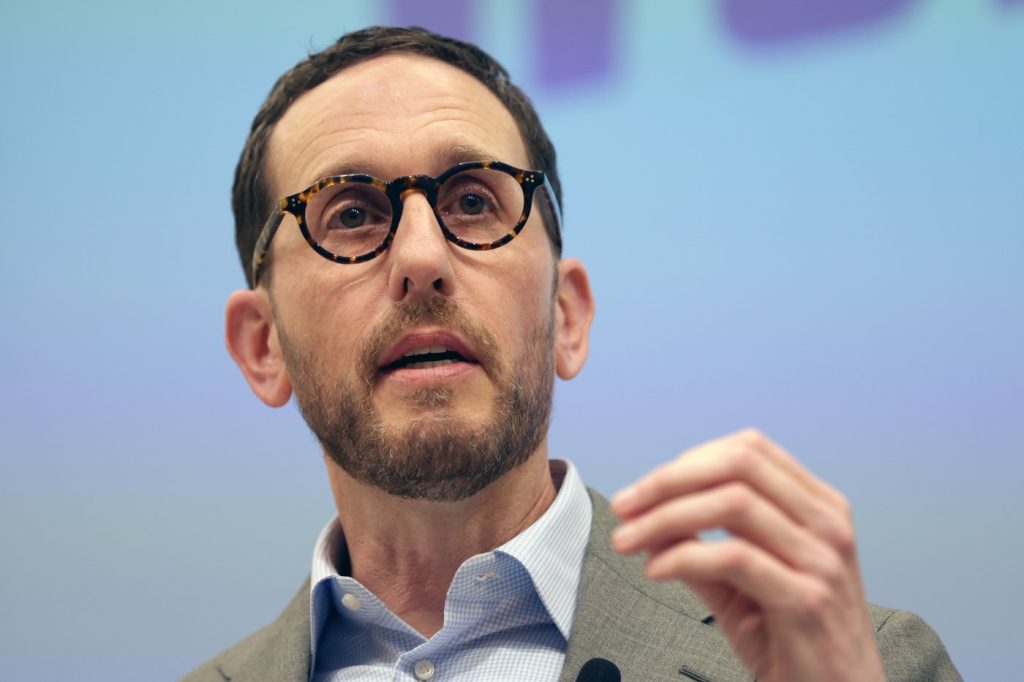
SAN FRANCISCO – Scott Wiener, a California state lawmaker, is emerging as the front-runner to succeed Nancy Pelosi in the U.S. House of Representatives. Known for championing significant and sometimes controversial policies, Wiener has made headlines with legislation such as a ban on masks for federal agents and protections for transgender youth. As he is poised to secure the endorsement of the California Democratic Party, his candidacy is gaining momentum ahead of a fiercely competitive primary.
With over 15 years of political experience in city and state government, Wiener is accustomed to the delicate balance of navigating modern Democratic politics. Longtime Sacramento lobbyist Chris Micheli noted that Wiener is not one to shy away from contentious political battles, stating, "Sen. Wiener only does the tough bills." This reputation has placed Wiener at the forefront of California's most divisive issues, particularly relating to housing and drug policy. His supporters and critics alike recognize his relentless advocacy for the legislation he authors.
However, Wiener has faced challenges, particularly when navigating complex and sensitive topics. A notable instance occurred in January, when he shifted his stance on the Israel-Palestine conflict. Initially hesitant to label Israel's actions as "genocide," he later adopted the term, leading to backlash from both Jewish groups and progressive allies. This incident highlighted the intricate political terrain many Democrats, including Wiener, must traverse as opinions on Israel shift within the party.
Wiener has played a pivotal role in addressing California's housing crisis by authoring laws designed to mandate large companies disclose their climate emissions and to facilitate apartment construction near public transit stops. Despite these successes, he encountered setbacks, including a ruling that blocked his law requiring federal and local law enforcement agents to refrain from wearing face coverings during immigration raids. His attempts to decriminalize psychedelic mushrooms and hold oil companies accountable for climate damage have also faced legislative roadblocks.
His policies, particularly those aimed at supporting LGBTQ+ rights, have drawn ire from Republican opponents, who have resorted to derogatory rhetoric. Critics from within his own Democratic party, such as San Francisco supervisor Aaron Peskin, have also expressed concerns that Wiener’s legislation has unintentionally hindered local housing initiatives.
Born into a Conservative Jewish family in New Jersey and later becoming involved in Jewish fraternity life at Duke University, Wiener reflects on his experiences of marginalization in the LGBTQ+ community. He supports Israel's right to defense but has expressed horror at the humanitarian toll of its military actions in Gaza, which have reportedly resulted in the deaths of over 70,000 Palestinians since the conflict escalated in late 2023. His reluctance to initially use inflammatory terminology regarding Israel’s actions has fueled tension within his constituency.
As he competes to fill Pelosi’s seat, Wiener faces formidable opponents. San Francisco Supervisor Connie Chan and former tech executive Saikat Chakrabarti argue that they represent a new wave of political leadership better equipped to drive change after Pelosi's tenure. They criticize Wiener as a moderate with ties to the establishment, while claiming they possess a stronger focus on affordable housing and the high cost of living in San Francisco.
Political consultant Jim Ross remarked on the difficulty of comparing any candidate to the towering figure of Pelosi but acknowledged Wiener’s strength in fundraising and legislative ambition. While Wiener is capturing the attention of the media and supporters alike, the path to political victory is fraught with challenges, as he must navigate both traditional Democratic support and internal party dissent.








