

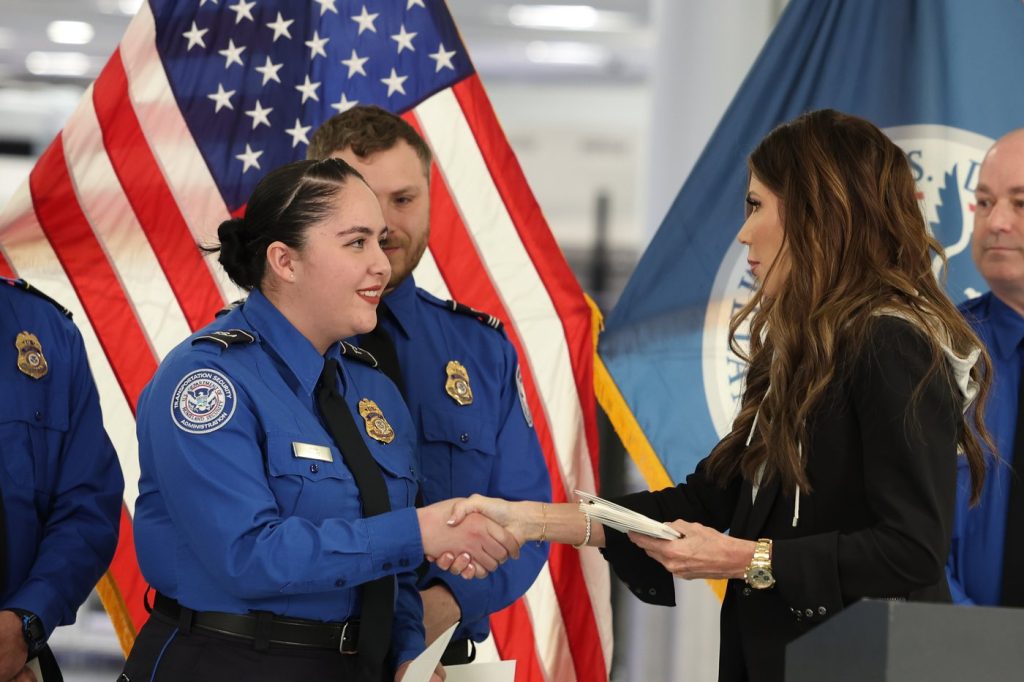
WASHINGTON (AP) — The U.S. Department of Homeland Security has announced the suspension of the TSA PreCheck and Global Entry airport security programs amid an ongoing partial government shutdown. This decision could lead to increased delays and frustrations for travelers as these programs are specifically designed to expedite the security screening process for registered travelers.
Homeland Security Secretary Kristi Noem emphasized the real-world repercussions of the shutdown, indicating that it has necessitated prioritizing the general traveling public over programs that offer expedited processing. In her statement, she specified that both the Transportation Security Administration (TSA) and Customs and Border Protection (CBP) would be halting courtesy escorts and special privilege evaluations, which typically benefit a smaller subset of travelers.
The partial government shutdown commenced on February 14, following a breakdown of negotiations between Democrats and the White House regarding legislation aimed at funding the Department of Homeland Security. Central to this impasse were issues related to immigration operations, which are a crucial aspect of President Donald Trump’s ongoing deportation efforts. As a result of this stalemate, essential services and programs, including those that facilitate smoother travel experiences at airports, have been negatively impacted.
In response to the suspension of the TSA PreCheck and Global Entry programs, Democrats on the House Committee on Homeland Security have voiced their concerns through social media platforms. They have criticized the administration, arguing that the decision is detrimental to travelers and effectively “kneecaps” programs that were established to improve the security and efficiency of travel. Accusations have surfaced suggesting that the administration is deliberately undermining the travel experience for citizens and travelers alike.
Moving forward, travelers can expect longer wait times at security checkpoints without the assistance of expedited programs that previously allowed frequent flyers to navigate airport security with relative ease. The suspension of these programs not only affects individual travelers but could also generate broader implications for the airline industry, potentially impacting flight schedules and operations during a crucial travel period.
The situation reflects the ongoing challenges that arise from such government shutdowns, where budgetary negotiations become intertwined with essential public services. As the stalemate continues, the immediate ramifications for travelers grow increasingly apparent, underscoring the importance of reaching a resolution to restore normalcy to airport operations.








