

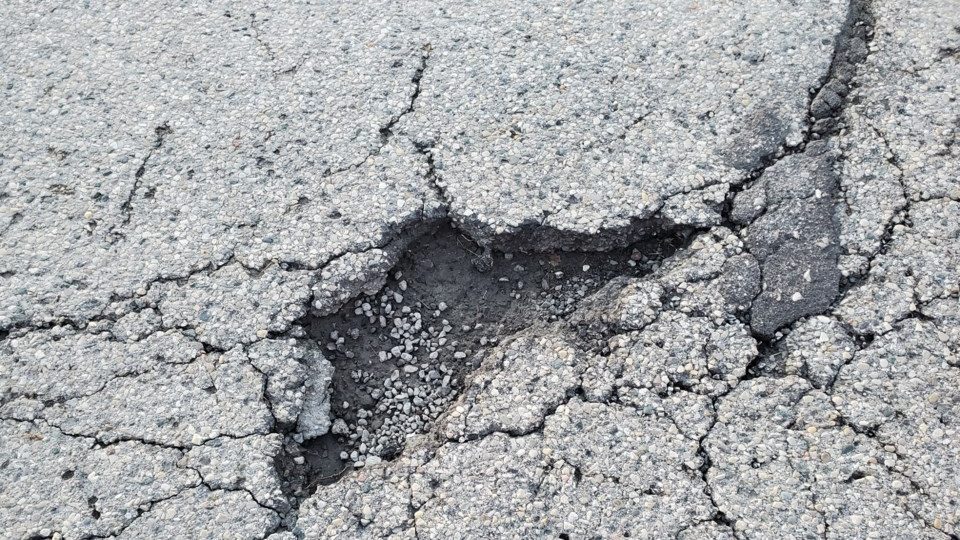
As the winter season starts to fade, residents in Nova Scotia are facing deteriorating road conditions. Jason Turnbull, a Cape Breton resident, has voiced his concerns, stating that with the onset of spring thaw, Canadian roads are likely to worsen significantly. To address this growing issue, he has developed RoadRot, a crowdsourced mapping platform that identifies potholes throughout the province.
Frustrated by the frequent encounters with the same potholes, Turnbull realized the lack of an accessible system for tracking the worst roads. He noted that municipal 311 systems accept reports but do not disclose the location or status of reported potholes to the public, leaving many residents in the dark about road conditions.
The Halifax Regional Municipality categorizes potholes into two priority levels for repairs. Priority one potholes are those measuring at least 25 centimeters in diameter and eight centimeters deep, which are supposedly repaired within 30 days of being reported. In contrast, priority two potholes can take up to 12 months for repairs. The municipality’s repair service standards are enforced from April 1 through November 30; however, some repair work has already commenced in 2026.
Recently, the municipality informed residents about initiating repairs on several key streets, including Robie Street, Agricola Street, Barrington Street, and North Street. Turnbull has critiqued this repair process, arguing that it is relatively opaque to the public. His website, RoadRot, aims to shed light on pothole classifications, thereby informing citizens and demanding greater accountability from local authorities.
The RoadRot platform enables users to rank the worst roads by city and offers a one-click feature to contact municipal, provincial, or federal representatives regarding potholes in their neighborhoods. Reports made on the website are tracked, revealing how many individuals have emailed about specific potholes. According to Turnbull, potholes that cause damage or remain unaddressed should be documented publicly to intensify civic pressure for repairs.
Since its launch earlier this month, RoadRot has garnered over 120 reports from Cape Breton alone within its first two weeks, and Turnbull is now seeking participation from residents across other regions of Nova Scotia to expand the database.
Individuals can easily access RoadRot by visiting roadrot.ca on any device. Users can simply tap on the map to report a pothole, assess its severity, optionally upload a photo, and submit their report without needing to register or download an app, ensuring complete anonymity. Additionally, citizens are encouraged to corroborate others' reports to enhance the reliability of the data collected.
RoadRot is part of a broader initiative by Turnbull to create crowdsourced civic accountability tools. He also oversees WattRot.ca, a platform for comparing power bills across Canada, and has recently launched erstat.ca, which provides Nova Scotia residents with health wait time data, allowing them to set alerts for when wait times plummet below their chosen thresholds.








