

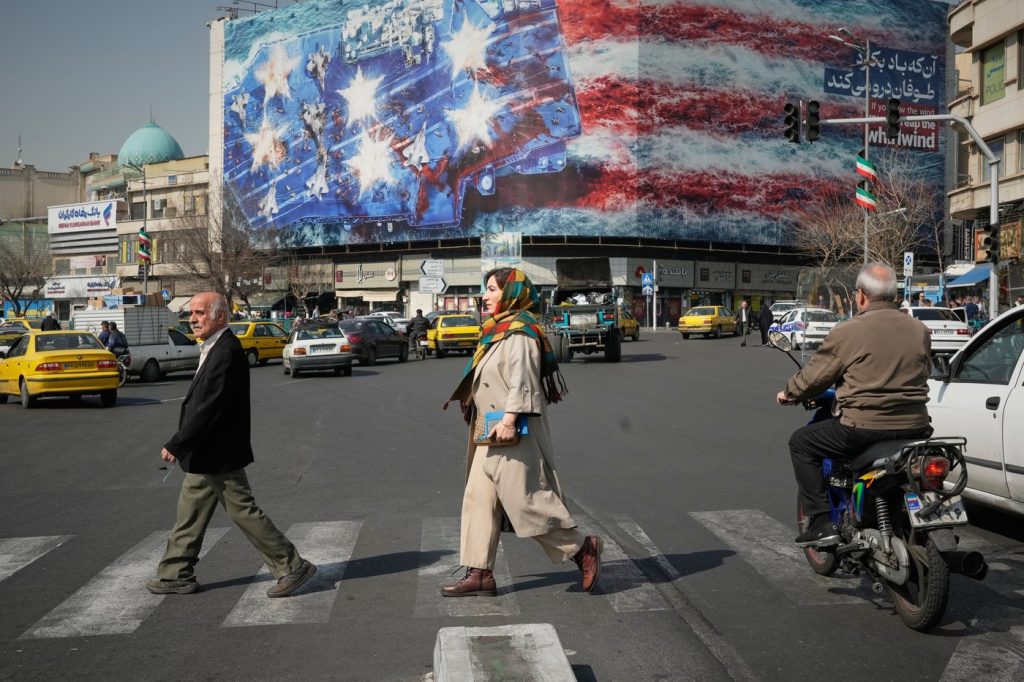
On Sunday, new anti-government protests erupted in Iran, with witnesses reporting demonstrations led by university students in Tehran and another city, centered around memorials commemorating those killed during previous nationwide protests. These protests come approximately six weeks after a severe crackdown that resulted in numerous fatalities.
The state media of Iran reported that students protested at five universities in Tehran and one in Mashhad. The demonstrations began the previous day, coinciding with the 40-day memorials for the victims of anti-government rallies that saw significant violence in January. Most of the casualties during those protests are believed to have occurred around January 8 and 9, as per reports from activists tracking the incidents.
Iran’s government has remained silent regarding the ongoing protests, with many citizens marking the traditional mourning period over recent days. The crackdown on the earlier protests was one of the deadliest in the history of the Islamic Republic, led by Supreme Leader Ali Khamenei, who has been in power for 86 years. It is estimated that thousands were killed and tens of thousands arrested as the authorities responded with extreme force.
Even after the primary protests were suppressed, smaller demonstrations persist, as indicated by videos posted on social media. Historical precedents suggest that 40-day memorials for those killed during protests often lead to renewed protests, inciting further violence as security forces typically attempt to disrupt these gatherings.
Recent social media posts have alleged that security forces are trying to prevent attendance at some of the 40-day memorial ceremonies. The protests are taking place against the backdrop of escalating tensions between Iran and the United States, especially as the U.S. ramps up its military presence in the Middle East in response to Iran's nuclear program and other geopolitical concerns.
The U.S.-based Human Rights Activists News Agency reported that at least 7,015 individuals were killed during the previous protests and the subsequent crackdown, including 214 security personnel. This organization has a reliable track record of accurately documenting casualties during unrest in Iran, using an established network of activists to verify information. However, the Iranian government has only acknowledged a death toll of 3,117 from the earlier protests, and it is known for underreporting fatalities from civil unrest.
Independent verification of casualty figures remains challenging for media outlets such as the Associated Press. Authorities in Iran have disrupted internet access, making it difficult for journalists to get accurate reports from within the country. President Donald Trump recently indicated the possibility of limited military strikes against Iran while Iran's Foreign Minister Abbas Araghchi expressed optimism that a proposed deal regarding nuclear negotiations would soon be ready following indirect talks with the U.S.
The movements of additional U.S. military assets, such as the USS Gerald R. Ford aircraft carrier now positioned near the Mediterranean, add to the tensions but do not ensure an imminent strike against Iran. Nonetheless, these maneuvers could empower Trump to exercise military options if he deems it necessary, further escalating the already volatile situation in the region.








