

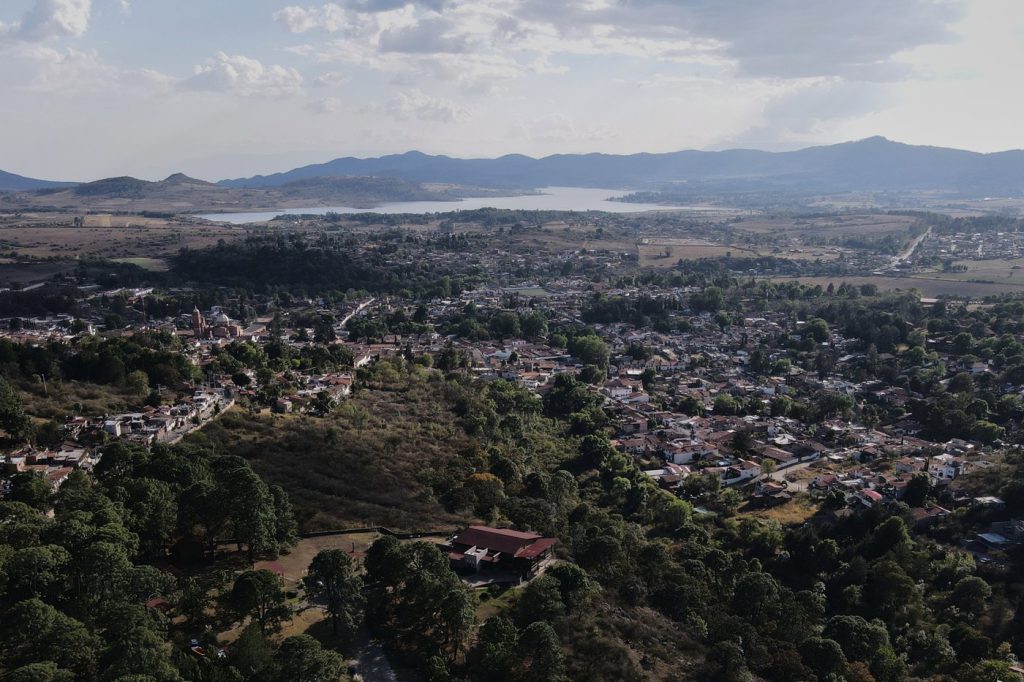
MEXICO CITY (AP) – Nemesio Oseguera Cervantes, commonly known as "El Mencho," was a notorious drug lord whose low profile came to an end when the Mexican army killed him on Sunday in Tapalpa, Jalisco state. With a criminal career spanning over two decades, Oseguera Cervantes had built one of Mexico's most powerful criminal organizations, yet little is known about his life beyond a few photographs from his earlier arrests for robbery and drug charges in California during the late 1980s and early 1990s.
The 59-year-old Oseguera Cervantes was born as Rubén Oseguera Cervantes in El Naranjo, Michoacán. His addition of the name Nemesio is unexplained, but it provided the basis for his infamous nickname. As a young man, he migrated to the United States, settling in California, where he married into a gang known as "Los Cuinis." This gang was led by his brother-in-law, Abigael González Valencia, also referred to as "El Cuini."
Oseguera Cervantes's criminal activities escalated after he was deported to Mexico following a three-year prison sentence for heroin trafficking. Upon his return, he aligned himself with "Los Cuinis," associated with the drug lord Armando Valencia Cornelio, known as "El Maradona," who headed the now-defunct Milenio cartel. During the 1990s, Oseguera Cervantes acted as a gunman for Valencia Cornelio while maintaining connections with cocaine trafficking networks tied to Colombian traffickers and Sinaloa state.
As internal conflicts arose in Michoacán, Valencia Cornelio and González Valencia relocated their operations to Jalisco, collaborating with Sinaloan drug traffickers. Following Valencia Cornelio's arrest in 2003, González Valencia and Oseguera Cervantes began working for Ignacio "Nacho" Coronel, a key financier for the Sinaloa Cartel and an associate of Joaquín "El Chapo" Guzmán, the former cartel leader currently serving a life sentence in a U.S. prison.
Oseguera Cervantes's rise to power gained momentum after the capture of Óscar Nava Valencia in 2009 and the subsequent killing of Coronel by the Mexican military in 2010. These events triggered a schism within the organization, leading factions including Oseguera Cervantes and Erik Valencia Salazar, known as "El 85," to establish the Jalisco New Generation Cartel (CJNG) around 2009.
Within less than two decades, Oseguera Cervantes managed to build a formidable criminal organization with thousands of members, as reported by the U.S. Drug Enforcement Administration (DEA), which now operates in 21 of Mexico's 32 states and claims a presence in 36 countries worldwide. The cartel's rapid expansion can be attributed to various factors, including security measures under former President Enrique Peña Nieto that weakened the Sinaloa Cartel, culminating in Guzmán's capture and extradition to the U.S.
In response to the escalating influence of the Jalisco cartel, the United States added Oseguera Cervantes to its most wanted list in May 2016. Moreover, the U.S. State Department offered a $10 million reward for information leading to his arrest in 2018, later increasing the reward to $15 million in 2024. Following his death, the Jalisco New Generation Cartel was designated a foreign terrorist organization by then-President Donald Trump.
Despite having only a secondary education, Oseguera Cervantes demonstrated remarkable intelligence and strategic skills, successfully building an organization supported by local and federal officials. His operations diversified beyond drug trafficking, extending into extortion, real estate, fuel theft, and other ventures. His proclivity for violence also played a crucial role in establishing and expanding his drug empire, further solidifying his notorious reputation in the world of organized crime.








