

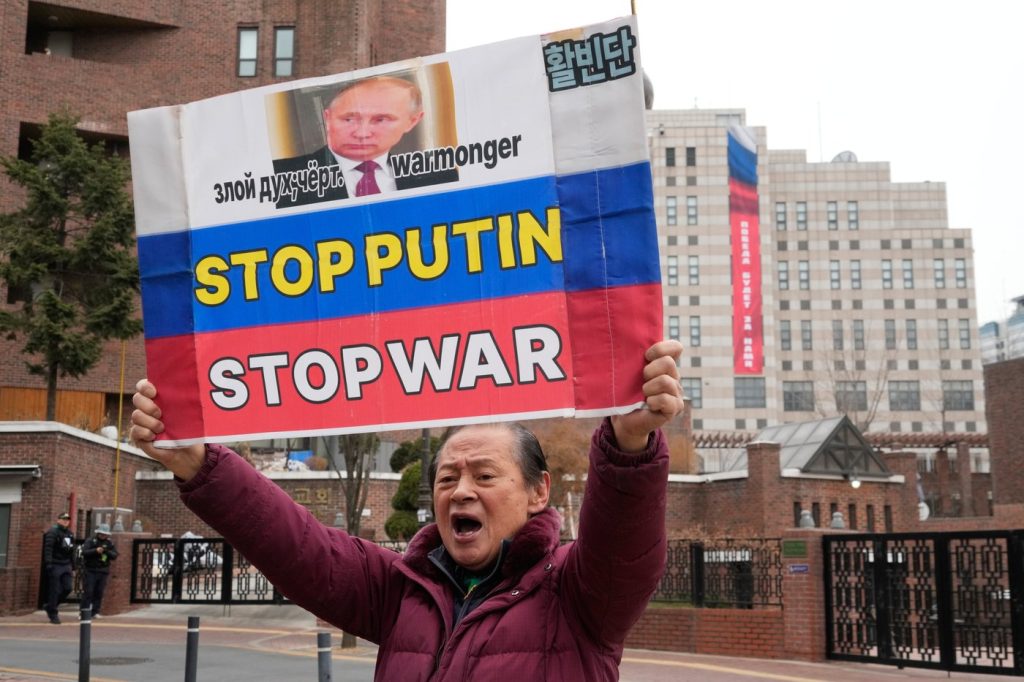
It has been four years since Russia initiated its large-scale invasion of Ukraine on February 24, 2022. This invasion, which Russian President Vladimir Putin referred to as a "special operation," was expected to be a brief campaign culminating in the capitulation of Kyiv. Contrary to those expectations, Ukrainian forces have demonstrated resilience and continued to defend their territory.
On the anniversary of the invasion, European officials traveled to Kyiv to express solidarity with President Volodymyr Zelenskyy and the Ukrainian populace. Their visit coincided with ongoing discussions of military support and financial aid for Ukraine, although they arrived without two deals: a new sanctions package against Russia and a 90 billion euro loan intended to finance Ukraine's defense over the next two years. Hungary, recognized as the most pro-Russian nation in the European Union, obstructed these initiatives, highlighting the challenges of maintaining unity among European countries as the conflict persists.
President Zelenskyy emphasized Ukraine's ability to weather the assault from Russia's larger, better-equipped military. According to the Institute for the Study of War, Russia has managed to capture only 0.79% of Ukrainian territory in the past year. Zelenskyy asserted, "Looking back at the beginning of the invasion, we have defended our independence, we have not lost our statehood; Putin has not achieved his goals." He affirmed that the Russian leader has not broken the spirit of Ukrainians nor won the war.
French President Emmanuel Macron characterized the conflict as a "triple failure for Russia"—militarily, economically, and strategically. He noted that the war strengthened NATO, the very expansion Russia aimed to prevent, and galvanized European unity. Macron called for the European Union to approve the previously mentioned 90 billion euro loan to Ukraine, insisting that there was no justification for delaying the aid, which is contingent on unanimous agreement among member states.
During a videoconference with other Western leaders, including British Prime Minister Keir Starmer, Macron reiterated the importance of sustained support for Ukraine. Britain's Armed Forces Minister, Al Carns, described the war as the most significant conflict in decades, pointing out its revolutionary impact on warfare tactics and military technology, particularly drone usage. Carns remarked on the staggering casualty figures for Russia, estimating that up to 1.25 million Russian personnel have been killed or injured since the invasion began, which he believed to be an underestimate.
European leaders emphasized that Ukraine's defense is integral to the broader fight for freedom and stability in Europe. Danish Prime Minister Mette Frederiksen commended the courage of the Ukrainian people, asserting that their struggle represents a fight for the freedom of all Europeans. Swedish Prime Minister Ulf Kristersson acknowledged the uncertainty surrounding the war's conclusion but emphasized that its outcome will significantly affect Sweden’s security in the future. Polish Foreign Minister Radoslaw Sikorski expressed his country’s unwavering support for Ukraine, contrasting the four-year defense of Kyiv with Russia's initial expectations of a swift victory.








