

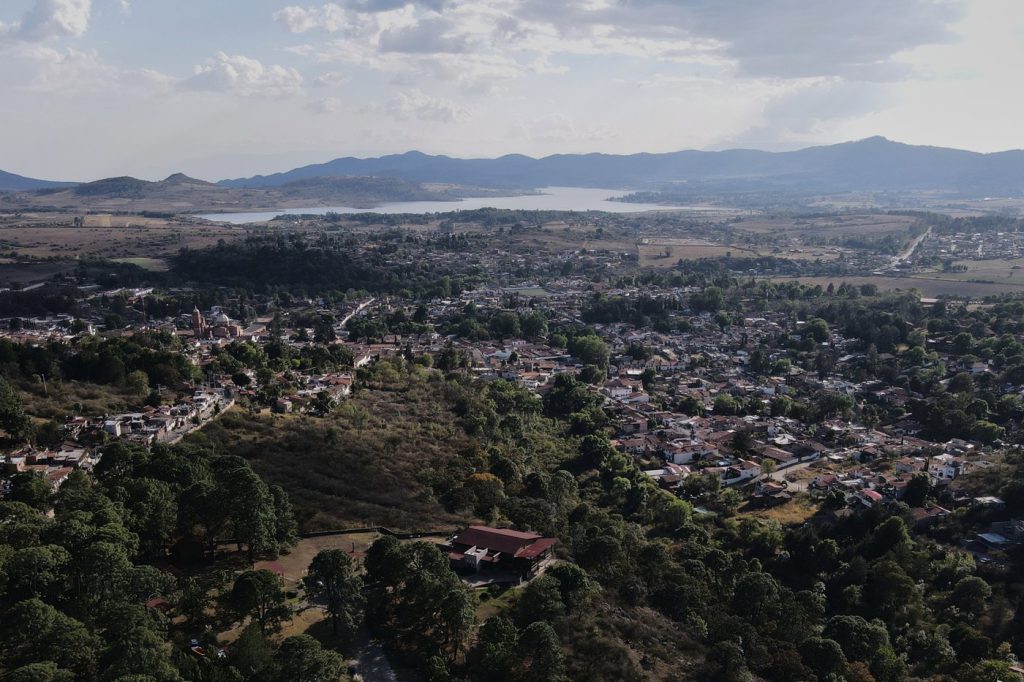
MEXICO CITY (AP) - Recent discoveries in the hideout of Nemesio Oseguera Cervantes, known as "El Mencho," who was killed by the Mexican army on a Sunday, uncovered an unexpected aspect of the notorious cartel leader: his religious devotion. Found within his residence in a gated community in southern Jalisco state were various religious items, including a crucifix, a makeshift altar adorned with figurines of Our Lady of Guadalupe, Saint Jude Thaddeus, and Saint Charbel Makhlouf, as well as votive candles depicting different saints. In the backyard, images of the Virgin and Saint Jude were carved into large stones.
On the day of his death, Mexican special forces successfully encircled Oseguera Cervantes and captured him following a firefight on the outskirts of Tapalpa. Authorities confirmed that he succumbed to his injuries while being transported to a hospital. Among the items collected from the house by local media was a handwritten copy of Psalm 91, a scripture commonly recited by Catholics seeking divine protection from danger and adversity.
Additionally, letters were reportedly found addressed to Oseguera Cervantes in a familiar tone, mentioning St. Jude, a figure revered among criminals, drug users, and marginalized communities in Mexico. Despite his position, Oseguera Cervantes maintained a low profile during his nearly two-decade tenure as the leader of the Jalisco New Generation Cartel, a group infamous for its violent tactics and rapid expansion. Mexican authorities linked one of his romantic partners to the location of the hideout.
Fabián Acosta Rico, a researcher from the University of Guadalajara and the Center of Religious Studies in Mexico, highlighted that the intersection of religion and violence is a common occurrence throughout history. He referenced various global examples, illustrating that this phenomenon is not limited to contemporary criminal organizations. In Oseguera Cervantes' case, Acosta Rico noted a distinct form of "popular religiousness," which reflects an everyday spirituality rather than traditional Christian fervor. He argued that individuals often turn to God not seeking forgiveness or salvation, but in response to immediate and pressing needs, such as hunger or violence.
The relationship between drug trafficking and religious iconography is deeply rooted in Mexico, a predominantly Catholic nation. The Mexican Catholic Bishops Conference has previously criticized the misuse of religious symbols by criminal groups, including the worship of Santa Muerte, a cult figure blending pre-Hispanic traditions with Catholicism. This being said, there are well-documented instances of drug lords who express their devotion to Catholic saints. For example, Édgar Valdez Villarreal, alias "La Barbie," was known to hold a deep reverence for Our Lady of Guadalupe, while Ovidio Guzmán López, son of the infamous Sinaloa Cartel leader Joaquín "El Chapo" Guzmán, was photographed donning a scapular of the Holy Infant of Atocha during his first arrest in 2019.
According to Acosta Rico, the Roman Catholic Church faces limitations in addressing the association between drug traffickers and religious imagery, particularly in an era valuing religious freedom. Individuals can freely incorporate religious symbols into their lives, irrespective of how they may distort their intended meanings. Acosta Rico emphasized that the Church has lost the authority to enforce standards regarding the appropriate use of religious iconography.








