

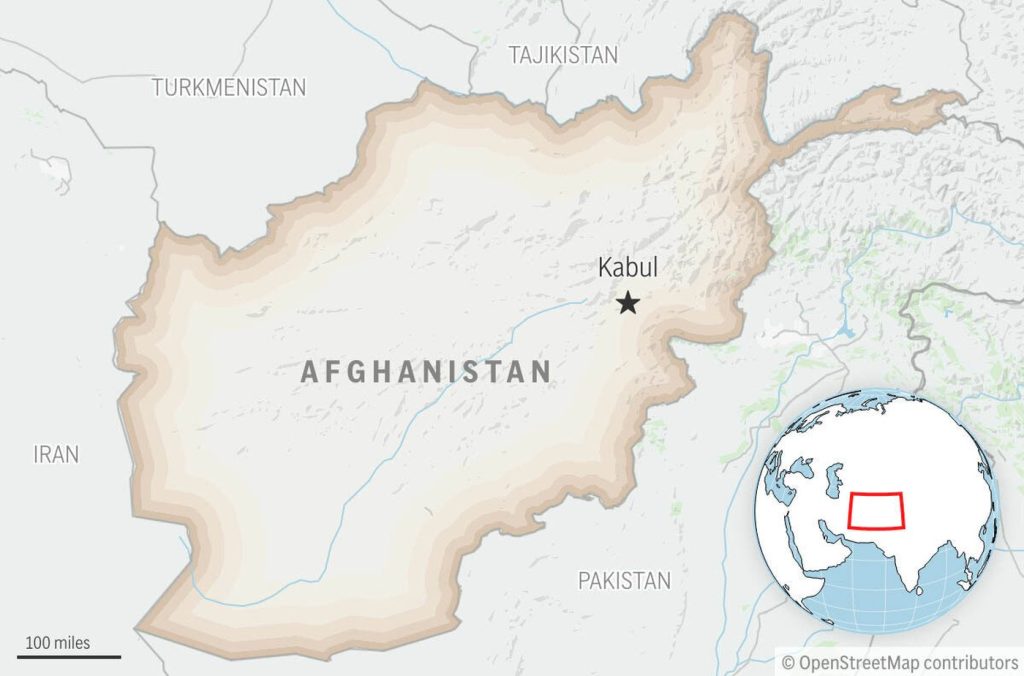
ISLAMABAD (AP) — Pakistan's Defense Minister Khawaja Mohammad Asif announced that the nation has lost "patience" regarding its conflict with Afghanistan, alleging that an "open war" now exists between the two countries following a series of retaliatory strikes. His remarks follow an Afghan cross-border attack that occurred after Pakistan conducted airstrikes in Afghan border regions.
In a post made on X, Asif expressed disappointment in the Taliban's governance since the withdrawal of NATO forces, claiming that instead of focusing on the welfare of the Afghan people and maintaining regional stability, the Taliban has turned Afghanistan into an "Indian colony" by allegedly harboring militants and "exporting terrorism." He stated, "Our patience has now run out. Now it is open war between us." To date, Afghan government officials have not publicly responded to these claims.
Pakistan has a history of accusing India of supporting militant groups such as the Baloch Liberation Army and the Pakistani Taliban, allegations that India has consistently denied. The recent increase in violence between the two neighboring countries casts doubt on a Qatar-mediated ceasefire, which Asif did not mention in his statements regarding the current situation.
Asif further criticized the Taliban government for denying basic human rights to Afghans, particularly women's rights, which he asserted are protected under Islamic principles, although he did not provide specific examples or evidence to support this allegation. He claimed that Pakistan has made extensive efforts to maintain stability in the region both directly and through collaborations with friendly nations.
In response to Afghan aggression, Asif noted, "Today, when attempts were made to target Pakistan with aggression, by the grace of God, our armed forces are giving a decisive response." The escalatory actions began with an Afghan cross-border attack on Thursday, leading to Pakistani airstrikes on various Afghan provinces, including Kabul, Kandahar, and Paktia. Reports indicate that at least three explosions were heard in Kabul, though details regarding the strikes' locations or any immediate casualties were not available.
Afghan government spokesperson Zabihullah Mujahid confirmed the occurrence of the strikes, emphasizing the cross-border tensions that have persisted. Amid these tensions, the Pakistani Defense Minister highlighted Pakistan's historical role in hosting around five million Afghan refugees over the last five decades, noting that millions of Afghans continue to earn their livelihoods in Pakistan.
In October 2023, Pakistan initiated a sweeping crackdown on undocumented migrants, urging Afghan immigrants to leave voluntarily to avoid arrest and forced deportation. This action coincided with similar measures taken by Iran around the same time. Consequently, millions of individuals, including those born in Pakistan decades ago, have returned to Afghanistan, leading to significant migrations across the border.
Last year, approximately 2.9 million individuals returned to Afghanistan, according to statistics from the U.N. refugee agency, with nearly 80,000 having returned so far this year. This ongoing crisis underscores the complex interplay between Pakistan and Afghanistan, marked by issues of migration, border conflicts, and regional stability.








