

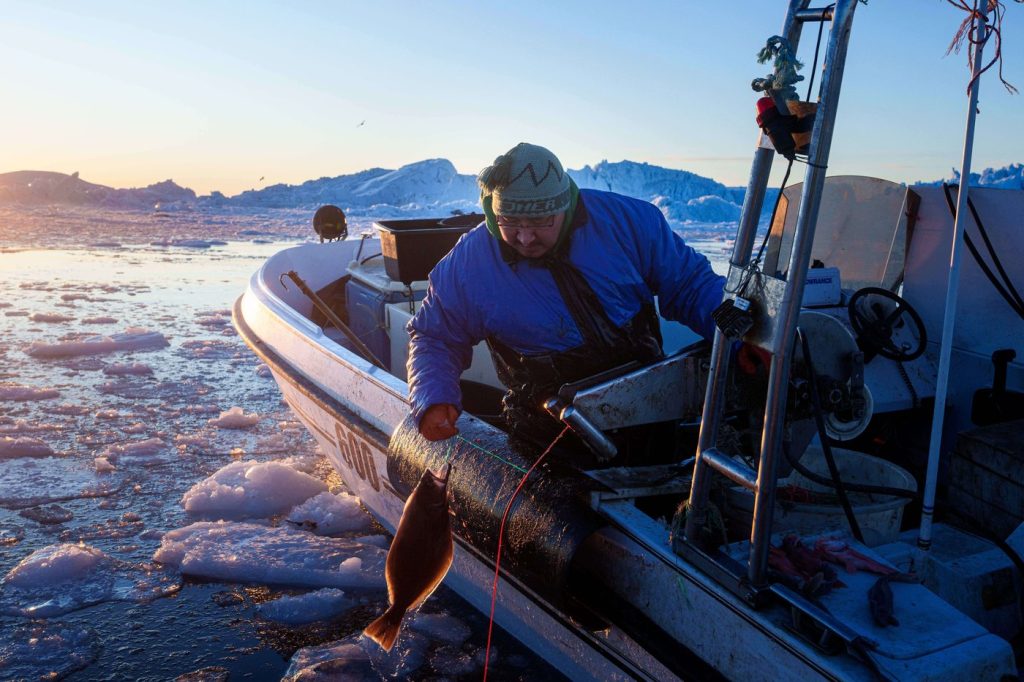
ILULISSAT, Greenland (AP) - Fisherman Helgi Aargil grapples with the uncertainties of his trade on Greenland's fjords, where he spends extended periods on his boat with his dog, Molly. The landscape around him is both majestic and unpredictable, accentuated by the ever-changing northern lights overhead.
Last year, Aargil faced the challenge of his boat getting stuck in ice that had broken off from a nearby glacier. This year, heavy rains have made conditions equally difficult. His income fluctuates dramatically; a fishing expedition could yield approximately 100,000 Danish kroner (around $15,700), or it could bring in nothing at all.
The rapidly changing climate in the Arctic is adding layers of complexity to Greenland's economy, a semiautonomous territory of Denmark that has felt the reverberations of U.S. President Donald Trump's past interest in purchasing the territory. While Trump's approach has evolved, the larger problem of climate change continues unabated, with the Arctic warming faster than any other region in the world due to greenhouse gas emissions from oil, gas, and coal.
The implications for the fishing industry, which is the backbone of Greenland's economy, remain uncertain. Fishing accounts for up to 95% of exports, primarily to China, as well as the United States, Japan, and Europe. As the climate shifts, traditional fishing methods are being significantly altered. Aargil typically catches halibut and cod, while shrimp and snow crab represent other valuable catches in the region.
According to Karl Sandgreen, the director of the Icefjord Center—located in Ilulissat and dedicated to studying climate change—traditional ice fishermen have experienced dramatic shifts in their fishing practices. He recalls that his father used to fish from sea ice that was over one and a half meters thick. Following the disappearance of this sea ice around 1997, many local fishermen have made the transition to fishing by boat, though this new method carries higher costs and brings with it an increase in pollution that accelerates global warming.
Fishing has long been integral to the social fabric of Greenlandic communities. The harbors where fishermen return to sell their catches are central to every settlement. Before embarking on trips, many fishermen collect boxes from local fishing companies to store their catches, which are subsequently transported to fish factories in Nuuk, Greenland's capital.
Toke Binzer, CEO of Royal Greenland, the largest employer on the island, expresses deep concern over the potential consequences of diminishing sea ice. This decline could drive traditional fishermen towards larger urban centers and into the realm of commercial fishing, placing further strain on fish stocks. Binzer points out the dual challenge: there can be too much ice preventing voyages while at other times too little ice to venture out safely. This inherent unpredictability has resulted in significant industry disruptions.
Royal Greenland has initiated loans for fishermen to purchase boats, allowing them to repay the loans through sales of their catch. However, if all fishermen shift to boat-based fishing, economic benefits may be offset by risks of overfishing. Boris Worm, an expert in marine biodiversity at Dalhousie University in Canada, notes signs of overfishing near the shore, particularly with halibut sizes decreasing as larger fish are caught while smaller ones remain.
As shifting ice patterns offer easier access to more fishing grounds, warmer temperatures may initially increase fish stocks due to greater nutrient availability from melting ice and rainfall. However, Worm cautions that fish behavior could become increasingly unpredictable, as they may adapt to foraging for different nutrients if algae under the sea ice diminishes.
Meanwhile, Aargil faces a growing concern: warmer waters have rendered some fish harder to find, as they dive deeper in search of cool currents. He expresses frustration, stating simply, "It's too warm. I don’t know where the fish is going, but there’s not so much." Options in Greenland beyond fishing are limited; although tourism is on the rise, it currently represents a minor share of the economy.
Furthermore, the traditional practices of Greenlanders are at risk; dog sledders often find themselves restricted to land when the sea ice is absent. Ken Jakobsen, manager at Royal Greenland’s factory in Nuuk, emphasizes the cultural significance of fishing, affirming that many Greenlanders depend on fishing as their primary livelihood. In Nuuk alone, there are over 1,000 boats in the summer harbor against a backdrop of a population barely exceeding 50,000.








