

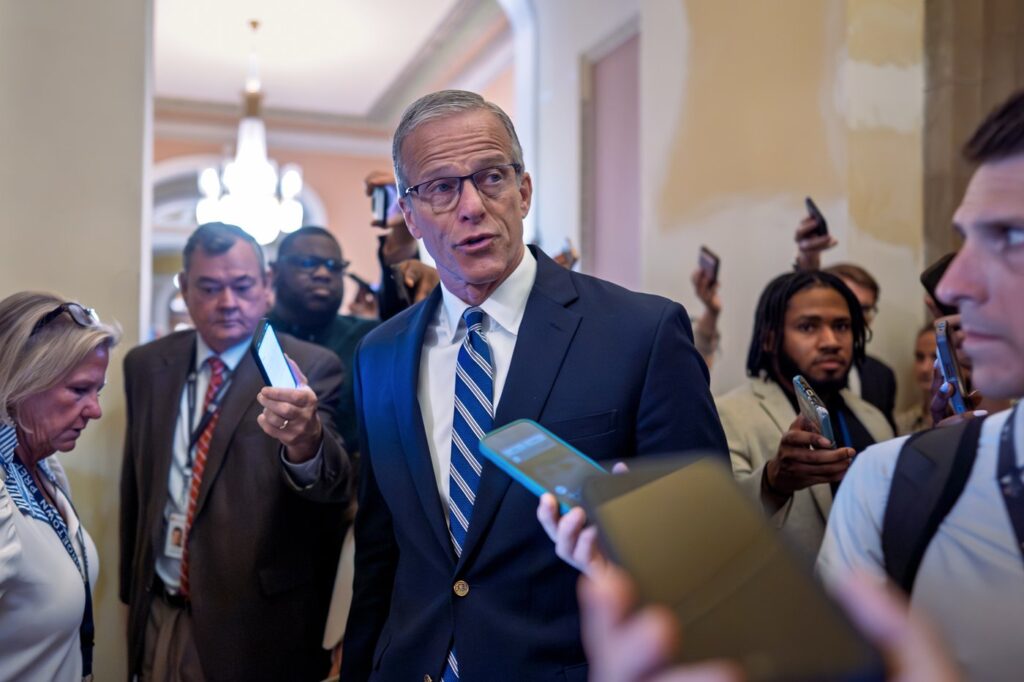
The Senate passed legislation early Friday morning to fund President Donald Trump’s immigration enforcement agencies, concluding weeks of delays over contentious amendments related to a $1.776 billion settlement fund. Senators voted 52-47 in favor of the $70 billion bill, intended to finance Immigration and Customs Enforcement (ICE) and Border Patrol through the end of Trump's term. This vote was taken just before 5 a.m., after Republicans staved off attempts from both Democrats and their party members to include provisions that would ban the settlement fund linked to Trump’s allies.
During the tumultuous hours preceding the vote, Senate Republicans overcame internal divisions, defeating an amendment from Louisiana Senator Bill Cassidy. This amendment aimed to redirect settlement payments towards law enforcement officials injured during the January 6 Capitol attack. Party unity was tested, with debates overshadowing the primary focus on immigration enforcement, particularly given the upcoming election year.
Senate Majority Leader John Thune, a South Dakota Republican, expressed frustration over the prolonged discussions, emphasizing that the delays pertained to issues linked to the settlement fund. Despite internal GOP criticism of the fund, Thune urged party members to concentrate on immigration funding. He noted that the haggling around the settlement fund had unnecessarily drawn out the legislative process.
Trump’s influence in the negotiations became apparent after he voiced uncertainty regarding the settlement's status, creating further complications. The initial Democratic motion to ban the settlement was narrowly defeated after Cassidy voted against it. Meanwhile, the Senate also rejected another amendment from North Carolina Senator Thom Tillis, which sought to similarly prohibit the settlement fund but redirect funds to an anti-fraud initiative at the Department of Justice. Tillis articulated concerns that the settlement fund represented a potential political liability for Republicans.
The ongoing disputes over the settlement were compounded by fears that funding could unintentionally benefit individuals who participated in the January 6 Capitol insurrection. Cassidy's proposal to assist injured law enforcement officers was a critical critique of the settlement, suggesting that the funds might indirectly support those who had harmed police during the riots. Furthermore, the Senate resisted various Democratic attempts to restrict or eliminate the settlement fund, including proposals to bar payments to January 6 defendants.
Senate Minority Leader Chuck Schumer criticized the Republican stance, stating it failed to ensure taxpayer accountability and likening it to a mere "permission slip." The eventual approval of the $70 billion funding bill for ICE and Border Patrol marked a significant legislative victory for Senate Republicans, ending a months-long impasse attributed to Democratic demands for policy changes following the fatal shootings of protesters by federal agents in January.
The Senate had to navigate procedural challenges to advance the legislation without any Democratic support, largely due to backlash against the settlement fund and other extraneous proposals originating from the Trump White House. This included earlier suggestions for significant funds aimed at White House security and Trump-related construction projects, which were ultimately discarded. Democrats insisted that any funding for the Department of Homeland Security be accompanied by measures tightening accountability for federal immigration authorities.
Amid rising tensions and the stark divisions over immigration enforcement policies, the funding for ICE and Border Patrol remained stalled for months prior to this legislative breakthrough. Congressional support was ultimately secured toward the end of April for other aspects of the Homeland Security budget, but critical funding for ICE and Border Patrol lingered unresolved.








