

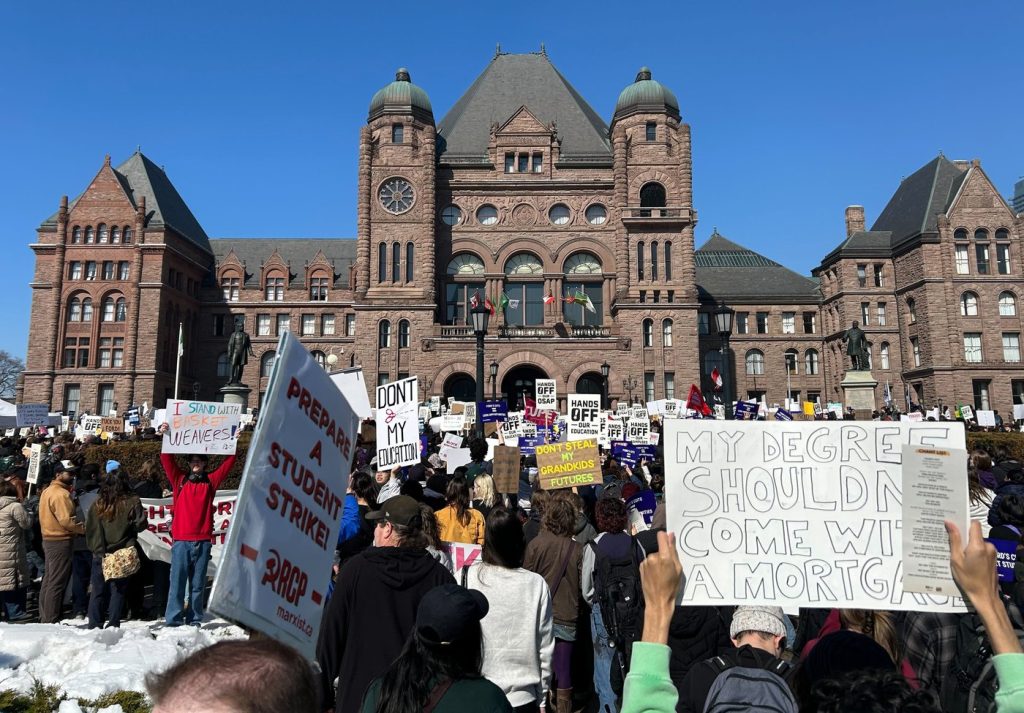
TORONTO – Ontario Premier Doug Ford's government has faced criticism following significant cuts to the Ontario Student Assistance Program (OSAP) grants earlier this year, which were characterized as a response to "unsustainable" costs. However, recent data has emerged indicating that the majority of the rise in financial aid expenses was associated with students from private career colleges.
According to information acquired through a freedom-of-information request by The Canadian Press, the province allocated an additional $465 million for OSAP grants between the 2023-24 and 2024-25 academic years, with 95 percent of this increase benefiting career college students. This has raised concerns among opposition critics who argue that the Ford government is responsible for this financial strain and unnecessary cuts affecting students in universities and publicly funded colleges.
Liberal critic for colleges and universities, Tyler Watt, condemned the government's actions, stating, "Doug Ford used the rising cost of OSAP as his excuse to gut student aid, slashing the grant portion from 85 percent down to 25 percent and leaving students to take on more debt." He emphasized that the new figures undermine the rationale for cutting funding.
The data reveals that while overall financial aid from Ontario and federal funds has increased, students attending universities experienced a decrease in grants, receiving approximately $370 million in 2023-24, which fell to around $354 million the following year. Publicly funded college students saw a slight increase, receiving $349 million in the first year and $386 million the next year.
Conversely, career college students experienced a significant surge in financial support, going from $554 million in 2023-24 to about $994 million in 2024-25. This total is greater than the combined grants for public college and university students, raising alarms about the government's funding priorities.
NDP Leader Marit Stiles argued that the government's decisions appeared to be an excuse to reduce overall OSAP spending, suggesting a bias toward private career colleges over public institutions. "I think they were unwilling to only make cuts that impacted their friends at the private career colleges," she stated.
Earlier this year, Colleges and Universities Minister Nolan Quinn announced that career college students would no longer qualify for OSAP grants, paralleling changes at the federal level and citing budgetary unsustainability as the reason for broader financial aid reductions impacting university and college students. The proportion of non-repayable grants available through OSAP was slashed from 85 percent to a maximum of 25 percent according to the changes.
Students and advocates have raised alarms that the increased reliance on loans for financing education could lead to graduates incurring substantial debt during a period of affordability challenges. The College Student Alliance, representing students at several publicly funded colleges, criticized the rapid growth in grant funding for career colleges compared to the stagnation for public colleges, calling for clarity on evidence that informs OSAP policies.
Prior to 2017, the ratio of grants to loans for OSAP was 15 to 85 percent. The shifts made by former Premier Kathleen Wynne led to increased spending that the province's auditor general projected might rise significantly. Although provincial spending on OSAP grants has recently reached projected levels, it was initially lower due to reduced demand during the pandemic. Government forecasts anticipate further increases to $2.7 billion by 2028-29, but breakdowns by institutional type remain undisclosed.
While Quinn acknowledged the growth in career colleges, he defended the need for spending cuts, asserting it was imperative to maintain assistance for future students. The auditor general’s report indicated that the steep rise in expenditures was likely underestimated, as it did not account for increased demand for OSAP support.
Career colleges are known for higher tuition fees, and a recent FOI request revealed that, in 2024-25, university and college students received average grants ranging from $5,500 to $7,000, whereas career college students received more than $15,000 on average. Amid these challenges, the Ontario government has announced a funding package totaling $6.4 billion over four years for colleges and universities, addressing concerns stemming from past financial constraints alongside changing federal immigration policies that have affected revenue generation from international students.








