

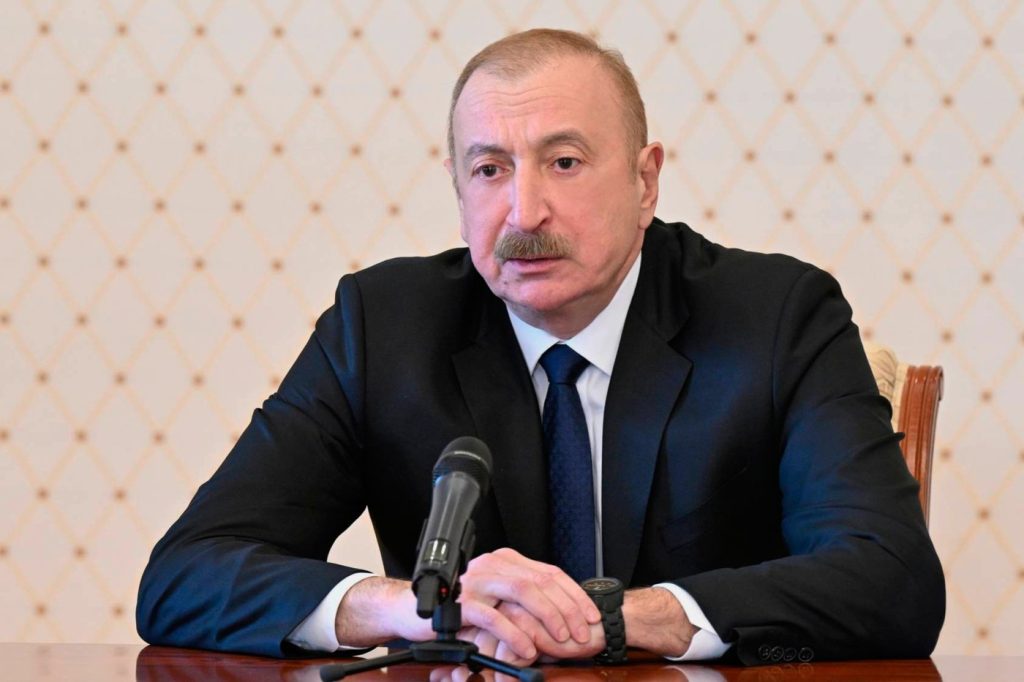
BAKU, Azerbaijan (AP) – Azerbaijan accused Iran on Thursday of conducting a drone attack on its territory that resulted in injuries to four civilians. In response, Azerbaijani officials vowed to retaliate, marking a significant escalation in the ongoing tensions affecting the region.
The Azerbaijani Foreign Ministry issued a statement asserting that Iranian drones had targeted its exclave of Nakhchivan, causing damage to an airport building and injuring civilians. President Ilham Aliyev condemned the incident as a "groundless act of terror and aggression," further instructing his military to prepare for retaliatory actions. Additionally, Azerbaijan halted truck traffic across its extensive border with Iran, which spans nearly 700 kilometers (over 400 miles).
Iran’s armed forces denied any involvement in the drone strikes, insisting that they had not launched any attacks toward Azerbaijani territory. The Iranian government has consistently maintained that it does not target oil infrastructure and civilian sites despite evidence of its drone and missile attacks hitting such locations in the ongoing conflict in the region.
This incident underscores the complicated relationship between Azerbaijan and Iran, which has been further complicated by Azerbaijan's growing military and economic connections with Israel. The geopolitical context has heightened Iran's anxiety over the potential leverage the U.S. and Israel may have regarding Iran's minority ethnic groups, including the significant Azeri population within Iran. Tehran has accused Baku of allowing Israeli intelligence operations from its territory, to which Azerbaijan has countered with assurances that its land will not be used for operations against Iran.
Azerbaijani officials noted that one Iranian drone had crashed near the airport in Nakhchivan, while another struck in proximity to a school where classes were in session. According to reports from Azerbaijan's Defense Ministry, four drones were fired towards Nakhchivan, with one being intercepted by Azerbaijani forces while the others targeted civilian objects, causing injuries to four individuals.
Nakhchivan is geographically isolated from mainland Azerbaijan, bordered by a 40-kilometer (25-mile) expanse of Armenia. This exclave comprises about 6% of Azerbaijan's overall territory, lying adjacent to Turkey and Iran. President Aliyev while addressing his Security Council labeled the attack as wholly unacceptable, demanding explanations from Iranian officials and holding those responsible criminally liable.
Azerbaijan's Defense Ministry further emphasized that Iran's actions would not go unpunished, asserting that it is prepared to ensure the country's territorial integrity and the safety of its civilians. President Aliyev clarified that Azerbaijan is not involved in any military operations against Iran and has no intention of engaging in conflict with its neighbors.
The Azerbaijani Foreign Ministry criticized Iran's actions as violations of international law, summoning the Iranian ambassador to express its protest. Baku has demanded an urgent explanation from Tehran and preventative measures against recurrence of such incidents. In global diplomatic responses, Turkish President Recep Tayyip Erdoğan condemned the drone attack and expressed solidarity with Azerbaijan, while the Turkish Foreign Ministry advised against escalating conflicts that could extend the war in the region.
In recent years, Azerbaijan has bolstered relationships with both Israel and the United States, diminishing Iranian influence within the South Caucasus. President Aliyev attended a trilateral summit hosted by former U.S. President Donald Trump involving Armenia, during which they discussed a transit corridor to Nakhchivan, a proposal that has raised concerns in Tehran. Analysts believe this corridor could diminish Iranian leverage, enhancing Azerbaijan's trade relations with Turkey and Armenia while increasing U.S. presence in the area.
Despite a decrease in tensions following the election of Iranian President Masoud Pezeshkian in 2024, Azerbaijan's ties with Israel render it a target for Iranian retaliatory actions. Recent diplomatic gestures by Baku, including condolences sent to Iran over the death of Supreme Leader Ayatollah Ali Khamenei, have aimed to assuage Tehran's apprehensions regarding Azerbaijan's partnership with Israel amid ongoing regional conflicts.








