

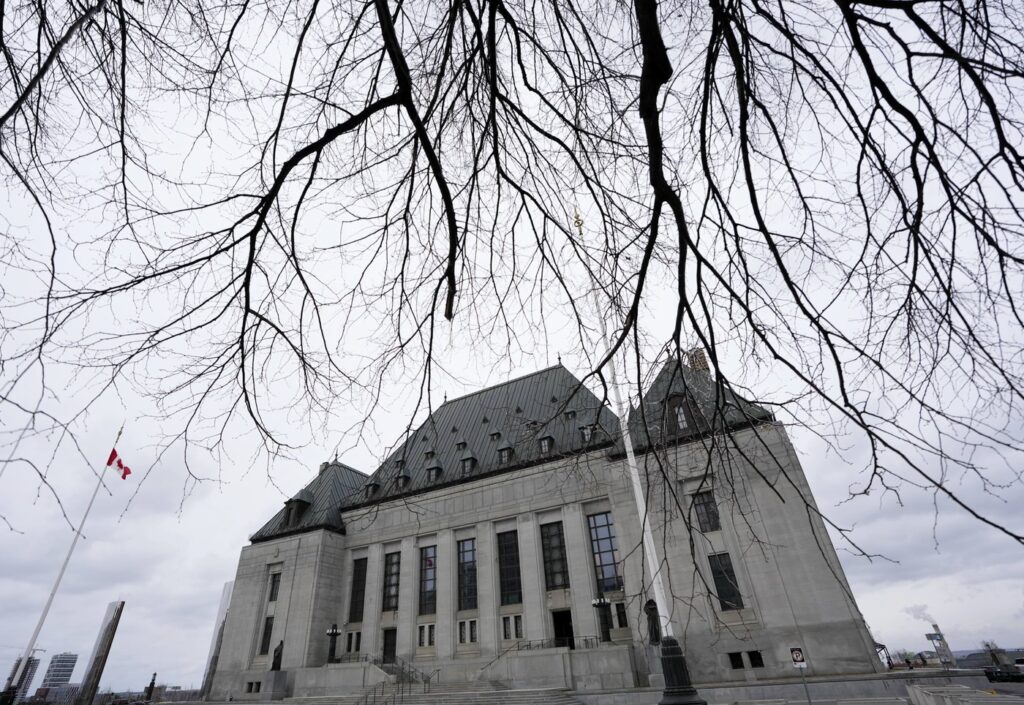
OTTAWA — A significant legal challenge against Quebec's secularism law, known as Bill 21, is currently unfolding at the Supreme Court of Canada. The arguments presented will prominently feature the use of the notwithstanding clause, a legal tool that has become a focal point in discussions surrounding the legislation's validity and implications.
Bill 21, enacted in June 2019 by the government of Quebec, led by Premier François Legault, places restrictions on certain public-sector employees, specifically teachers, police officers, and judges, prohibiting them from wearing religious symbols while performing their official duties. The law is grounded in the principle of state neutrality, asserting that public servants should not express their religious beliefs in a visible manner while engaged in their professional roles.
The Coalition Avenir Québec government, in an effort to protect Bill 21 from legal challenges, invoked the notwithstanding clause of the Canadian Charter of Rights and Freedoms. This strategic move aims to shield the law from most legal disputes concerning violations of fundamental rights, which raises questions about the balance between religious freedoms and state-imposed secularism.
Legal experts suggest that the core of the arguments will focus more on the criteria and conditions necessary to suspend rights than on the underlying principle of state secularism itself. This nuanced discussion points to the complexities involved in the interpretation of the Charter and the limits of governmental power in curtailing individual freedoms.
In previous rulings, both the Quebec Superior Court and the Quebec Court of Appeal have generally sided with the provincial government regarding Bill 21. However, these courts have also voiced concerns regarding the government's application of the notwithstanding clause, indicating a level of scrutiny about how such powers are exercised in relation to rights protections.
Various advocacy organizations, including the National Council of Canadian Muslims, the Canadian Civil Liberties Association, and the World Sikh Organization, are actively participating in the discourse surrounding this case. These groups plan to hold a press conference today, coinciding with the opening of the hearings, and they are expected to highlight the potential implications of Bill 21 on civil liberties and religious expression.
The Supreme Court hearings are anticipated to last for four days, officially commencing on March 23, 2026. The outcome of these proceedings could have lasting effects on the legal landscape concerning secularism in Canada and the application of the Charter’s protections, particularly in regards to marginalized communities affected by this controversial law.
As this pivotal case progresses, it remains to be seen how the Supreme Court will navigate the conflicting interests of maintaining a secular state while ensuring the protection of individual rights and freedoms in a diverse society.








