

The Russian Defense Ministry announced on Thursday that Russian air defenses successfully intercepted 347 Ukrainian drones overnight. This incident occurred in the wake of Moscow's refusal to accept a ceasefire proposed by Kyiv earlier in the week, as tensions heightened in anticipation of Russia's upcoming Victory Day celebrations.
According to the Defense Ministry, the intercepted drones were destroyed across 20 Russian regions, including the capital, Moscow. This aerial assault represents Ukraine's second-largest drone attack since Russia's full-scale invasion began over four years ago, with the largest recorded being 389 drones last March.
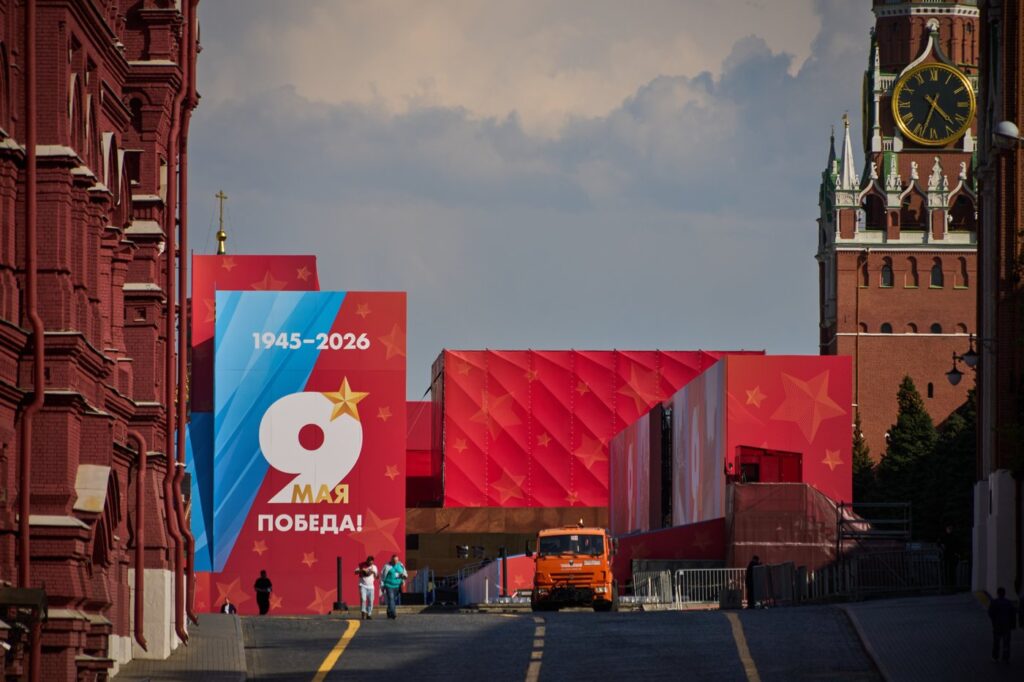
The timing of this drone attack coincided with Russia's significant secular holiday, which commemorates the anniversary of the Soviet Union's victory over Nazi Germany during World War II. In light of these developments, Russian authorities declared a unilateral ceasefire in Ukraine for Friday and Saturday. Ukraine swiftly responded by announcing its own suspension of hostilities starting from midnight Tuesday; however, Ukrainian President Volodymyr Zelenskyy asserted that Moscow ignored this gesture of goodwill and continued its military operations.
"Russia has not stopped any type of its military activity. Unfortunately, it has not stopped. Ukraine will act symmetrically," Zelenskyy stated in his regular evening video address on Wednesday.
Concerns have escalated as Russia's Victory Day is approaching, and peace efforts led by the U.S. have not gained momentum. In a move to avert potential Ukrainian attacks, mobile internet access and text messaging services will be suspended in Moscow on May 9, according to state media reports quoting the Ministry of Digital Development, Communications, and Mass Media.
Moreover, the traditional Victory Day parade in Moscow will not showcase the customary tanks, missiles, and other military hardware for the first time in nearly two decades. Russian authorities cited the "current operational situation" as the reason for omitting military equipment from the parade. Kremlin spokesman Dmitry Peskov accused Ukraine of "terrorist activity," implicitly referencing the recent drone strikes when discussing the scaled-back celebrations and increased security measures in Moscow.
The restrictions during the celebrations will also involve websites classified under the Russian government's "white list," which are typically accessible during the frequent connectivity blackouts experienced across the country. However, home internet and Wi-Fi services will remain unaffected, officials noted.
Meanwhile, Ukraine's military reported that it shot down 92 out of the 102 drones that Russia launched overnight. Despite Ukraine's effective defense, Russia continues to maintain a substantial advantage in drone numbers, often deploying hundreds of drones in a single attack.








