

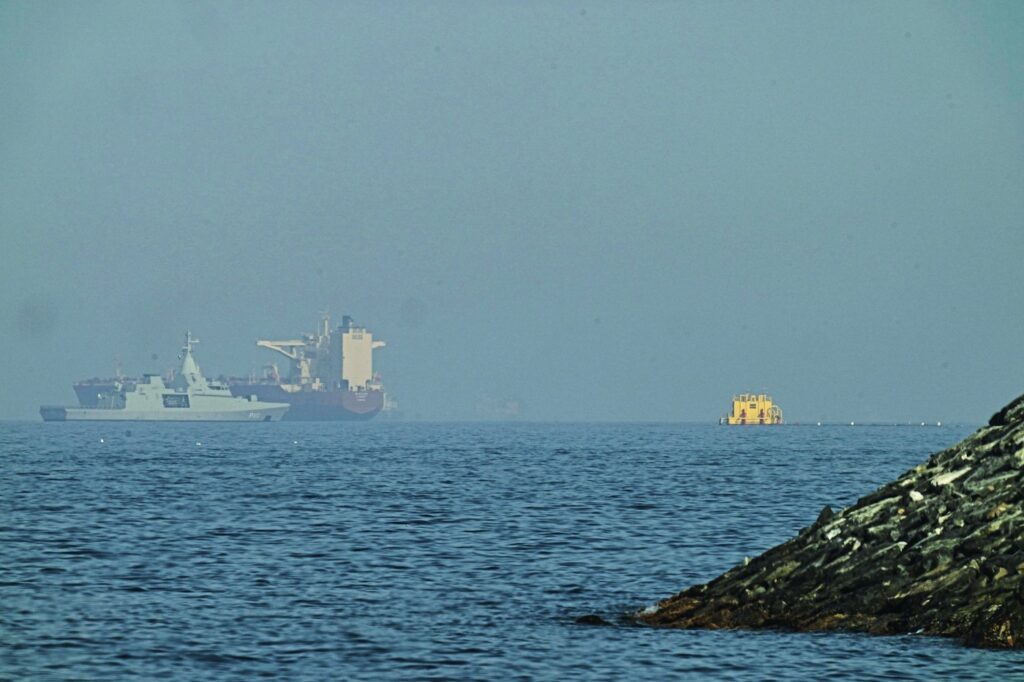
DUBAI, United Arab Emirates (AP) – Iran is currently reviewing the latest U.S. proposals aimed at ending the ongoing war, as President Donald Trump has issued a stern warning of renewed bombings should a deal not be reached. The conflict, which escalated in February with military strikes from the U.S. and Israel against Iran, has significantly impacted international shipping routes, specifically the vital Strait of Hormuz.
The two-month conflict raised hopes for a resolution this Thursday, subsequently affecting international markets. This optimism came despite the U.S. military firing upon an Iranian oil tanker that attempted to breach an American blockade on Iran’s ports. The situation, however, coincided with mixed messages emanating from the Trump administration regarding their strategy to conclude the war.
Trump expressed on social media that the war could soon come to an end, suggesting that oil and natural gas shipments could resume. He indicated that Iran's acceptance of a previously reported agreement was pivotal for this to happen. Notably, he declared, “If they don’t agree, the bombing starts.”
A fragile ceasefire between the U.S. and Iran has managed to hold since April 8, despite ongoing tensions. In-person negotiations hosted by Pakistan last month, however, did not yield any agreements. The war was initiated on February 28, when the U.S. and Israel commenced airstrikes on Iranian targets.
Pakistan's Foreign Ministry spokesperson, Tahir Andrabi, expressed optimism about the diplomatic efforts, stating, “We expect an agreement sooner rather than later,” although he refrained from providing a definitive timeline or revealing specific details of the ongoing negotiations.
Moreover, Pakistan’s Prime Minister Shehbaz Sharif reiterated that Islamabad is in constant communication with both Iran and the United States to pursue an extension of the ceasefire and to halt the conflict.
The narrative surrounding the war has experienced notable shifts, characterized by returning and often contradictory messaging from the Trump administration. This week saw a rapid change in U.S. strategy, particularly concerning efforts to reopen the Strait of Hormuz, which Iran has effectively blocked, heavily disrupting the shipment of various goods including oil, gas, and essential supplies.
On Wednesday, U.S. Central Command reported that a U.S. fighter jet had shot out the rudder of an Iranian oil tanker attempting to breach the blockade, emphasizing the precariousness of the situation in the Gulf of Oman.
Trump maintained that Iranian officials are eager to finalize a deal, hinting at the possibility that the U.S. could enforce a resolution. He stated, “If they don’t agree, the bombing starts, and it will be, sadly, at a much higher level and intensity than it was before.” Reports suggest that the White House is nearing an agreement with Iran, which would be documented in a one-page memorandum. This proposed agreement includes key concessions such as a moratorium on uranium enrichment by Iran, lifting U.S. sanctions, distributing frozen Iranian funds, and opening the Strait for international shipping.
Despite the unfolding dialogue, a spokesperson for the Iranian Foreign Ministry declared that Tehran "strongly rejected" previous U.S. proposals, although they are still contemplating recent suggestions from Washington.
In a related development, Trump suspended a short-lived U.S. initiative, named Project Freedom, which aimed to ensure safe passage for commercial vessels through the Strait of Hormuz. Currently, the avenue remains congested, with hundreds of merchant ships stranded, boosting fuel prices, and significantly affecting the global economy.
The financial strain is manifesting in statements from shipping companies; for instance, Hapag-Lloyd reported the blockage is costing them approximately $60 million weekly. As the market grapples with these implications, Brent crude oil prices stabilized around $100 a barrel, with investors remaining anxious about the potential reopening of the Strait.
Additionally, French President Emmanuel Macron announced that France’s aircraft carrier strike group is moving into the Red Sea in anticipation of a potential collaborative mission with Britain to restore maritime security in the Strait of Hormuz, contingent on favorable conditions.
China has also expressed concern over the situation, with its foreign minister calling for a comprehensive ceasefire during talks with Iranian Foreign Minister Abbas Araghchi. China’s close ties with Iran put it in a position to influence developments; the U.S. is reportedly urging China to leverage its relationship to facilitate openness in the Strait.
Araghchi’s visit to China positions him ahead of a high-profile summit between President Trump and Chinese President Xi Jinping, scheduled for May 14-15, whereby discussions are anticipated around the Strait of Hormuz and the broader implications of Iran's nuclear program and sanctions.








