

DETROIT (AP) - For years, Michigan Republicans had eagerly anticipated the year 2026 as a critical opportunity to regain influence in a swing state dominated by Democrats, who currently hold all statewide offices and both U.S. Senate seats. However, recent events have begun to dampen that optimism.
Several factors, including soaring gas prices, an unpopular war in Iran, and tariffs impacting the state's essential auto industry, have contributed to increasing worries about the political landscape for Republicans in Michigan. The most alarming indication of this trend emerged recently when a Democrat won a special election by nearly 20 points in a Senate district that Vice President Kamala Harris had previously secured by a margin of less than 1 point in 2024. The seat was held by a Democrat who won it by a 6-point margin back in 2022.
Michigan pollster Richard Czuba articulated the implications of this election outcome, noting that such a substantial margin in a competitively balanced district signals that Democrats and independent voters are collaborating to express their dissatisfaction with the Trump administration.
This discontent presents a significant challenge for Michigan Republicans, particularly as voters prepare to make critical decisions in the midterm elections regarding the gubernatorial office, legislative control, and a competitive U.S. Senate race. Michigan's political climate is also significant on a national scale, as the Republican Party views the state, which Trump flipped in 2024, as crucial to its overall coalition and midterm strategy focused on the industrial Midwest.
Compounding these difficulties, a recent AP-NORC poll revealed a decline in former President Donald Trump's approval ratings on economic issues, particularly between March and April, coinciding with the challenges posed by the war in Iran. During this time frame, Trump's economic approval among Republicans fell from 74% to 62%, and his standing with independent voters remained low, with only 20% approving of his economic management compared to around 30% the previous month.
Residents in Michigan seem to be feeling the brunt of these economic pressures more acutely than others across the nation. Gas prices in the state have surged to an average of $4.80 per gallon, ranking as the 10th-highest in the country after spiking by over 80 cents in just one week. Individuals like Jared Kaufman, a 26-year-old teacher who recently voted for Democrat Chedrick Green, have expressed frustration over rising costs and the ongoing war in Iran, emphasizing the perceived burden of sacrifices for conflicts far removed from their everyday lives.
Furthermore, tariffs have stoked new anxieties in a state heavily reliant on the auto industry and cross-border trade with Canada. While Trump has maintained that these tariffs will bolster domestic manufacturing, smaller manufacturers and suppliers in Michigan report that the unpredictability of such policies is complicating their investment and expansion plans. John Lytle, president of Promess Inc., noted that a stable economic climate is essential for making growth decisions.
Jason Roe, a strategist and former executive director of the Michigan GOP, acknowledged the current challenging political environment but also pointed out that Democrats are not without their own issues. He emphasized the urgency of resolving the concerns surrounding Iran to alleviate Republican woes, stating, "If they don't get Iran figured out pretty quick, we’re screwed."
The escalating political challenges for Republicans are also intertwined with internal divisions within the party. With Democratic Governor Gretchen Whitmer set to leave office after her term, the governor's race was previously viewed as a prime opportunity for Republican acquisition. Republicans often see success in electing a governor from the opposite party when an incumbent departs.
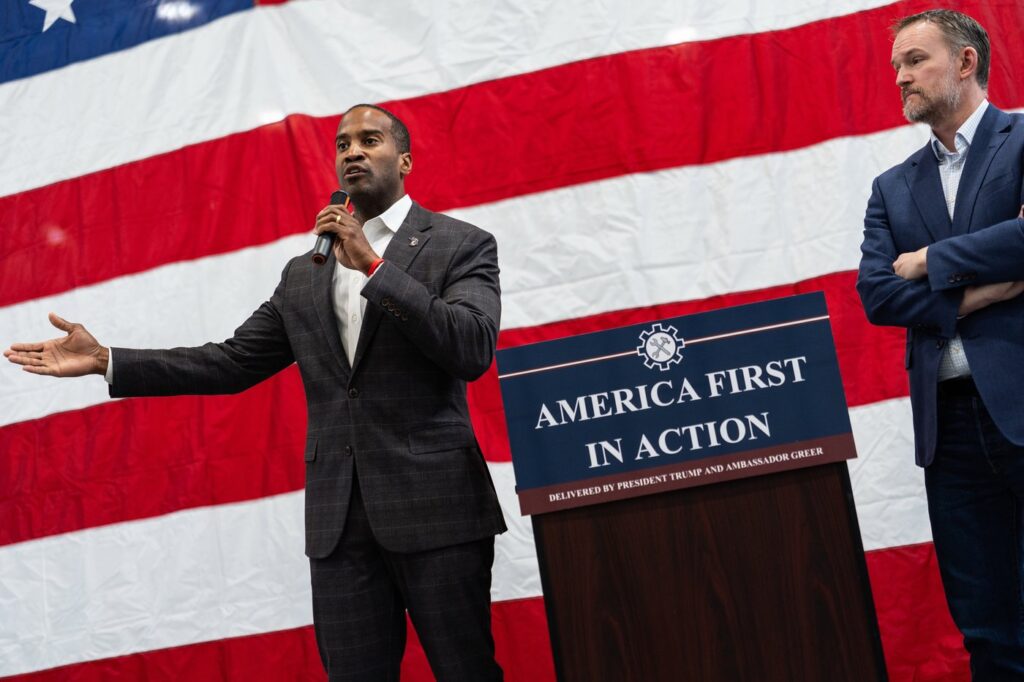
Rep. John James, a veteran and the favored candidate in the GOP primary, has faced mounting criticism over his campaign's effectiveness, particularly after he opted out of a critical GOP debate in an essential swing county. This prompted some Republicans, including Chris Long, a member of the Michigan GOP leadership, to voice their concerns about James' potential to win the general election if he secures the primary.
On the Democratic side, Secretary of State Jocelyn Benson is poised to take on the challenge of leading the party's gubernatorial campaign, though significant hurdles remain, including the candidacy of ex-Democrat and current independent Detroit Mayor Mike Duggan, who could siphon votes away from the party's nominee.
In the Senate race, national Republicans are equally invested in flipping Michigan's open Senate seat, with former U.S. Rep. Mike Rogers making a return to the political landscape after a narrow loss in 2024. However, doubts remain about his ability to win a race he previously lost with Trump on the ballot, particularly as Republicans have not won a U.S. Senate seat in Michigan since 1994.
Despite having substantial financial support from the Senate Leadership Fund aimed at boosting his campaign, Rogers is already trailing behind Democratic candidates in fundraising. Consultant Czuba noted that the influx of outside funding might not be beneficial if it shifts the focus away from local issues towards national dynamics, which could further challenge Rogers in a state already discontented with the current presidential administration.
Throughout this turbulent landscape, Michigan Republicans face a complex array of challenges that include both external and internal hurdles as they seek to regain control in a critical electoral cycle.








