

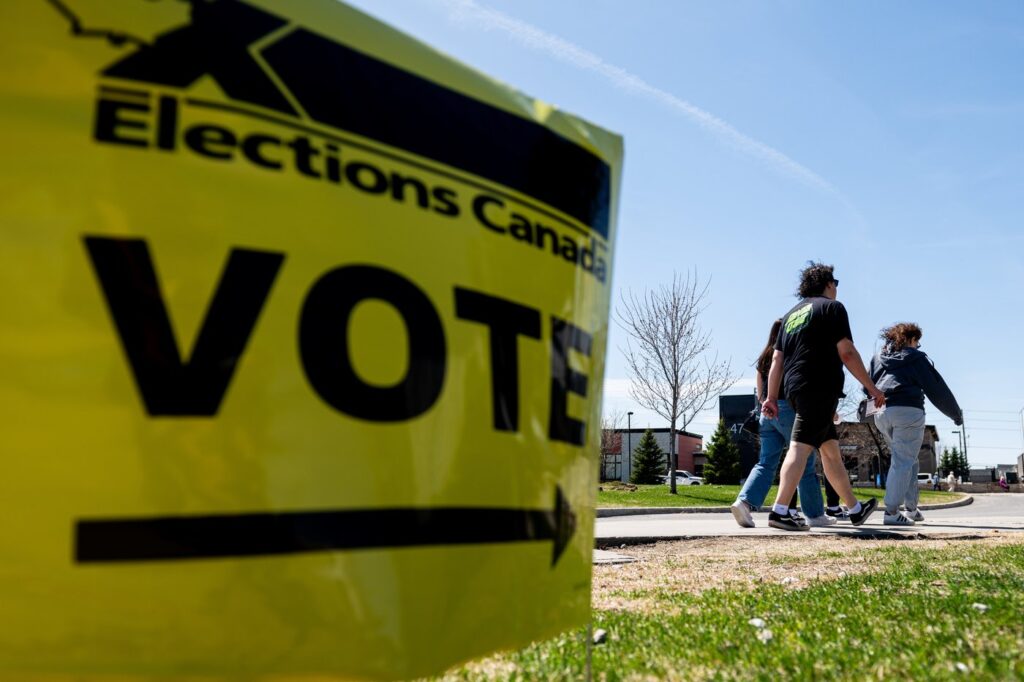
OTTAWA — Three byelections scheduled for April 13 have the potential to significantly alter the composition of Parliament and impact its duration. This primer outlines the possible changes that may ensue based on the results.
Where are the byelections?
The byelections are occurring in two Liberal stronghold ridings in the Toronto area—Scarborough Southwest and University–Rosedale—and one competitive riding in Terrebonne, located north of Montreal. These seats became vacant following the resignations of two former Liberal cabinet ministers. Bill Blair vacated his seat to assume the role of Canada's high commissioner to the U.K., while Chrystia Freeland stepped away to take on multiple new duties, including serving as an economic adviser to the Ukrainian president and as the CEO of the Rhodes Trust.
Political observers expect the Liberals to retain both Toronto ridings. However, much of the intrigue centers around the byelection in Terrebonne. This riding is particularly notable because the previous election result was the closest in the country; the Liberals won by a mere single vote. The Supreme Court of Canada invalidated that result in February due to issues with mail-in ballots, necessitating a re-vote.
Polling aggregator 338 Canada indicates that Terrebonne, which has recently leaned towards voting for the Bloc Québécois, is now considered a toss-up between the Liberals and the Bloc for this byelection.
Why is Terrebonne so important to the Liberals?
For the Liberals, securing both Toronto seats would give them a total of 172 MPs, allowing them to claim a majority in the House of Commons. However, it is crucial to note that House Speaker Francis Scarpaleggia, a Liberal MP, votes only in the event of a tie. To pass legislation, a government with 172 seats requires at least one opposition member to either vote with them or choose to abstain. A victory in Terrebonne would provide the Liberals with that critical extra vote.
Why is this situation so unusual?
Prime Minister Mark Carney's approach is noteworthy, as he is attempting to accomplish something unprecedented in recent history: transforming a minority government into a majority by recruiting members from opposition parties. This has included notable defections such as Nova Scotia MP Chris d’Entremont, who crossed the floor in November, and Ontario MP Michael Ma, who followed suit shortly before Christmas. More recently, Alberta Conservative Matt Jeneroux joined in February, and Nunavut MP Lori Idlout left the NDP earlier this month.
The Conservative Party has criticized these moves, accusing Carney of engaging in "shady backroom deals" and creating an "undemocratic" majority, although they have not proposed changes to curb floor-crossings.
What would change in the House of Commons if the Liberals gain a majority?
The primary shift accompanying a majority government pertains to confidence votes. Canadians have elected minority Liberal governments in three successive elections since 2019. Minority governments face continuous challenges to maintain confidence through votes related to throne speeches, budgets, and non-confidence motions. A majority government would ease those pressures; however, the implementation of such a majority does not automatically confer additional seats on parliamentary committees, which could hinder control over legislative progress.
As articulated by Éric-Antoine Menard, vice-president and head of Quebec operations at North Star Public Affairs, the number 172 is "not magical." Majority governments traditionally exert more influence in committee settings, which are pivotal arenas for legislative debate. Current committee arrangements, established in June, include five Liberals, four Conservatives, and one Bloc member, and cannot be altered unless through cooperation with opposition parties or amendments to the Standing Orders.
What happens next?
The potential for additional byelections looms large, meaning that even if the Liberals achieve a majority, maintaining that position could present challenges. Liberal MP Nate Erskine-Smith is contemplating a bid for the Ontario Liberal leadership, which would lead to a vacancy in his Beaches–East York seat. Similarly, rumors abound concerning North Vancouver–Capilano MP Jonathan Wilkinson's ambitions for a diplomatic post, and NDP MP Alexandre Boulerice is reportedly considering a move to Quebec provincial politics.
Instability persists in Parliament, with floor-crossing rumors circulating. Menard suggests that a narrowly accrued majority could complicate Carney's governance as he must ensure cohesion within a diverse caucus comprising former New Democrats and several ex-Tory MPs. "One does not know how these individuals will react on an issue-by-issue basis," he notes.
What does all of this mean for the timing of the next election?
A majority government could sustain power for up to three years or opt for an early election. Current polling indicates that the Liberals maintain a considerable lead, with Carney enjoying higher popularity than Conservative Leader Pierre Poilievre. Smith opines that the prevailing sentiment among Canadians does not signal a desire for an imminent election. However, should geopolitical circumstances remain uncertain, the possibility of an early election remains "not off the table." In the end, the dynamics within Parliament continue to evolve, presenting an interplay of strategies and political maneuvering.








