

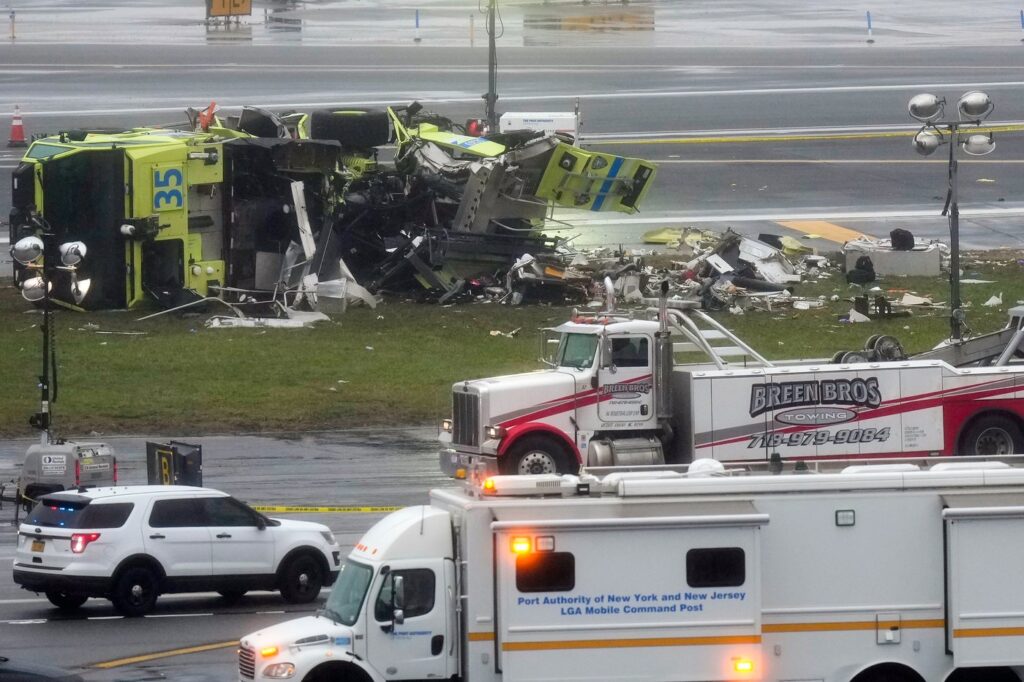
NEW YORK (AP) – A tragic incident unfolded at LaGuardia Airport in New York City on Sunday night when an Air Canada regional jet collided with a fire truck on the runway. The collision, which occurred around 11:45 p.m., resulted in the deaths of both the pilot and copilot, as well as injuries to several individuals on board and on the ground.
The Air Canada regional flight, operated by Jazz Aviation and arriving from Montreal-Pierre Elliott Trudeau International Airport, struck the fire truck that was en route to address a separate incident involving a concerning odor aboard another aircraft. According to audio recordings from the airport control tower, the truck had been cleared to cross the runway initially. However, prior to the collision, a controller attempted to retract the truck's clearance and instructed it to stop to prevent the impending crash. The recordings reveal a frantic attempt to divert incoming flights from landing as the situation quickly escalated.
The aftermath of the collision was severe, with images capturing the jet's nose crushed and tilted upward, while debris hung from the mangled cockpit. Emergency stairways were hastily positioned against the damaged aircraft to evacuate the approximately 70 passengers and four crew members on board. Reports indicate that about 40 passengers and crew were transported to nearby hospitals, with some suffering serious injuries, although most were reported to have been released by Monday morning. Additionally, two Port Authority employees who were in the fire truck at the time of the accident also sustained injuries that were not deemed life-threatening.
As a consequence of the crash, LaGuardia Airport experienced a complete shutdown, leading to the diversion of all air traffic. Investigators from the National Transportation Safety Board (NTSB) have initiated a thorough investigation into the circumstances surrounding the tragic incident. The airport is expected to remain closed until at least 2 p.m. Monday, compounding frustrations as air travel is already hampered by a government shutdown affecting U.S. airports amid the busy spring break travel season.
LaGuardia, located in the borough of Queens and roughly 9 miles from Manhattan, is a critical transit hub, ranked as the 19th busiest airport in the United States as of 2024. The airport has been operational since it opened to commercial traffic in 1939. The crash highlights ongoing challenges faced by air traffic controllers, particularly during periods of operational strain such as the current government shutdown, which has been ongoing for more than a month. While air traffic controllers are designated as essential workers and are not directly impacted by the shutdown, they have had to navigate heightened stress levels without compensation during previous shutdowns.
Though it remains unclear at this time whether the shutdown played a direct role in the collision, the incident underscores broader concerns regarding air traffic safety and operational efficiency during crisis situations. Prolonged funding disputes in Congress have contributed to significant disruptions at transportation security checkpoints, leading to long lines and increased frustration among travelers nationwide. President Trump has responded by deploying immigration enforcement officers to assist TSA agents, as the ongoing deadlock over funding for the Department of Homeland Security persists.
This tragic event serves as a stark reminder of the inherent risks in aviation and the complexities of airport operations, emphasizing the need for continued focus on safety protocols and effective communication in the air traffic control community.








