

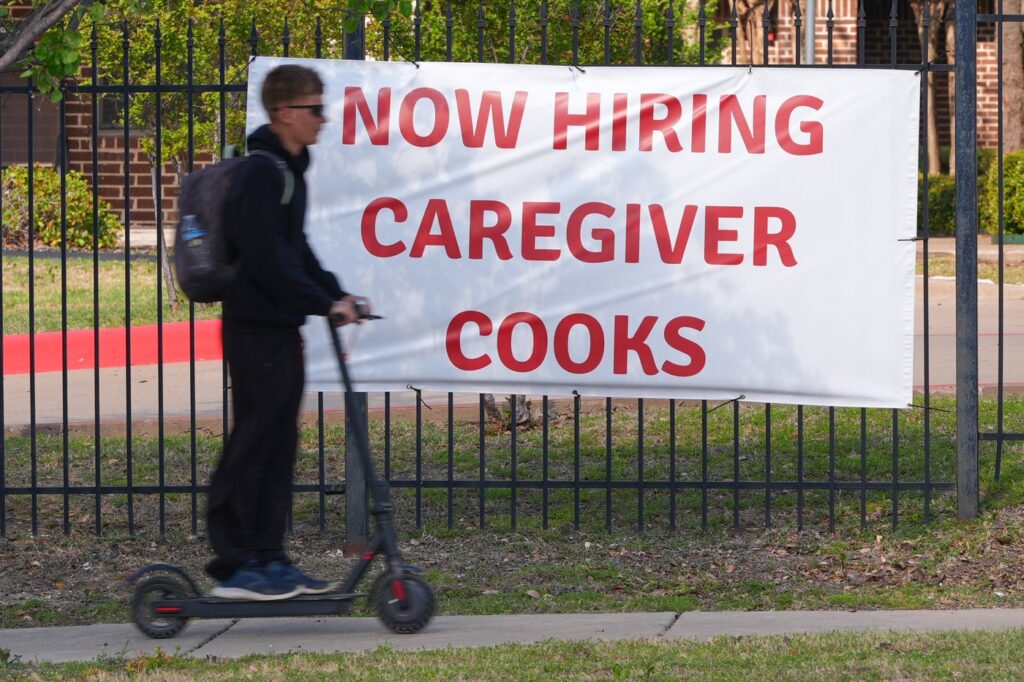
In a recent survey conducted by Gallup, Americans’ perspectives on the job market have shifted towards a pronounced pessimism, a surprising reversal given the historically low unemployment rates. Only 28% of workers believe it is a “good time” to secure quality employment, while a significant 72% view the current market unfavorably. This is a stark contrast to mid-2022 figures, where 70% of respondents felt positively about job opportunities.
As of late 2024, nearly half of workers still had a favorable view of the job market. However, the latest survey, executed during the final quarter of 2025, reflects the growing concerns during a time of economic turmoil, such as the Iran war, which has resulted in soaring oil prices and is expected to dampen the economy as consumers allocate more funds toward fuel instead of other expenditures.
This pessimistic outlook aligns with other surveys indicating a generally bleak perception of the economy, despite indicators suggesting growth and low job losses. College graduates, in particular, are exhibiting increased gloominess about the job market. The hiring landscape in many white-collar positions has remained stagnant over the past two years, specifically in sectors such as software, customer service, and advertising. According to the Gallup findings, only 19% of college-educated workers regard this as a propitious time to find quality jobs, in contrast to 35% of workers without a college degree who maintain optimism.
A separate Gallup survey highlights that college graduates' optimism regarding job prospects has reached its lowest level since 2013. Moreover, the disparity in job market sentiment between those with and without a college degree is the widest since Gallup began tracking this question in 2001.
Among younger workers, discontent is notably pronounced. Only about 20% of workers aged 18-34 believe this is an optimal time to secure employment, while roughly 40% of individuals aged 65 and older express a similar sentiment. The survey aligns with economic analysts’ observations of a “low-hire, low-fire” job market, where businesses are retaining existing workers, and layoffs remain at low levels. Consequently, older employees enjoy job security, whereas sluggish hiring rates hinder younger job seekers from entering the workforce effectively.
Younger generations also report a higher tendency towards actively seeking new positions compared to their older counterparts. A majority of Gen Z and Millennial workers are at least monitoring new opportunities; in stark contrast, approximately three-quarters of baby boomers are not currently looking for work.
Concurrently, government data illustrates that overall hiring has reached its weakest level in over a decade. The Labor Department's “hiring rate,” a measure of the percentage of employed individuals who are hired each month, plummeted to 3.2% last November, matching levels that hadn't been observed since March 2013. During that time, the unemployment rate stood at 7.5%, following the 2008-2009 Great Recession, highlighting the current labor market’s challenges despite low unemployment levels.
Furthermore, current statistics reveal that there are 7.4 million unemployed individuals compared to only 6.9 million job vacancies, a significant reversal from the post-pandemic period when job openings exceeded the number of job seekers. Gallup's survey also shows that workers’ outlook on their lives and future prospects is bleaker than at any point since 2009, underscoring the prevailing feelings of discontent among the workforce.
Echoing this sentiment, the Conference Board's consumer confidence survey reported a reading of 91.2 in February, hovering close to pandemic-era lows, a substantial decline from nearly 130 prior to the pandemic. While more respondents perceive jobs as “easy to get” compared to those deeming them “hard to find,” this gap has consistently narrowed over the years, indicating a more challenging job market overall.








