

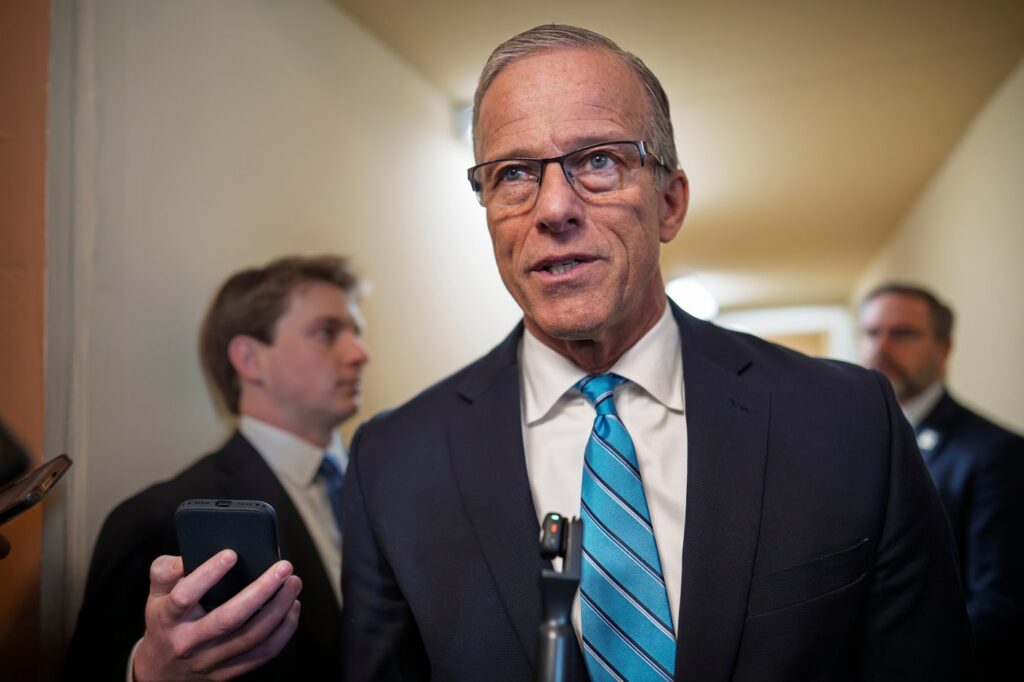
Senators in Washington are negotiating a proposal aimed at resolving the ongoing budget stalemate affecting the Department of Homeland Security (DHS). The proposal seeks to fund key components of the DHS, including the Transportation Security Administration (TSA), which has seen airport workers go without pay amid the partial government shutdown. However, it excludes funding for the Immigration and Customs Enforcement (ICE) enforcement and removal operations, which has been a significant point of contention in these negotiations.
The negotiations gained traction after a group of Republican senators met with President Donald Trump at the White House. Following the meeting, Senators expressed optimism about the discussions, indicating that they expected to finalize proposals overnight for both parties to consider during their weekly caucus lunches.
Senate Majority Leader John Thune of South Dakota remarked on the positive nature of the talks, suggesting they were progressing in the right direction. Meanwhile, Senate Democratic Leader Chuck Schumer acknowledged that both parties were engaging seriously in the discussions. This shift comes after a monthlong standoff, which has led to long airport lines due to TSA understaffing, particularly during the busy spring travel season. Democrats are resistant to funding the DHS without imposing restrictions on Trump’s immigration enforcement activities, especially following recent incidents of violence related to ICE protests in Minneapolis.
In a move that drew significant concern from lawmakers, Trump ordered ICE officers to assist with airport security over the weekend, which could potentially heighten tensions. The tentative deal under consideration would largely fund the DHS while excluding ICE's enforcement and removal operations—central to Trump’s deportation strategy. The proposal also intends to allocate funding for ICE's Homeland Security Investigations and Customs and Border Protection but includes new measures to ensure that their officers are utilized in traditional roles, rather than as active participants in immigration enforcement in urban areas.
Democrats have also suggested several changes to immigration operations, such as mandating the use of body cameras and proper identification for officers. There is an understanding among senators that since many operations within ICE are already funded through legislation from Trump's prior tax cuts, any new constraints must also apply to operations that rely on this funding source. Republican Senator Katie Britt from Alabama, one of the chief negotiators, indicated a willingness to work through the night in hopes of finalizing the proposal.
Senator Chris Coons, a Democrat from Delaware, mentioned a sense of urgency in the discussions, outlining three potential paths forward: no funding for ICE, full funding for ICE with restrictions, or a compromise that involves funding most of the DHS while excluding ICE’s enforcement operations. This middle ground appears to be the focus of the ongoing negotiations. Senator Angus King, an Independent from Maine, emphasized the importance of having a written proposal to understand the specifics better.
Additionally, senators confirmed Markwayne Mullin as the new Homeland Security secretary. Mullin succeeds Kristi Noem, who faced public backlash over the department's immigration enforcement tactics that triggered the funding dispute. During his confirmation hearing, Mullin acknowledged the significance of obtaining judicial approval for warrants used by immigration officers, a key demand from Democrats.
Senator Peter Welch, a Democrat from Vermont, highlighted the progress made towards addressing these issues, noting the significance of Noem’s departure. Republican Senator John Hoeven from South Dakota expressed hope that a resolution could be achieved, remarking on the varied factors influencing the ongoing discussions.








