

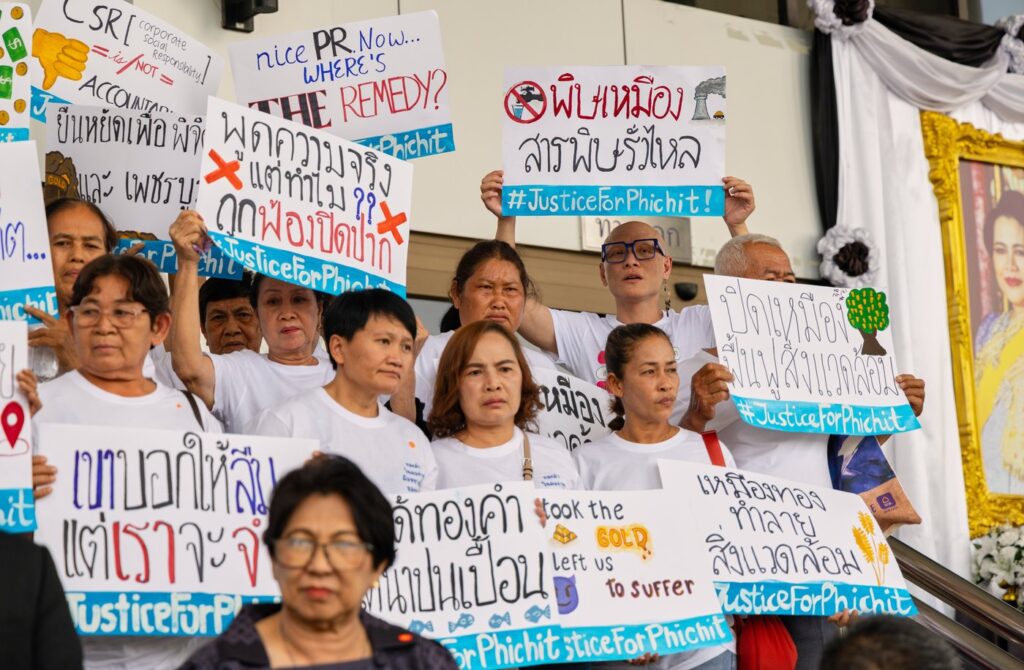
A Thai court on March 24, 2026, ruled that the operator of the Chatree Gold Mine, an Australian-owned facility in Phichit province, is responsible for environmental damage and adverse health effects experienced by nearby residents. This landmark verdict marks the first environmental class action lawsuit in Thailand, following a legal amendment in 2015 that enabled such cases. The lawsuit, initiated in 2016, involved hundreds of villagers who accused Akara Resources, the mine's operator, of causing toxic contamination due to its mining activities.
The Bangkok Civil Court found the company liable and mandated compensation for the affected villagers. The compensation amounts ordered ranged from 50,000 to 200,000 baht (approximately $1,535 to $6,143) for each affected individual, in addition to payments for medical care and emotional distress. The verdict is seen as potentially setting a precedent for climate litigation within Thailand and may influence similar cases across Southeast Asia, where "polluter pays" lawsuits are increasingly common.
Emilie Palamy Pradichit from the Manushya Foundation, which supported the villagers throughout the legal process, highlighted that this decision could significantly influence public perception of the judicial system as either a viable route for justice or an ineffective pathway in environmental disputes. Legal analysts believe that the ruling could not only impact future environmental cases in Thailand but also serve as a reference point for other jurisdictions facing similar issues, particularly in Southeast Asia.
In her comments outside the courtroom, plaintiff Thanyalak Boontham expressed a sense of hope for future generations, despite acknowledging that the compensation awarded did not meet all expectations. She emphasized the need for a cleaner environment for the children to grow up in. Cherdsak Utha-aroon, the general manager for sustainability at Akara Resources, stated that the company respects the court's ruling but refrained from elaborating on further legal actions.
The development comes as climate and environmental litigation is on the rise in Asia. Georgina Lloyd, an expert in environmental law, indicated that the number of cases is growing both in terms of volume and geographical reach, reflecting a global trend towards increased accountability for environmental harm. According to the Grantham Research Institute, around 225 climate litigation cases were filed in 2024 alone, pointing to a burgeoning movement for climate justice in the region.
Apart from the Chatree case, two other significant "polluter pays" lawsuits emerge in Southeast Asia. One case involves survivors of Typhoon Odette in the Philippines suing Shell in the UK for the company's contributions to climate change that intensified the storm. Another case in Switzerland allows Indonesian fisherfolk to sue Holcim, a cement company, over emissions purportedly linked to flooding and rising sea levels threatening their livelihoods.
Experts like Jameela Joy Reyes emphasize that the verdict in Thailand serves as an essential call to action regarding climate justice discussions, affirming that the recognition of liability by the court is a significant achievement, which could resonate across jurisdictions and serve as a warning for other corporations engaged in environmentally detrimental practices.








