

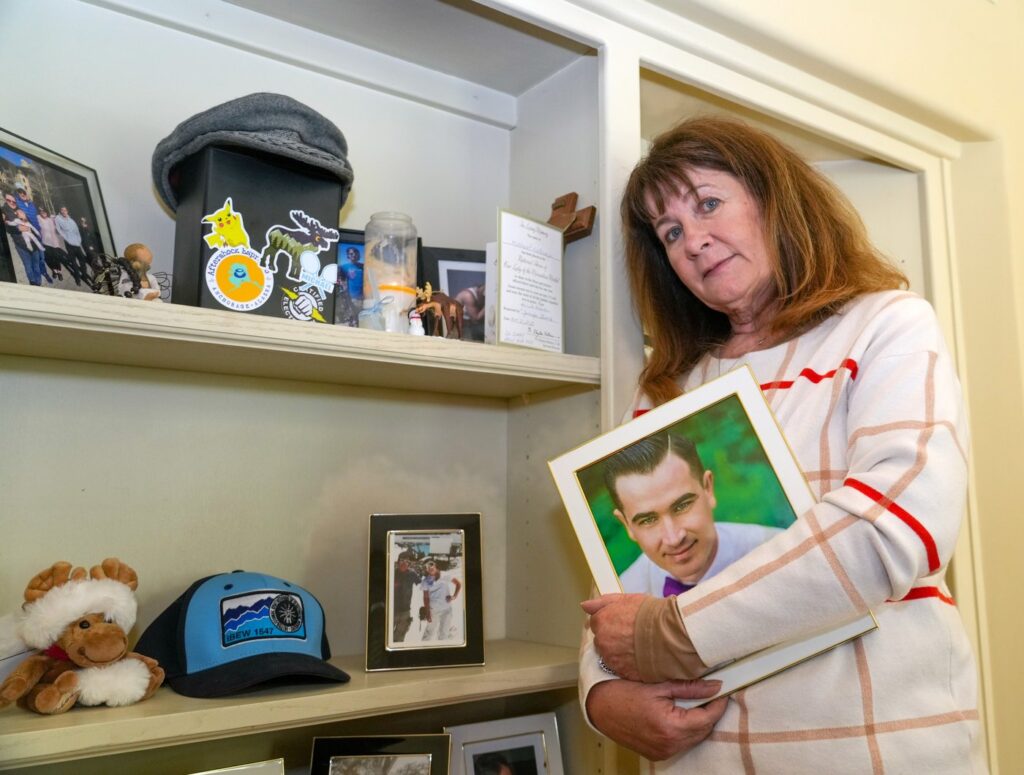
Nearly two decades after his battle with drug addiction in his teenage years, Michael Nalewaja, a 36-year-old electrician, had found solace in a quiet life in Alaska. His world was abruptly shattered just days before Thanksgiving 2025, when he and a friend inadvertently consumed a fatal mixture of fentanyl and carfentanil, believing it to be cocaine. "I heard the word 'autopsy' and I literally just collapsed to the floor," said Kelley Nalewaja, Michael's mother, recalling the devastating phone call from his wife. Despite the potential use of Narcan or a 911 call, authorities suggested that Michael would not have survived the encounter.
Carfentanil, a potent synthetic opioid nearly 10,000 times stronger than morphine and 100 times stronger than fentanyl, has seen a disturbing resurgence in the U.S., leading to numerous unintentional overdoses and fatalities among users. This increase follows stricter regulations by the Chinese government on precursor chemicals used for fentanyl production. Consequently, traffickers in Mexico are reportedly turning to carfentanil to enhance the effects of fentanyl, creating a dangerous situation for users who are drawn to opioids on the street.
Frank Tarentino, the DEA's chief of operations for the northeast region, highlighted the alarming danger associated with carfentanil, stating that even a tiny amount, much less than a grain of salt, could be deadly. This contributes to a particularly frightening environment for individuals struggling with substance dependency. After a peak in carfentanil-related overdoses a decade ago, statistics from the DEA show an immense increase in seizures, with carfentanil identified 1,400 times in U.S. drug seizures in 2025. In contrast, it was only detected 145 times in 2023 and just 54 times in 2022.
Authorities suspect that drug traffickers in Mexico might be attempting to synthesize carfentanil while others may be exploiting loopholes to procure it from Chinese suppliers. The manufacturing process is notoriously dangerous, and only a minuscule quantity is required to produce lethal effects. The situation has been complicated by recent trends indicating a drop in overall fentanyl seizures and overdose deaths, attributed to the increased availability of naloxone and enhanced addiction treatment across the United States.
Yet, experts warn that traditional overdose-reversal methods using naloxone may not be sufficient against carfentanil, given its extreme potency. Fentanyl seizures have also decreased significantly. In 2025, Customs and Border Protection reported around 12,000 pounds of fentanyl seized, which is less than half of the 2023 figures. Despite these trends, the DEA remains focused on combating fentanyl trafficking, proposing a budget with a substantial increase aimed directly at cartel activities.
Carfentanil, initially researched for use as a chemical weapon and employed by Russian forces in past conflicts, commands a notably low annual quota of only 20 grams for legitimate use, specifically in veterinary medicine, underscoring its dangerous nature. In 2024 alone, the CDC noted nearly tripling overdose deaths related to carfentanil, reporting 413 fatalities across 42 states and Washington, D.C. Experts stress the urgent need for targeted law enforcement efforts to address the growing threat of this deadly substance.
As Michael Nalewaja's mother, Kelley, mourns her son, who once achieved recognition in his profession, she has taken proactive steps to prevent similar tragedies. Instead of hosting a large funeral, she organized a town hall in El Dorado Hills, California, engaging local officials and other grieving families to advocate for changes that could mitigate the risks associated with drugs like carfentanil. "It's not an OD; it's not an overdose," Kelley emphasizes, "It’s a murder weapon."








