

MONTREAL – A white supremacist rally took place on Saturday in Shawinigan, located in Quebec's Mauricie region, prompting strong reactions from political leaders across the province. The demonstration featured masked individuals who displayed a banner with the slogan "I remember a white Quebec," a phrase that has raised concerns regarding the propagation of racist ideologies.
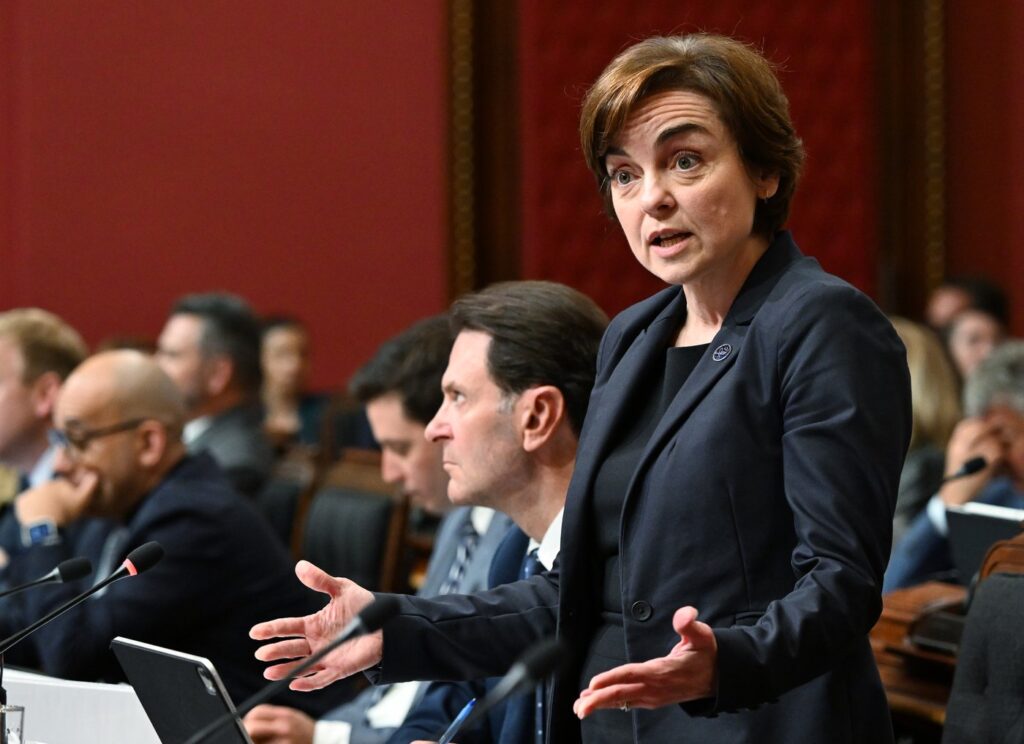
Quebec Premier Christine Fréchette was quick to condemn the rally, stating that such racist messages have no place in Quebec society. She emphasized the importance of maintaining an inclusive environment that rejects hate and extremism in all its forms. Fréchette's remarks highlight the provincial government’s commitment to fostering a culture of acceptance and diversity within Quebec.
In addition to the Premier, leader of the Parti Québécois, Paul St-Pierre Plamondon, also spoke out against the rally. He connected the event to a broader trend where hate groups leverage sports as a means to normalize extremist views and behaviors. This assertion underscores the concern that such gatherings may not only reflect the views of a small minority but could also find resonance in more mainstream activities, creating a dangerous interplay between sports and radical ideologies.
Charles Milliard, the leader of the Liberal Party, joined both Fréchette and Plamondon in denouncing the rally. Milliard argued that the values displayed by the demonstrators do not represent the openness and inclusivity of the majority of Quebecers. His comments aimed to reinforce the idea that the actions of a few do not define the entire province, advocating for a unified front against such divisive messages.
Quebec provincial police reported that they became aware of the demonstration after receiving a picture that circulated widely in the media over the weekend. However, they have not provided any information on whether an official investigation into the rally has been initiated. This lack of immediate action from law enforcement has raised questions about how the authorities will handle similar events in the future and whether adequate measures will be put in place to prevent the escalation of hate-based gatherings.
The incident occurred on June 1, 2026, and has drawn attention to the ongoing issues of racism and extremism that permeate various aspects of society, including public demonstrations. As the provincial government and various political leaders continue to denounce such acts, the focus remains on how to effectively combat hate and ensure a safe and inclusive community for all Quebecers.
With the spotlight now on the interactions between extremist groups and public sentiment in Quebec, discussions regarding policy changes, community engagement, and educational efforts to counteract hate speech are likely to gain momentum. Political leaders and community advocates are calling for sustained vigilance against all forms of racism, seeking to protect the values of solidarity and acceptance that are fundamental to Quebec's identity.








