

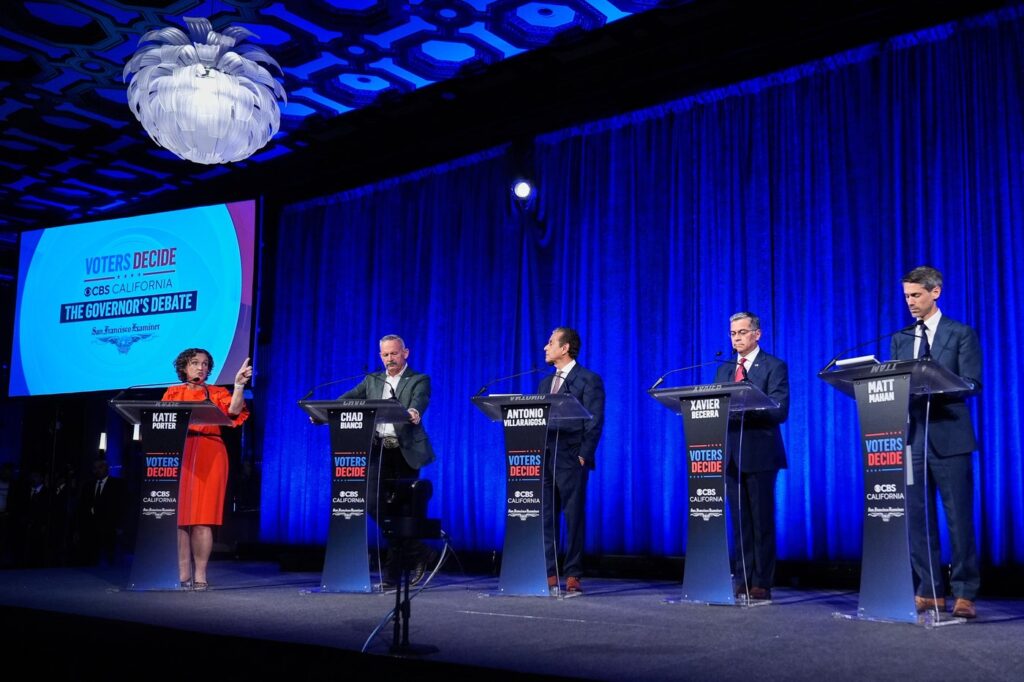
SACRAMENTO, Calif. (AP) — The California gubernatorial primary concludes on Tuesday, marking the end of a tumultuous race to replace termed-out Democratic Governor Gavin Newsom. The contest, which began in early May, has witnessed a crowded field of approximately 60 candidates, creating a chaotic environment without a definitive front-runner. Candidates have been scrambling in the final days to present themselves as the best choice to lead the most populous state in the U.S. and one of the largest economies globally.
In California's unique electoral system, all candidates appear on a single primary ballot irrespective of their party affiliation, with the top two finishers advancing to the general election in November. This system has raised concerns among Democrats, who make up about 45% of the state's registered voters compared to the 25% who identify as Republicans. Democratically aligned candidates feared that the crowded field might split their vote, potentially allowing two Republicans to secure spots in the general election. However, as the race progressed, a few candidates, particularly Democrats, emerged as prominent contenders.
Key Democratic candidates include Xavier Becerra, the former state attorney general and current U.S. health secretary; billionaire climate activist Tom Steyer; Katie Porter, a former member of Congress; and San Jose Mayor Matt Mahan. On the Republican side, the most notable candidates are conservative commentator Steve Hilton and Riverside County Sheriff Chad Bianco. Throughout the campaign, Democrats focused their efforts on defending California's liberal policies against perceived attacks from the Trump administration, while Republican candidates pushed for change after over 15 years of Democratic governance in Sacramento.
A central theme in the campaign has been addressing California's high cost of living. As of late May, drivers were facing gas prices averaging $6.08 per gallon, significantly higher than the national average. The state's housing market is also challenging, with the typical home priced at around $775,000, more than double the national average. Moreover, California has the second-highest residential electricity rates in the U.S., behind Hawaii. Candidates offered various proposals to alleviate these burdens, with some Democrats suggesting the suspension of state gas taxes and others advocating for a government-run health insurance system, while Republicans emphasized increasing oil and gas production and reducing regulatory burdens.
The primary race has also been marked by significant developments. Democratic Rep. Eric Swalwell’s resignation due to sexual assault allegations opened the door for Becerra to gain traction, leading to increased fundraising and endorsements from influential labor groups and Latino leaders. However, his newfound momentum also made him a target of criticism regarding his handling of health-related issues while serving as health secretary, including the management of migrant children shelters during a crisis in 2021, which received scrutiny for poor living conditions.
Tom Steyer, who has committed over $203 million to his campaign through various ad formats, has faced backlash concerning his past business investments in fossil fuels and private prisons. Becerra, in an attempt to differentiate himself, emphasized the legitimacy of his campaign, arguing that the election would reflect those who have earned their place as opposed to those trying to buy it. On the Republican side, Hilton, who received Donald Trump's endorsement, attempted to consolidate support but faced challenges in unifying the party vote behind him and Bianco.
An additional complicating factor is California's mail-in voting system, wherein all voters receive a ballot-by-mail, and ballots postmarked by election day can be counted up to a week afterward. This often leads to prolonged wait times for final results, with outcomes not being declared until days or even weeks later. The current gubernatorial primary marks the first time in over two decades that a political superstar has not been a part of the race, following notable figures such as Arnold Schwarzenegger in 2003 and Jerry Brown in 2010.








