

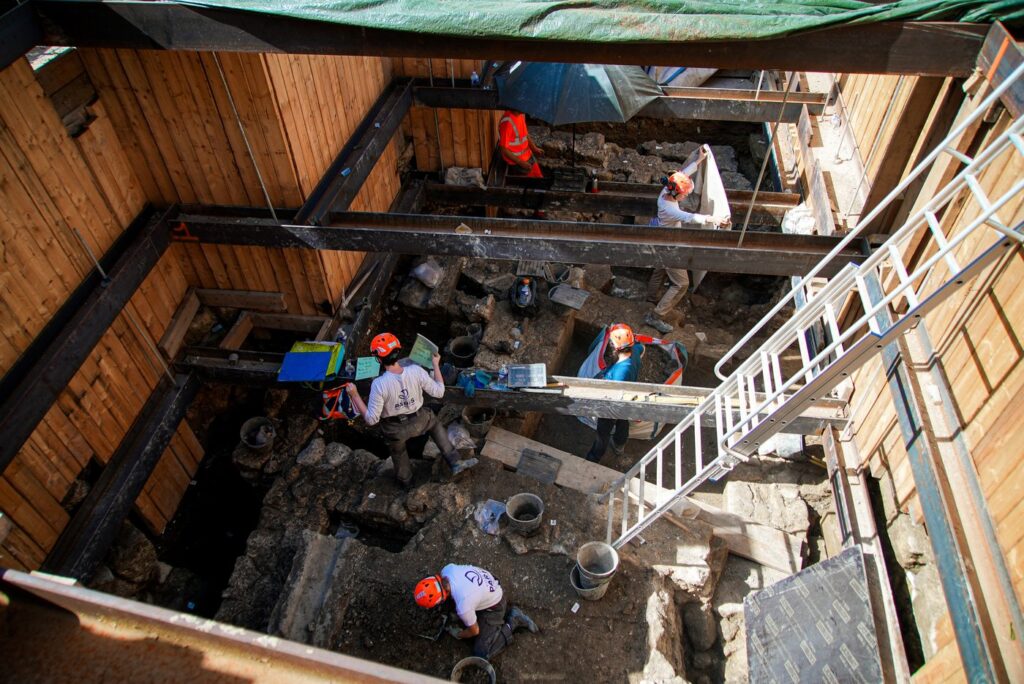
PARIS (AP) - As tourists stand under the sweltering summer sun, waiting to climb Notre Dame Cathedral and see its iconic gargoyles, a team of archaeologists is busy 4 meters (13 feet) below ground, digging into the rich history of Roman Paris from 2,000 years ago. Following a devastating fire in 2019 that caused the cathedral's spire to collapse, Notre Dame was rebuilt and is expected to reopen in late 2024. Now, plans are underway to enhance the square in front of the cathedral with trees and shade, necessitating excavation to protect the archaeological layers beneath.
This endeavor has transformed part of Notre Dame's forecourt into an excavation site, which has been labeled as the "dig of the century" by French media. Lucie Altenburg, a conservator from the Paris archaeology unit, described the project as a significant opportunity to contribute to the understanding of Paris’s history. Among the discoveries so far are a 4th-century coin depicting Emperor Constantine and fragments of medieval pottery adorned with undeciphered markings that intrigue experts.
The first signs of history emerge just 50 centimeters (20 inches) down, but the excavation team continues to recover items from deeper layers, sometimes filling 15 crates a day with artifacts from soil that has been undisturbed for decades. This situation is common in ancient cities where the past is inevitably beneath the streets. For example, in Rome, the ground level has risen nearly 9 meters (30 feet) since the fall of the Roman Empire in the 5th century AD.
Similar to the extensive archaeological work done in Athens for the 2004 Olympics, Paris, specifically the Ile de la Cité where the city originated, is no different in its rich archaeological landscape that has witnessed centuries of urban development. The area around Notre Dame was once densely packed with medieval houses and a single street, as noted by Camille Colonna, the archaeologist leading the dig.
The team has uncovered layers representing various historical periods—from Merovingian and Carolingian grain pits of the 6th to 10th centuries to a densely populated Roman quarter from the 4th and 5th centuries. Archaeology student Yasmine Benali remarked on how the excavation makes Paris feel less like a static postcard and more like a dynamic entity still revealing its long-lost secrets.
The most compelling artifacts have originated from ancient latrines, which served as trash dumps for discarded items. The archaeologists have retrieved entire jugs and cups, miraculously preserved despite being cast aside centuries prior. Valentine Breloux, an archaeologist, noted that it is unusual to find such intact ceramics, with the soft waste having cushioned these objects over centuries. Furthermore, the excavation team has come across pottery with unique reddish markings inside, the meanings of which remain a mystery.
Among the finds are coins that can help in dating the various layers of soil. Initially appearing as blackened discs covered in rust, the coins reveal the visages of Roman emperors, including Constantine, who ruled in the early 300s AD. Altenburg emphasized the value of such artifacts in determining the chronology of the layers excavated. Roman artifacts are the most prized, as they provide insight into the less understood period of Paris, known as Lutetia during Roman times.
Each newly unearthed item is transported to the city's archaeology center, described by Colonna as a “huge archaeological store,” filled with treasures of Paris’s past. The team is uniquely privileged to conduct this excavation, which only occurs when construction projects are initiated. Altenburg remarked that this significant work emerged from Paris’s desire to beautify its surroundings.
The redesigned square is set to be completed by 2028, featuring a woodland area with 160 new trees and a thin water film designed to mitigate heat during summers—an adaptation to increasing temperatures driven by climate change. Tourists currently waiting in the sun will soon enjoy their visits under the cooling shade.
In the coming months, the archaeological team aims to delve even deeper, potentially uncovering remnants from the Gauls, the original inhabitants who first named the city. Altenburg expressed hope that they can push the limits of history further back than ever before.








