

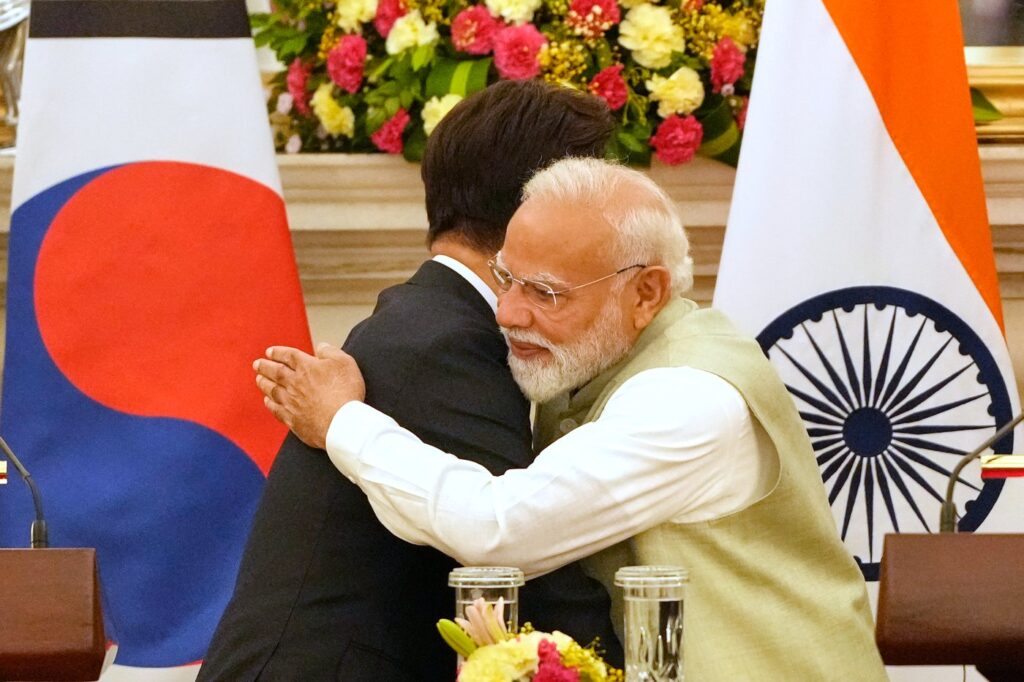
NEW DELHI (AP) – On Monday, South Korean President Lee Jae Myung engaged in discussions with Indian Prime Minister Narendra Modi in New Delhi, where both leaders committed to enhancing their bilateral trade relations significantly. The objective is to nearly double current trade figures from approximately $27 billion to $50 billion by the year 2030. This ambitious goal aims to be achieved through the strengthening of supply chains, improving market access, and fostering increased investment between the two nations.
During the meeting, Modi emphasized that India and South Korea are poised to evolve their established partnership into a futuristic collaboration. This strategic alignment is particularly crucial as both countries seek to solidify their ties in light of ongoing global economic instability and supply chain disruptions resulting from tensions arising from the Iran war.
President Lee articulated that both nations have reached an agreement to significantly enhance their economic cooperation. Key sectors identified for growth include shipbuilding, defense, and artificial intelligence. He also noted that collaborative industrial efforts will be expanded, with a focus on advanced manufacturing and critical areas such as nuclear energy and critical minerals.
In a strategic move to bolster supply chains further, Lee indicated that South Korea plans to increase its import of naphtha, a derivative of crude oil, from India. This decision is aimed at mitigating potential supply disruptions associated with ongoing geopolitical tensions in the Middle East. Notably, India represented about 8% of South Korea’s naphtha imports in the previous year, marking a significant trading relationship in this sector.
The discussions between Modi and Lee are part of a broader initiative to enhance trade and economic relations amid a continuously evolving global landscape. As both leaders navigate the complexities of international trade, their commitment to expanding cooperation in high-tech and basic industries reflects a mutual understanding of the need for resilient supply chains.
Following his visit to India, President Lee is scheduled to travel to Vietnam, indicating a strategic tour of Southeast Asia to nurture further international relations and partnerships.








