

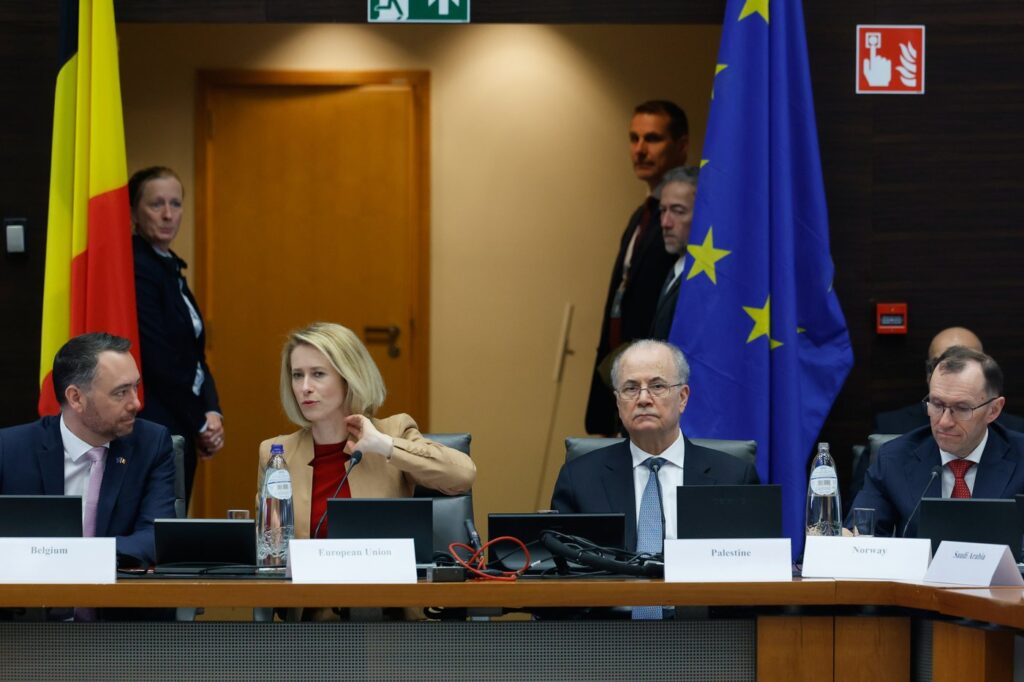
BRUSSELS (AP) — In a significant diplomatic gathering, more than 60 nations are sending representatives to Brussels to engage in discussions with Palestinian Prime Minister Mohamed Mustafa regarding stability, security, and long-term peace in Israel, the West Bank, and Gaza. This meeting is taking place amid heightened global focus on crises in Iran and Lebanon, which has somewhat overshadowed the ongoing Israeli-Palestinian conflict.
Belgian Foreign Minister Maxime Prévot emphasized the deteriorating situation, noting the ongoing attacks in the West Bank and the devastation in Gaza, which diminish the prospects for achieving a two-state solution. Prévot, who is co-hosting the meeting alongside the EU's chief diplomat Kaja Kallas, remarked, "We observe without naivety that the two-state solution is being made more difficult by the day." Despite these challenges, he affirmed that Belgium, alongside many European and Arab partners, continues to advocate for the two-state solution as the only realistic path to enduring peace for Israelis and Palestinians, which is also vital for the stability of the entire region.
The European Union (EU), consisting of 27 member countries, stands as the largest single donor to the Palestinian Authority. With its long-serving president Mahmoud Abbas, who has ruled from Ramallah for over two decades, the EU has preferred multilateral engagement through the United Nations rather than joining the U.S.-initiated Board of Peace, aiming to remain relevant in diplomacy related to the volatile Mediterranean region.
Recent outrage in Europe over the humanitarian crisis in Gaza has led many EU leaders to condemn Israel's military actions and to apply pressure on Prime Minister Benjamin Netanyahu's government. Following the recent removal of Viktor Orbán, a long-time ally of Netanyahu, there is speculation that there may now be sufficient political support within the EU for more decisive actions, such as targeted sanctions on Israeli settlers or even the suspension of certain ties with Israel.
Reports from Palestinians in the West Bank indicate that Israel is exploiting the cover of the ongoing conflict with Iran to tighten its control over the territory. As attacks by settlers surge, the Israeli military continues to impose additional wartime restrictions on movement, citing security concerns.
During the meeting, Prime Minister Mustafa addressed the attendees, stating that Gaza requires “one state, one government, one law and one goal.” He pointed out that a unified security structure under the legitimate authority should guide effective coordination among the International Stabilization Force, the Palestinian Authority, security institutions, and other international actors. Mustafa stressed the need for comprehensive security, asserting that "Security must not be fragmented." Furthermore, he advocated for the “gradual and responsible collection of arms from all armed groups” and called for a complete Israeli withdrawal from Gaza.
This meeting marks a significant moment in the ongoing dialogue concerning Israeli-Palestinian relations, highlighting the urgent need for renewed efforts toward achieving peace and stability in the region. The convergence of international representatives aims to restore focus and facilitate discussions that could influence future diplomatic strategies and resolutions pertinent to the longstanding conflict.








