

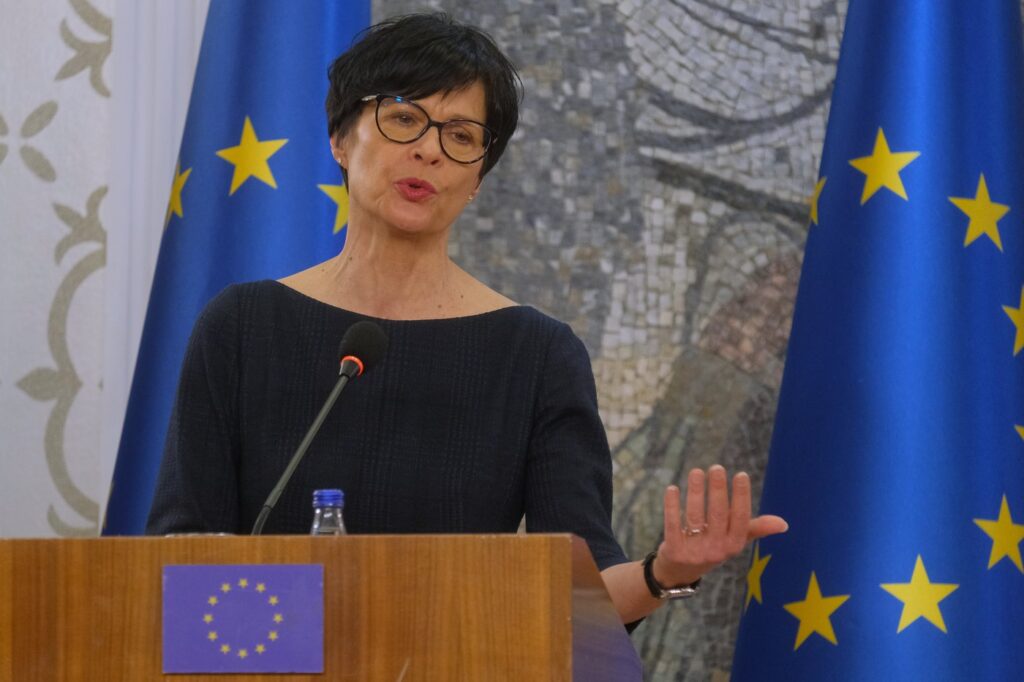
BRUSSELS (AP) — Serbia could potentially lose access to approximately 1.5 billion euros ($1.8 billion) in European Union funds if it fails to address issues related to democratic backsliding, as warned by EU Enlargement Commissioner Marta Kos on Monday. The EU has expressed significant concerns about the political climate in Serbia, particularly in light of recent local elections that were marred by violence and irregularities in ten municipalities.
Commissioner Kos conveyed her increasing worries during her address to EU lawmakers, highlighting that the European Commission is currently assessing whether Serbia continues to meet the necessary conditions to qualify for payments under the EU’s financial instruments. Among the main issues identified are laws perceived to undermine judicial independence, suppression of protests, and persistent interference with independent media.
Serbia qualifies for substantial EU funding aimed at promoting growth in candidate countries, contingent on the implementation of necessary reforms. So far, Belgrade has received 110 million euros ($130 million), yet approximately 1.5 billion euros remains uncertain, hinging on the country’s adherence to democratic standards.
Since Russia’s invasion of Ukraine in February 2022, the EU has amplified its efforts to integrate Western Balkan nations into the bloc, recognizing the potential for Russian destabilization in a region still healing from the impact of 1990s conflicts. Serbia, under the leadership of populist President Aleksandar Vucic, has expressed ambitions to join the EU; however, Vucic has cultivated close relations with Russia, notably attending Russia's Victory Day parade alongside President Vladimir Putin despite EU admonitions.
Recently, experts from the Venice Commission, Europe’s primary democracy and constitutional affairs body, visited Serbia to engage with political leaders and legal officials to address concerns raised by the president of Serbia’s parliament. The commission is expected to issue an “urgent opinion” based on its findings in the upcoming weeks. Commissioner Kos emphasized that Brussels expects Serbia to fully align its judicial frameworks with the Venice Commission’s recommendations and work towards restoring the independence of its media.
“Serbia has to deliver,” Kos asserted, indicating the critical nature of upcoming reforms and adjustments. The EU’s strong stance on this matter underscores the importance of democratic integrity and adherence to rule of law as prerequisites for financial support and eventual EU accession.








