

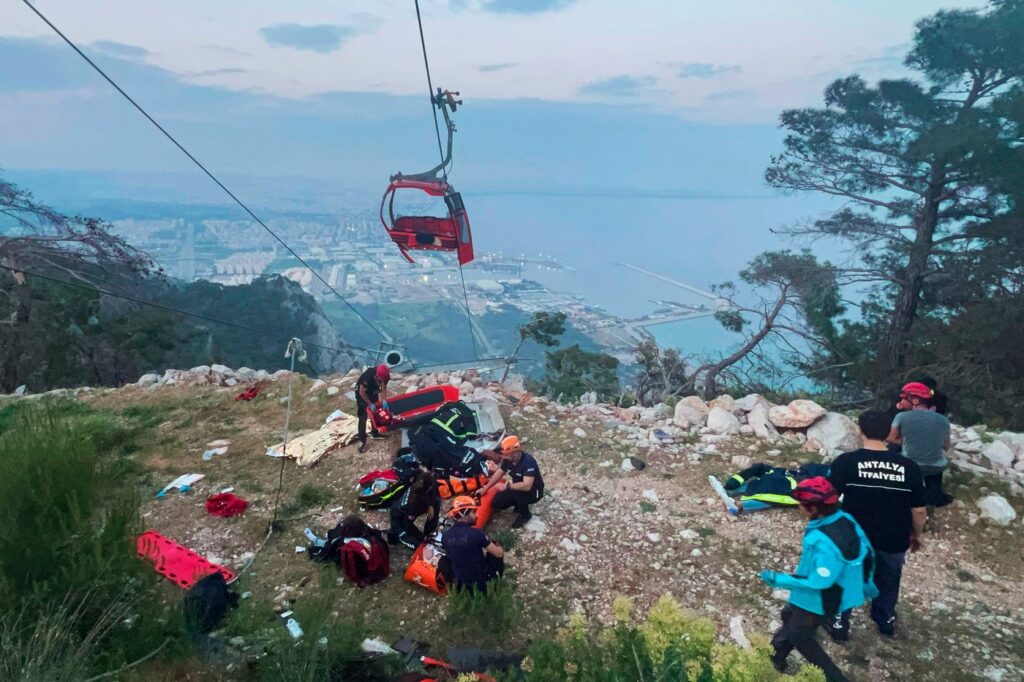
ISTANBUL (AP) -- A court in southern Turkey sentenced eight individuals to prison for their involvement in a tragic cable car accident that occurred in Antalya in 2024. The incident resulted in the death of one passenger and left seven others injured, highlighting serious safety concerns in the management of tourist attractions.
According to reports from the state-run Anadolu news agency, four of the defendants were found guilty of causing death and injury through negligence. Each received a sentence of 7 1/2 years in prison. The other four defendants, also charged with the same offense, received sentences ranging from three years and four months to five years. This verdict underscores the legal consequences tied to negligent actions in the context of public safety.
The accident took place on April 12, 2024, during a busy holiday period coinciding with Eid al-Fitr, which marks the conclusion of Ramadan, the Muslim holy month. On that day, one of the gondolas on the cable car system collided with a pole, causing it to burst open and send its passengers plummeting to the rocks below. In the aftermath of the accident, the cable car system automatically shut down, leaving 174 individuals stranded in their gondolas high above the ground. Some of these passengers were trapped for nearly 23 hours before rescue teams could reach them.
The cable car service, which transports tourists from Konyaalti Beach to a restaurant and viewing platform located at the summit of the 618-meter (2,010-foot) Tunektepe peak, serves as a significant attraction in the area. The incident raised alarming questions about the safety protocols and operational standards of such tourist facilities, particularly during peak holiday times when visitor numbers are high.
Among the defendants in the case were employees of ANET, a subsidiary of Antalya Metropolitan Municipality, which operates the cable car system in this picturesque Mediterranean city. The court proceedings have drawn attention to the responsibilities of municipal enterprises in ensuring the safety of both residents and tourists, especially in activities characterized by inherent risks.
The case of the Antalya cable car accident is not only a judicial matter but also a reflection of broader issues surrounding tourism safety and regulatory compliance in Turkey. As the local economy heavily relies on tourism, the outcomes of such incidents can significantly impact public perception and visitor confidence in local attractions. The sentences handed down by the court serve as a reminder of the critical importance of maintaining high safety standards in operations that engage large numbers of people.
In conclusion, the Antalya cable car accident remains a pivotal event, emphasizing the dire consequences of negligence in public safety. The legal repercussions faced by those found guilty could also lead to broader discussions about the need for more stringent safety regulations and better training for personnel involved in high-risk services for tourists, aiming to prevent similar tragedies in the future.








