

The political landscape in the United States is rapidly evolving, especially with an increasing focus on the redistricting process as the nation gears up for the November elections. This week, significant developments emerged from several Southern states, including a landmark ruling in Virginia and repercussions from a recent U.S. Supreme Court decision.
Virginia Court Overturns Redistricting Plan
In a pivotal 4-3 ruling on Friday, the Virginia Supreme Court invalidated a congressional redistricting initiative that had been approved by voters in April. The original map was designed to favor the Democratic Party, potentially allowing them to secure 10 out of the state’s 11 congressional seats, an increase from their current six seats.
The ruling was primarily based on procedural grounds, citing that lawmakers failed to adhere to constitutional requirements in the amendment process that allowed the new maps to be sent to voters. Specifically, the initial approval in October took place after early voting had commenced for the general election, rendering the amendment invalid. Consequently, the previous congressional districts will remain in effect for the upcoming elections.
Impact of U.S. Supreme Court Ruling on Southern States
The repercussions of a U.S. Supreme Court decision from April 29 have also influenced redistricting initiatives across several Republican-controlled Southern states. This decision invalidated a Louisiana congressional district that had been drawn to maintain a Black majority, raising concerns regarding compliance with the Voting Rights Act, which aims to secure electoral representation for minority populations.
In response to the ruling, Louisiana promptly suspended its congressional primaries scheduled for May 16 to facilitate the creation of new district maps. Voting rights advocates voiced strong opposition at the statehouse against proposals that could potentially reduce the number of Black majority districts from two to one. Similarly, Alabama enacted legislation on Friday that would negate the outcomes of its May 19 congressional primaries in favor of a new election, contingent upon a federal court's acceptance of a revised map that could enhance Republican representation.
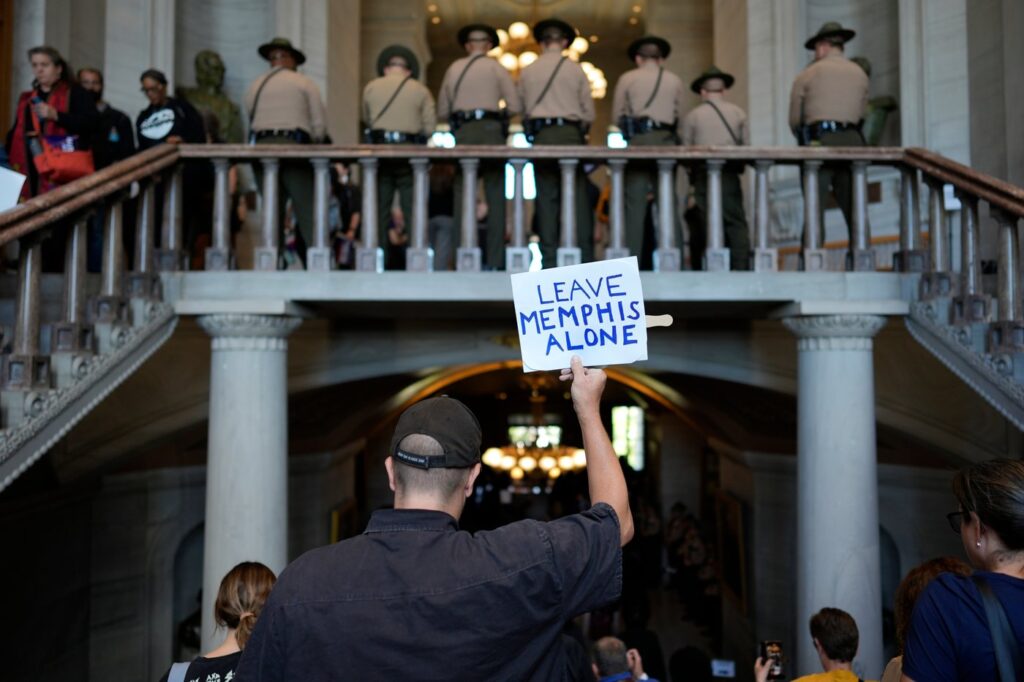
South Carolina's legislature convened on Friday to discuss a new congressional map that aims to secure all seven House seats for the GOP. However, there was apprehension that dismantling the one Democratic-held district could jeopardize other districts' Democratic competitiveness. Tennessee also took action, passing a law on Thursday that restructured a U.S. House district in Memphis, which is currently represented by a Democrat, towards a framework more favorable to the Republicans.
Shifting Political Power Dynamics
Typically, congressional districts undergo restructuring following the decennial U.S. Census. However, this cycle reflects a distinct approach prompted by partisan pressures. Former President Donald Trump has urged Texas officials to redraw districts with the objective of maintaining Republican dominance in Congress after the 2026 midterm elections. Following these directives, Texas has proposed a new mapping strategy that could yield up to five additional congressional seats for the Republicans.
In contrast, Democratic-controlled California is pursuing a redistricting plan aimed at gaining five new congressional seats, continuing the trend of aggressive redistricting across various states. The Supreme Court's recent ruling has further accelerated this pace, primarily in states where the Republican Party dominates congressional representation with limited potential for new Democratic gains.
As it stands, the mid-decade redistricting process has resulted in 14 congressional seats that Republicans believe they could potentially secure, contrasted with six seats that could favor Democrats, offering a prospective eight-seat advantage to the GOP prior to the midterm elections—a period traditionally unfavorable for the president's party.
The current House breakdown shows Republicans holding 217 seats, while Democrats occupy 212, alongside one independent member and five vacant seats. As ongoing changes and legal challenges unfold, the definitive outcomes remain uncertain.








