

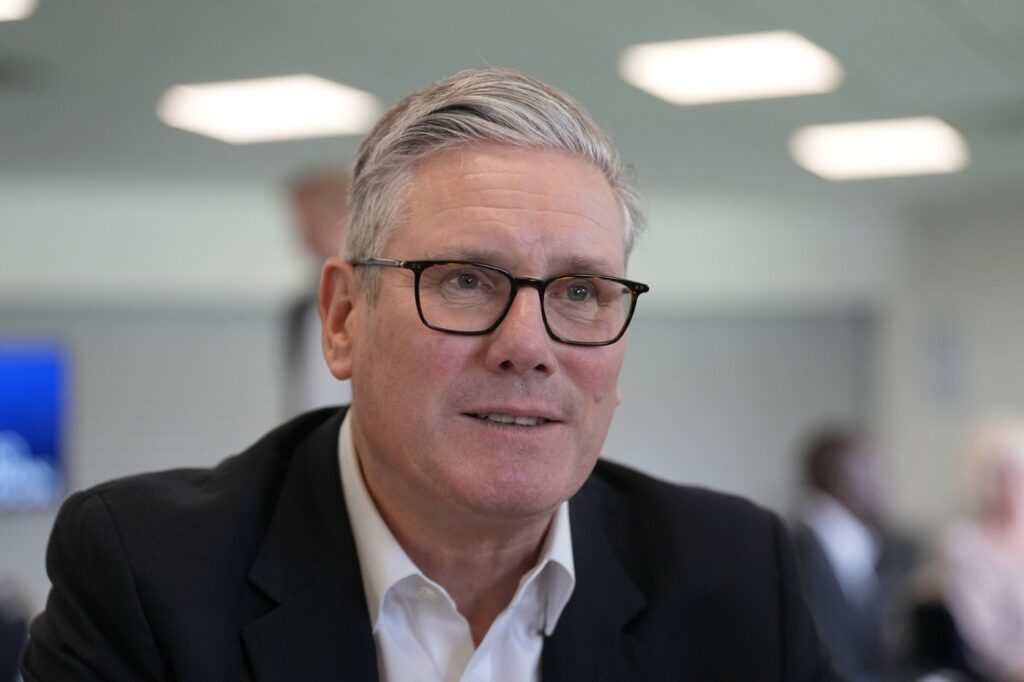
LONDON (AP) – British Prime Minister Keir Starmer is facing significant challenges to his leadership following disappointing local election results for the Labour Party. In the wake of these results, many lawmakers have urged him to resign, asserting that his position has become increasingly precarious. Starmer is scheduled to deliver a speech on Monday aimed at outlining a new direction for his government in an effort to regain momentum. However, some party members, including lawmaker Catherine West, have hinted at triggering a leadership contest if they find his plans unsatisfactory.
Former Deputy Prime Minister Angela Rayner has also expressed that the party "needs to change," though she has not directly called for Starmer's resignation. She emphasized that the Prime Minister must respond to the current political climate and articulate the changes the country requires. Starmer's government has been encountering challenges as Labour has lost ground in local elections across England, as well as in legislative votes in Scotland and Wales. Analysts widely viewed last week's elections as an unofficial referendum on Starmer's leadership.
Since taking power in a landslide victory less than two years ago, Starmer's popularity has significantly declined. His administration has struggled to fulfill promises related to economic growth, address the deteriorating state of public services, and manage the escalating cost of living. The government's reputation has also been hurt by several missteps and policy reversals, including controversial decisions such as the appointment of Peter Mandelson as Britain's ambassador to Washington—an individual associated with Jeffrey Epstein.
In the recent elections, Labour faced loss of support from both the right and left, with votes siphoned away by anti-immigration party Reform UK and the environmentally focused Green Party. This shift reflects a broader fragmentation within British politics, traditionally dominated by Labour and the Conservatives. Despite these challenges, Starmer has expressed his intention to remain in office for the next decade, relying on his upcoming speeches to reinvigorate his government's agenda.
One of the key policies Starmer plans to propose involves fostering closer ties with the European Union, from which the UK detached in 2020. Four years after the narrow victory of the "leave" side in the referendum, Starmer's government seeks to mitigate the trade restrictions that have adversely affected British businesses as a result of Brexit. He has highlighted the importance of securing a youth mobility deal to enable young people to live and work throughout Europe.
Starmer has ruled out the possibility of seeking to re-enter the EU or reinstating the EU's customs union and single market, which would significantly benefit UK businesses. Labour, which campaigned for EU membership during the 2016 referendum, has been cautious about reopening such discussions due to the divisions they caused in the country.
As pressure mounts, labour lawmakers are increasingly calling for Starmer to set a timetable for his departure. In the Labour Party, it is possible for leaders to be replaced midterm without necessitating new elections, which adds to the urgency of the situation. Josh Simons, previously a staunch supporter of Starmer, articulated in the Times of London that the Prime Minister needs to acknowledge that he has "lost the country" and should oversee an orderly transition to new leadership.
West's attempts to hasten the leadership contest indicate the rising urgency within the party for a change in direction. While she notes that she does not possess sufficient support to launch a formal leadership challenge, her comments have prompted other high-profile politicians to consider their positions. She stressed the importance of responding swiftly to the electorate's message, stating, "Working people sent us a message. We have to listen to that, and we have to change and we have to do it quickly."








