

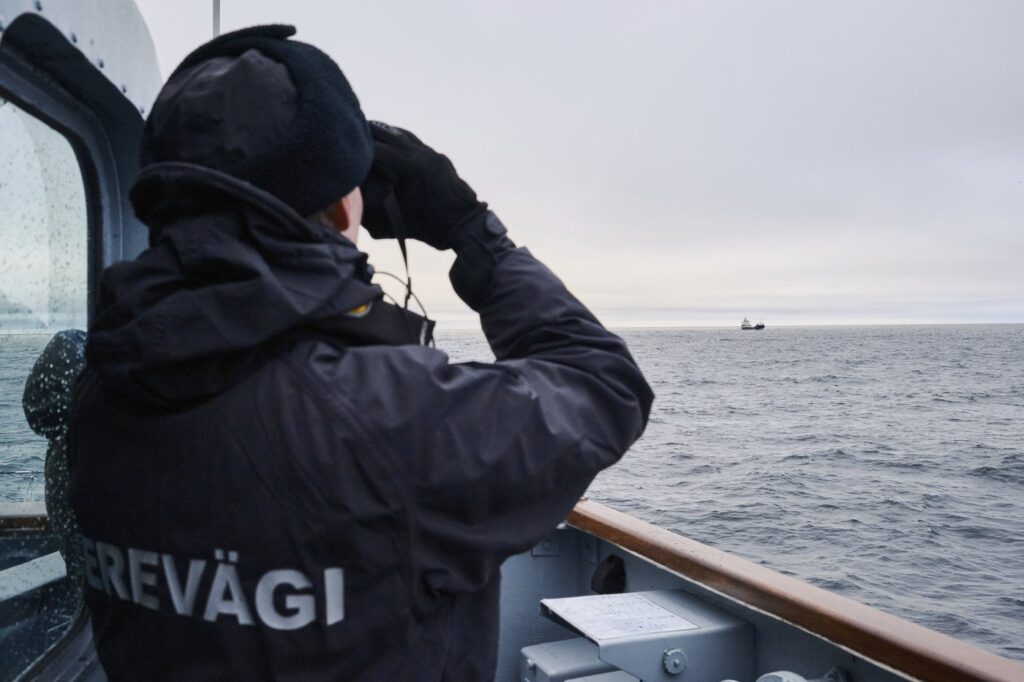
European officials have raised concerns that Russia's activities in the Baltic Sea may foreshadow similar tactics it could employ in Canada’s Arctic regions. A recent panel discussion in Ottawa, organized by the Polish embassy, focused on how countries such as Estonia, Poland, and Nordic nations like Sweden, Norway, Finland, and Denmark are addressing Russian threats that manifest across various domains: aerial, maritime, and cyber.
Polish Ambassador Witold Dzielski highlighted an incident from November, where an explosion on a rail line crucial for transporting military supplies to Ukraine is believed to be orchestrated by Russia. “Saboteurs are hired to conduct kinetic attacks,” Dzielski stated, emphasizing that Moscow frequently recruits disenfranchised youth through anonymous online channels for acts of sabotage, which include setting fires and planting bombs on railways.
Ambassador Dzielski also pointed out that Russia's assault on energy infrastructure is coupled with the usage of a “shadow fleet” of unregistered or deceptively registered ships, which aim to evade international sanctions on Russian oil. This fleet often interferes with undersea fibre optic cables and GPS signals, exacerbating the vulnerabilities of European security and digital industries dependent on these cables in the Baltic Sea. According to a report from the Polish Institute of International Affairs (PISM), these acts of sabotage are intended to undermine European stability.
Pawel Markiewicz, head of PISM in Washington, suggested that the region has become a battleground of active conflict between Russia and NATO without crossing into open aggression. He noted that this strategic area possesses the potential for high-intensity conflict with Russia.
The PISM report also underscored concerns regarding Canada, linking recent arrests in October 2024 of individuals allegedly involved in a plot to mail explosives to targets in Canada and the U.S. to Russia. Liberal MP Ahmed Hussen emphasized the need to adapt to the evolving nature of warfare, advocating for greater collaboration with international partners to strengthen resiliency against such threats.
Swedish Ambassador Signe Burgstaller echoed these sentiments, stating that there is a growing perception in the region of a connection between the threats faced in the Baltic and those encountered in the Arctic. “This is one strategic, operational domain,” she asserted, advocating for stronger defensive deterrence capabilities that would bolster both the eastern and northern flanks against Russian aggression.
Ambassador Burgstaller also remarked on Canada's military deployments in Latvia, which are crucial in deterring potential Russian incursions in the North. She noted that Russia is actively attempting to weaken NATO unity and that hybrid attacks on the Baltic region are a continual concern.
Recent incidents in Sweden, such as sabotage against telecommunications towers and aggressive cyberattacks, have prompted heightened vigilance in neighboring Nordic countries. Furthermore, Sweden has reinstated psychological defense measures previously abandoned at the end of the Cold War, equipping citizens and businesses with guidance on responding to potential armed invasions or disruptions in internet access.
The initiative, termed a “total defense system,” aims to enhance situational awareness among its populace, aiming to foster a resilient society capable of repelling threats. Hussen indicated that Canada could glean valuable lessons from Sweden's strategies for self-defense against Russia's bold tactics, advocating for deeper international cooperation and shared intelligence to counter emerging threats effectively.
Lastly, MP Hussen raised awareness about the potential ramifications of Russian cyberattacks on provincial health and education systems in Canada, highlighting the vulnerabilities that exist at subnational levels. He emphasized that many Canadians perceive Arctic threats as remote, a misconception that could be rectified through increased public awareness of the region's strategic importance.
In conclusion, the discussions in Ottawa reflect a growing recognition among European and Canadian officials regarding the potential for Russian tactics to escalate beyond the Baltic to the Arctic, necessitating a concerted effort in defense strategy and resilience building.








