

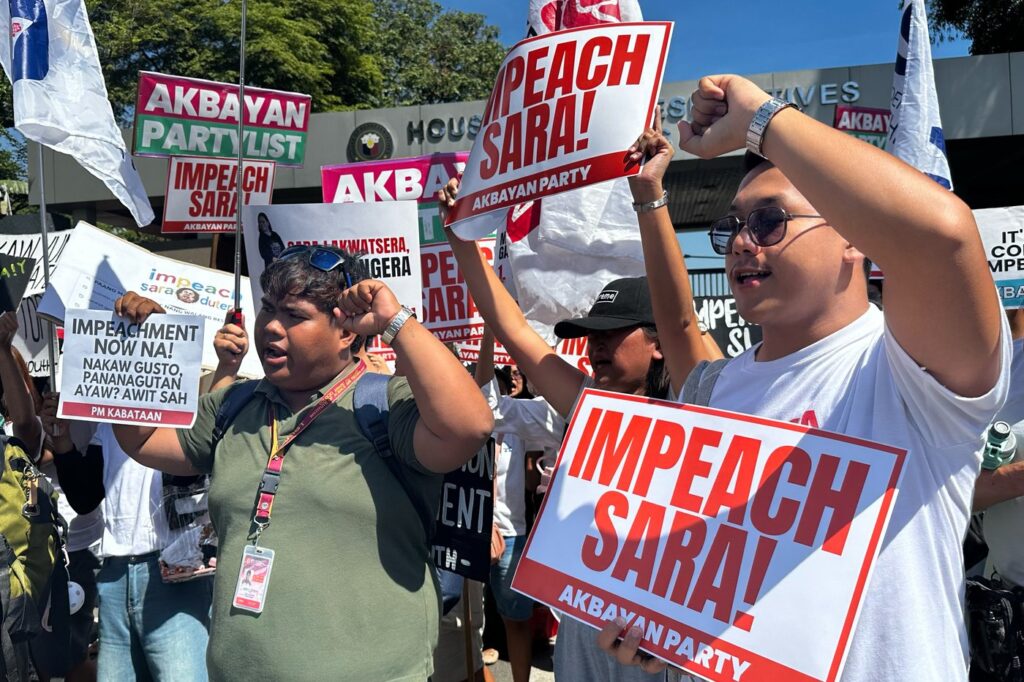
MANILA, Philippines (AP) In a significant political development, the Philippine House of Representatives voted overwhelmingly on Monday to impeach Vice President Sara Duterte. This decision came in light of serious allegations against her, including claims of unexplained wealth, misuse of state funds, and threats to have the president assassinated. The vote saw a majority of 255 members in favor of impeachment, 26 opposing and nine abstaining.
The impeachment complaints against Duterte will now proceed to the Senate, which is set to convene as a tribunal for her trial. This development is particularly notable given that the House is currently dominated by allies of President Ferdinand Marcos Jr., signaling a political atmosphere charged with tensions and divisions.
Sara Duterte, the daughter of former President Rodrigo Duterte, has consistently denied any wrongdoing. However, she has refrained from addressing the specific criminal allegations brought against her. This impeachment marks a continuation of political challenges faced by her, as she was previously impeached by the House last year. That earlier attempt did not lead to a trial due to a constitutional technicality mandated by the Supreme Court.
The backdrop to these events includes a growing climate of discontent among various sectors of the Filipino populace. Throughout the impeachment process, public protests have erupted, with demonstrators calling for accountability and demanding justice. These rallies have showcased a collective frustration towards perceived abuses of power and corruption within the government.
The political implications of this impeachment extend beyond just Sara Duterte. The actions taken by the House reflect the broader political dynamics in the Philippines, particularly the influence wielded by President Marcos Jr. and his allies. As the situation develops, it remains crucial to observe how the Senate tribunal will navigate the trial and what implications it will hold for the future of the Duterte family in Philippine politics.
In conclusion, the ongoing proceedings highlight the complexities of governance and the role of oversight in a democratic society. The potential consequences for Vice President Duterte and the broader political landscape in the Philippines warrant close attention as this situation unfolds.








