

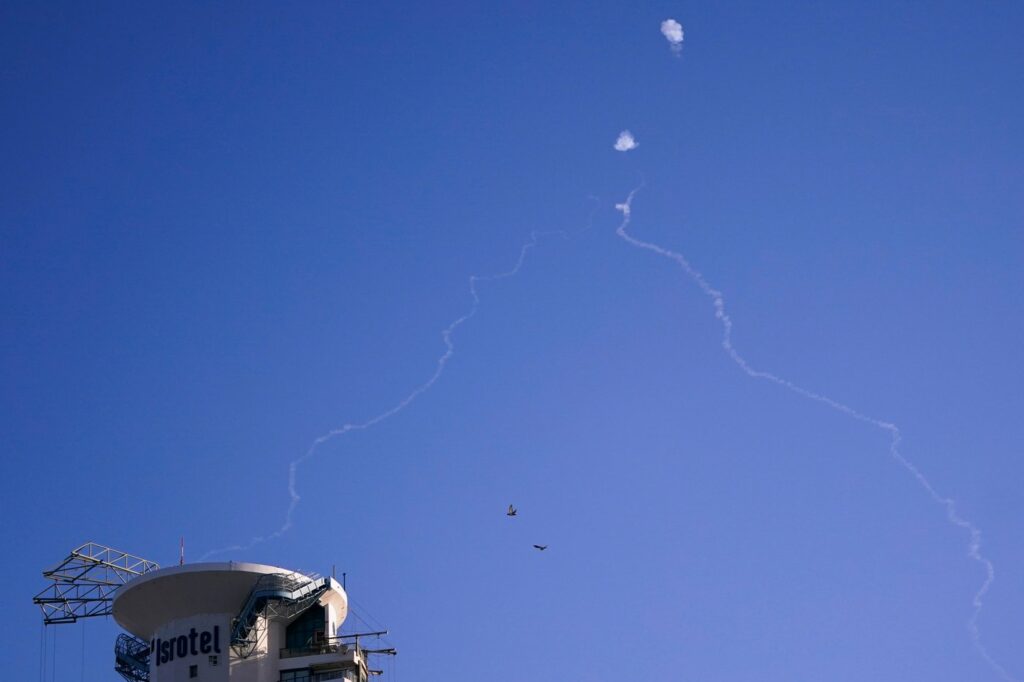
TEL AVIV, Israel (AP) — Israel has sent Iron Dome anti-missile batteries and personnel to the United Arab Emirates (UAE) to bolster the country's defense amid the ongoing Iran war, according to comments made by the U.S. ambassador to Israel, Mike Huckabee. This marks a significant step in the growing defense relationship between Israel and the UAE, two nations historically wary of Iran, particularly as they navigate a fragile ceasefire in the conflict.
Huckabee's statements highlight the strategic partnership developing between the UAE and Israel, underscored by the UAE's positioning as the first signatory of the Abraham Accords, which began the normalization of relations between Israel and several Arab states in 2020. This deployment is the first publicly recognized instance of Israeli military personnel operating within the Emirates, a federation that includes major cities like Abu Dhabi and Dubai.
While the ceasefire currently holds, tensions persist due to Iran's control over the Strait of Hormuz and stalled negotiations between the U.S. and Iran. These conditions elevate the risk of renewed military conflict in the region. Huckabee, a prominent figure and former governor of Arkansas, made his remarks during an event in Tel Aviv, expressing gratitude to the UAE for its partnership and emphasizing the benefits of collaboration between the two countries.
The UAE formally recognized Israel in 2020, a move met with immediate negative responses from Iran, Israel's primary adversary in the region. Although Iran did not comment on Huckabee's recent statements, it has previously implied that Israel maintains a military and intelligence presence in the Emirates.
Following Huckabee's remarks, there was no immediate response from either the UAE or Israel regarding this military deployment. Nevertheless, his comments followed a similar revelation by Mike Waltz, the U.S. ambassador to the United Nations, during an event at the Israeli mission, suggesting a coordinated release of information sanctioned by both the UAE and Israel.
The backdrop to these developments includes ongoing threats from Iranian missile and drone attacks, even amidst the ceasefire. The UAE has been keen to project stability and safety to investors and the public, illustrating its continued openness to business despite security concerns. Additionally, since the conflict escalated, the Emirates has taken steps to close down Iranian government-linked properties within its territory.
During a visit to the UAE by Egyptian President Abdel-Fattah el-Sissi, Sheikh Mohammed bin Zayed Al Nahyan, the Emirati leader, was seen supporting military operations at a base hosting Egyptian pilots and Rafael fighter jets. This marked a rare acknowledgment of foreign military presence in the Emirates, demonstrating the UAE's strategic military cooperation.
Huckabee also expressed optimism regarding the potential for more Gulf states to join the Abraham Accords, which collectively includes Bahrain and several other nations, formalizing their ties with Israel. However, the sentiment among many Arab countries remains critical due to Israel's military actions following recent attacks by Hamas, which have resulted in significant destruction in the Gaza Strip and retaliations against Iranian-aligned targets throughout the Middle East.
In his remarks, Huckabee urged Gulf states to reassess their positions, emphasizing that Israel does not pose a territorial threat, unlike Iran, which has actively targeted them. He articulated the idea that the security dynamics in the region are compelling Gulf states to evaluate whether their interests align more closely with Israel or Iran, citing the support Israel extends amid ongoing threats from Tehran.
Overall, the deployment of Israeli defense capabilities to the UAE symbolizes a strategic shift in regional alliances and highlights the nuanced geopolitical landscape shaped by the Iran conflict and the evolving relationships among Middle Eastern nations.








