

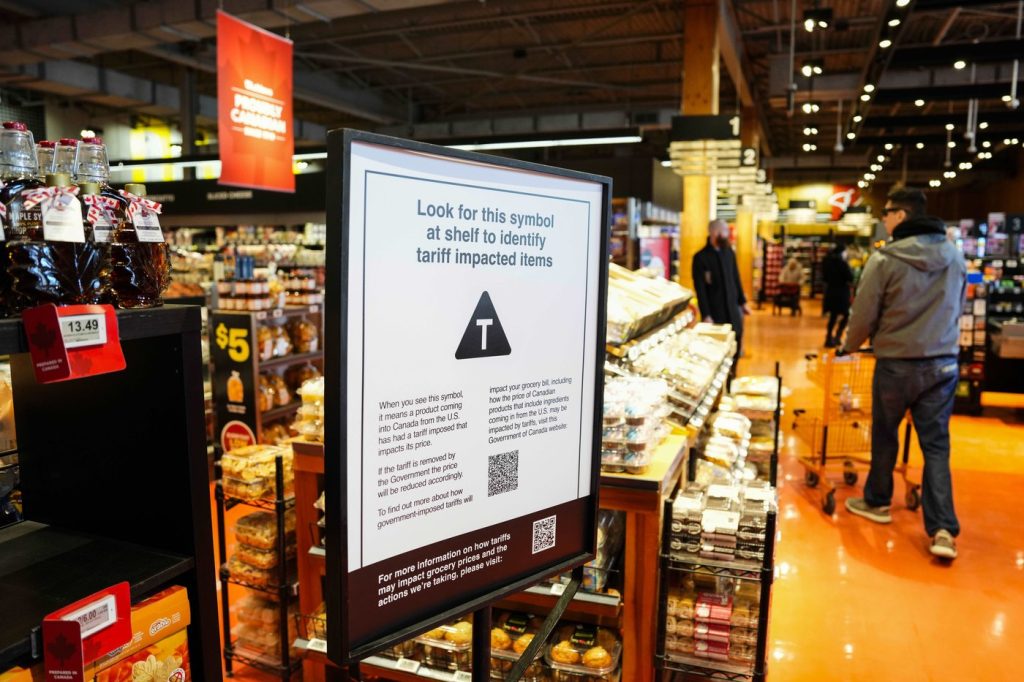
OTTAWA – Analysts at the Bank of Canada have reported that prices for goods impacted by Ottawa's counter-tariffs against the United States rose approximately six percent higher than non-tariffed items. This analysis is part of a broader evaluation of the economic consequences stemming from the federal government's decision to impose tariffs as a retaliatory measure against U.S. tariffs initiated by former President Donald Trump in 2025.
The Canadian government enacted tariffs of 25 percent on various consumer goods, including grocery items, clothing, and household staples imported from the U.S. This action was taken for approximately six months, starting in March 2025. As part of this initiative, the Bank of Canada conducted a comparison of over 100,000 tariffed goods at seven different retailers, assessing these prices against a control group of products that were not subjected to any duties.
According to the report, nearly a quarter of the costs associated with Ottawa's counter-tariffs were ultimately passed on to consumers by mid-June 2025, illustrating the immediate impact these tariffs had on everyday purchases. Notably, the findings from the Bank of Canada also highlighted that after the counter-tariffs were largely lifted in September 2025, the majority of the price increases for tariffed goods returned to normal levels within three months.
Furthermore, the research indicated that products explicitly marked with tariff-related banners were more likely to exhibit higher prices compared to those that did not highlight their tariff status. This suggests that the visibility of the tariff impact may have allowed retailers to exercise greater flexibility in adjusting prices, potentially mitigating customer backlash against price increases.
In summary, the Bank of Canada’s findings provide valuable insights into how trade policy decisions affect consumer pricing and market behavior. The implementation of tariffs significantly influenced pricing strategies among retailers, and the subsequent recovery of prices demonstrates the dynamic nature of consumer goods markets in response to governmental trade actions. The effects of such tariffs underscore the complexities of international trade and its direct repercussions on domestic economies.
This report was initially published on May 11, 2026.








