

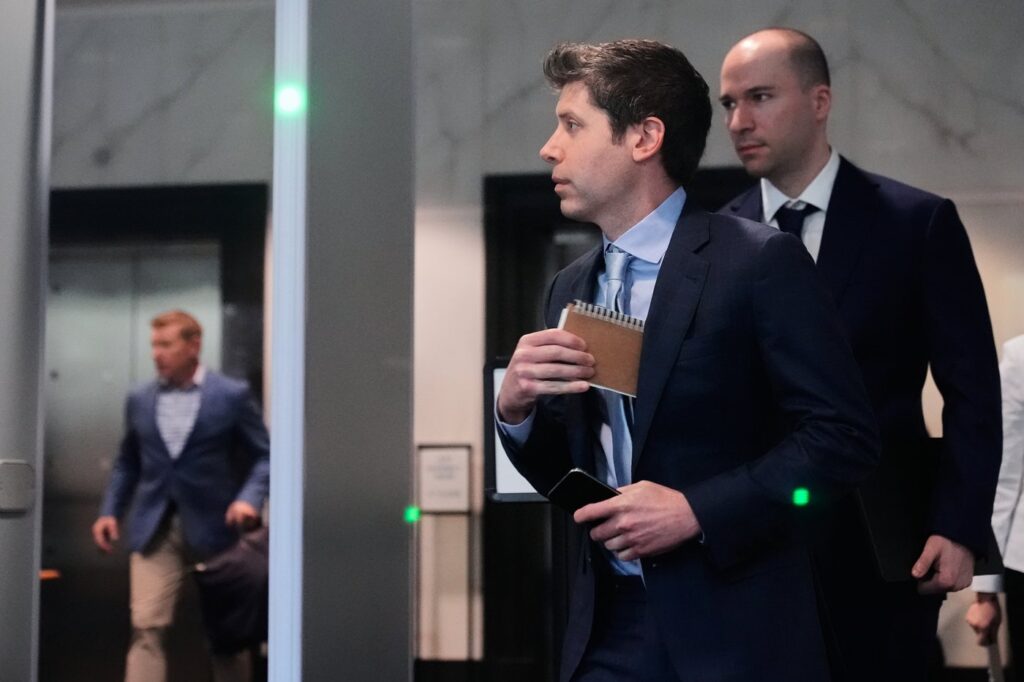
In a trial unfolding in Oakland, California, a dispute has erupted between tech moguls Elon Musk and OpenAI CEO Sam Altman. While neither figure has emerged as a particularly favorable one during the proceedings, Altman has more at stake, as he prepares to take the stand in defense of his leadership at OpenAI, the company recognized for developing ChatGPT.
The courtroom testimony surrounding Altman’s often tumultuous tenure has sparked numerous internet memes, particularly highlighting a 2023 text exchange with Mira Murati, where Altman asked if the company’s situation was improving, to which she candidly responded, “Sam, this is very bad.” This exchange exemplifies the mounting pressure and scrutiny Altman faces.
Elon Musk, the world’s richest individual, is pursuing a second ousting of Altman as part of a civil lawsuit that alleges Altman and his lieutenant, Greg Brockman, have deviated from OpenAI’s original mission of serving the public good in favor of profitability. This transition is particularly noteworthy, as OpenAI has evolved from a nonprofit, primarily backed by Musk, to a for-profit entity now valued at approximately $852 billion.
Even if Musk does not achieve a favorable verdict, the trial is expected to cast a long shadow over Altman's leadership as OpenAI competes with Musk's own AI ventures and other rivals, like Anthropic, which was founded by former OpenAI leaders. This competition is rising at a crucial time as all three firms gear up for potential initial public offerings (IPOs) that could result in record-breaking financial implications.
The jury, having heard various testimonies from former allies and adversaries of Altman, will ultimately decide the case's outcome. However, analysts are warning that the ongoing proceedings could further damage the already fragile public perception of the AI industry. Sarah Kreps from Cornell University’s Tech Policy Institute expressed concern that the trial’s negative tone might exacerbate existing skepticism surrounding AI.
Musk’s lawsuit accuses Altman and Brockman of betraying the mission of OpenAI, alleging they shifted towards profit-making activities without Musk’s knowledge. Musk has since adjusted his lawsuit, stepping back from claims for personal damages and instead seeking funds to support OpenAI’s charitable initiatives. In a text about a possible settlement, Musk ominously warned that Brockman and Altman would become “the most hated men in America” as a result of the trial.
While Musk is a familiar figure to the jury—being the head of companies like SpaceX and Tesla—Altman’s recognition before the trial was relatively limited, even among those familiar with ChatGPT. Over the course of the trial, the jury has heard from key witnesses including former board members Helen Toner and Tasha McCauley, who described the series of events leading to Altman’s temporary termination in 2023, amidst a climate of conflict and distrust.
One significant testimony came from Ilya Sutskever, a co-founder of OpenAI, who indicated that concerns over Altman’s honesty and resistance to governance were pivotal in the decision to dismiss him initially. Sutskever characterized Altman’s leadership as contributing to a toxic work environment, prompting him to regret his participation in the ousting after witnessing the detrimental effects on the company he valued deeply.
The trial has brought risks for Musk as well, who is eyeing a potential IPO for SpaceX, which could make him a trillionaire. In addition to testimonies from former board members, Shivon Zilis, also a witness, has attracted attention due to her undisclosed relationship with Musk, who is the father of her twins.
As the trial transitioned into its third week, OpenAI has begun presenting its case, starting with Bret Taylor, the current board chair, who lauded Altman’s leadership qualities. Despite these endorsements, analysts like Syracuse University’s Shubha Ghosh remain skeptical regarding Altman’s future at the helm of OpenAI, suggesting that the testimony and overall developments of the case could lead to significant changes in leadership.








