

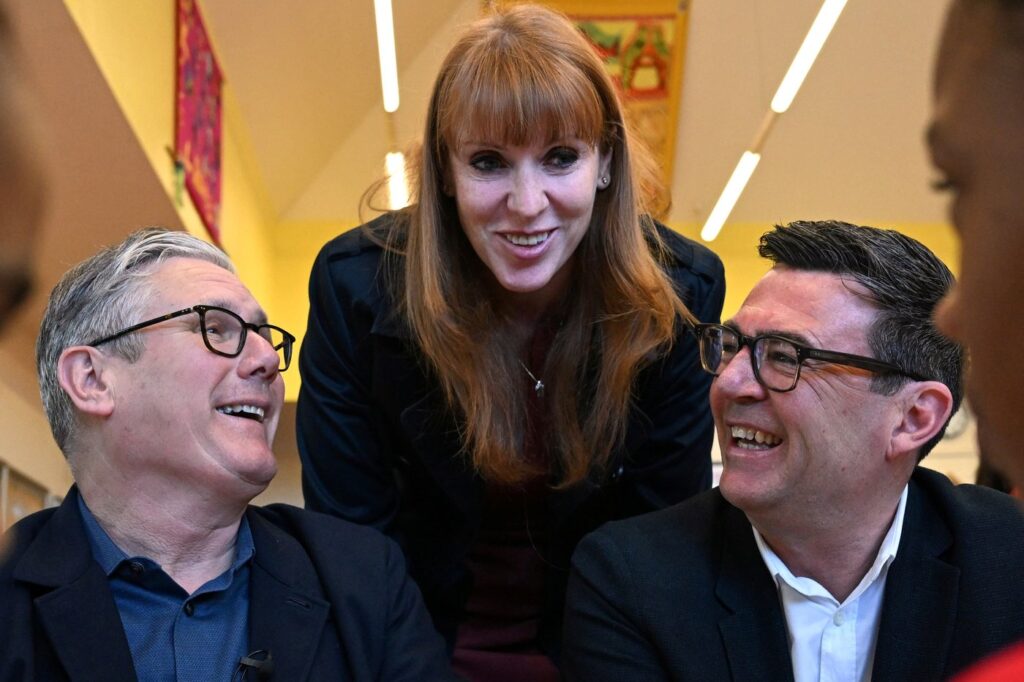
LONDON (AP) — The British government is bracing for several weeks of instability as Prime Minister Keir Starmer, facing increasing pressure, prepares for a leadership challenge from Andy Burnham, the well-regarded mayor of Greater Manchester. Burnham's potential candidacy hinges on his return to Parliament, a process complicated by a special election for the parliamentary seat he aims to claim.
Burnham's pathway back to Westminster is fraught with uncertainty. He must first secure a constituency in Makerfield, where he will face strong competition from the anti-immigrant Reform UK party. This election is particularly critical for Burnham, as it represents his opportunity to formally launch his challenge against Starmer.
Investor sentiment has turned cautious amid the political turbulence, evidenced by rising British government borrowing costs and a weakening pound. In the context of the current political landscape, the pound has depreciated by 1.4% against the U.S. dollar this week, reflecting concerns over the government's instability.
Over the previous week, speculation regarding Starmer's leadership escalated into open dissent within the Labour Party. Burnham publicly announced his intention to seek the leadership role, alongside two other senior party members who are positioning themselves for a similar bid. The urgency to find a replacement for Starmer intensified following the Labour Party's poor performance in recent local elections, during which it lost votes to both the Reform UK party and the Green Party.
In a move to quell the internal strife, Housing Secretary Steve Reed called on Labour members to reconsider their approach and avoid a divisive leadership contest. Reed emphasized the need for unity in addressing pressing issues, such as the ongoing cost of living crisis, which could be exacerbated by political infighting. In his remarks to the BBC, he urged members to prioritize the needs of the country over party politics and focus on their electoral promises.
This call for unity came after a tumultuous week in which political maneuvering overshadowed governmental responsibilities. Health Secretary Wes Streeting became the first Cabinet minister to resign, citing a loss of confidence in Starmer's leadership due to his handling of domestic issues. In his resignation letter, Streeting criticized the party for a lack of vision and direction, suggesting that leaders must take responsibility and engage with dissenting voices rather than silencing them.
Streeting did not position himself as a candidate for the leadership, instead advocating for a wide range of candidates to have the opportunity to address the future direction of the party. This sentiment appears to align with Burnham's aspirations, as he seeks to return to Parliament to mount a challenge against Starmer.
Following Streeting's resignation, Labour lawmaker Josh Simons took decisive action by resigning his seat to enable Burnham to contest in the special election for Makerfield. However, Burnham's path to candidacy is still laden with challenges. He acknowledged the uphill battle he faces, vowing to earn the trust of local constituents who may have become disillusioned with the party in recent years.
Burnham stated his commitment to work diligently for the votes and trust of the Makerfield constituents, many of whom have historically supported Labour but feel estranged from the party's recent direction. The forthcoming special election will be critical not only for Burnham but also for the Labour Party's stability and future leadership dynamics.








