

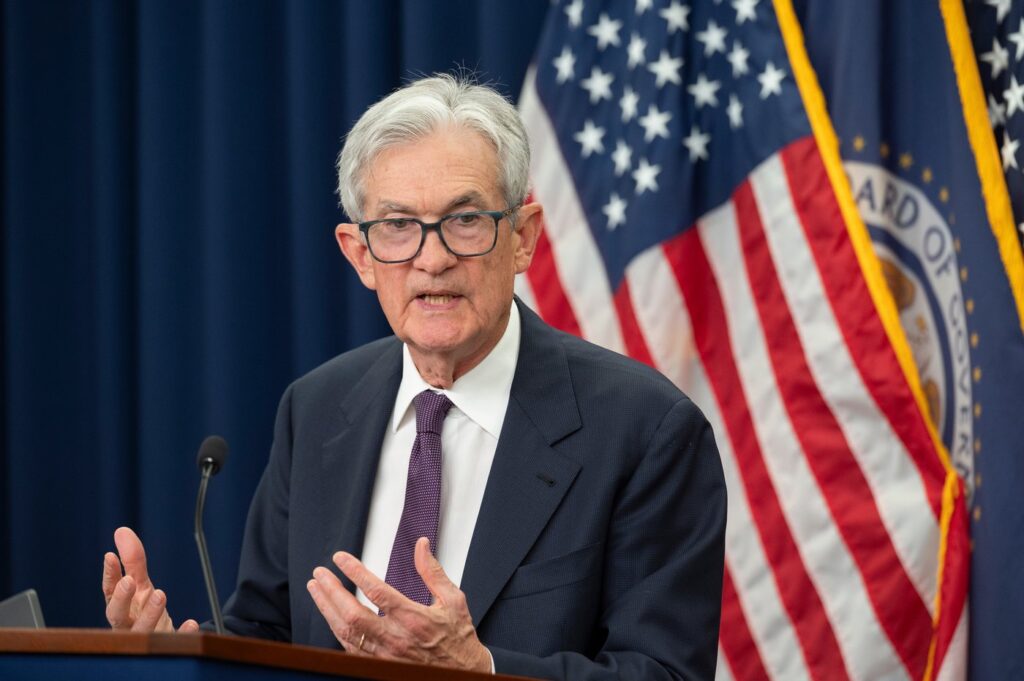
When Jerome Powell was sworn in as chair of the Federal Reserve eight years ago, the economic landscape was significantly different. Concerns were rife about low inflation and interest rates, with too few Americans employed. Fast forward to the present day, and Powell's tenure has witnessed a seismic shift in the U.S. economy marked by persistent inflation and rising interest rates.
Inflation soared after the COVID-19 pandemic, remaining above the Federal Reserve's 2% target for over five years, which has fueled public discontent regarding the rising costs of everyday goods. By 2023, the Fed’s key short-term interest rate reached a two-decade high, while unemployment fell to a half-century low, showcasing a paradox of economic dynamics under Powell's leadership.
Despite facing continual criticism from President Donald Trump, Powell maintained his focus on the central bank’s independence, a crucial aspect of his legacy. This independence was tested amid an unprecedented legal investigation from the Justice Department, during which Powell stood resiliently against political pressure.
Powell emphasized that his ongoing role on the governing board would continue until he felt the Fed's independence was sufficiently restored. Many analysts, including David Wilcox of the Peterson Institute for International Economics, recognize that although Powell’s tenure was not without blemishes, he navigated through a challenging economic context with commendable performance.
Notably, Powell differs from many of his predecessors as he is not a trained economist but a lawyer with a finance background. His demeanor is often described as unassuming—with moments of showcasing his guitar abilities during holiday gatherings highlighting his more informal side.
One of the most significant aspects of Powell's legacy is the inflation surge that followed the pandemic. Consumer prices reached a four-decade high, surging by 9.1% in June 2022, contributing to a staggering 27% increase in overall prices since before the pandemic. In stark contrast, prices had only risen by 10% in the six years leading up to COVID-19, indicating a substantive change in economic conditions.
Initially, Powell and other Fed officials viewed the inflationary spike as "transitory," attributing it to pandemic-related supply chain disruptions. Their immediate focus was on supporting the economy during crisis conditions—cutting the benchmark interest rate to near-zero in March 2020 and engaging in extensive asset purchases to stabilize financial markets.
As inflation began to climb, concerns over its persistence accelerated. Critics argue that the Fed's prolonged low-interest rate policy may have stoked excess spending, further exacerbating inflation. Even as inflation soared to 6.9% by early 2022, the Fed delayed rate increases, adhering to the belief that inflation driven by supply shocks would be temporary.
In response to growing inflationary pressures, Powell pivoted to a more aggressive monetary policy stance, implementing the most significant interest rate hikes since the early 1980s. This strategy ultimately curtailed inflation, with rates dropping to 2.3% by September 2024, nearly reaching the Fed’s coveted target.
Another defining characteristic of Powell's leadership is the tension between prioritizing inflation control and the Fed’s mandate to foster maximum employment. Before the pandemic, his emphasis on a robust job market won him acclaim, but this approach is now scrutinized as contributing to the delayed response to inflation rises. Nonetheless, defenders assert that Powell’s previous low-rate policy was warranted given the absence of inflationary signs at the time.
The ongoing relationship between Powell and lawmakers proved crucial for navigating political pressures, particularly during Trump's presidency. A notable moment arose when Powell publicly corrected Trump regarding a costly Fed building renovation, symbolizing his commitment to maintaining independence amid external critiques.
Academics underline the importance of a politically independent Fed, arguing it enables the central bank to enact necessary, albeit painful, measures to stabilize the economy without political interference. As Powell continues to serve, he remains pivotal in ensuring the Fed's autonomy—a legacy that promises to shape the central bank's future decisions.
Despite uncertainties surrounding the timeline of his departure, Powell’s focus on upholding the Fed's diplomatic relations and nonpartisan approach underscores his enduring impact on American monetary policy.








