

BERLIN (AP) — A humpback whale that was found dead off the coast of a Danish island this week has been confirmed as the same whale that was released two weeks ago following a contentious rescue effort. The whale, which had frequently stranded itself along Germany's Baltic Sea coast, was reported stranded again near the small island of Anholt in the Kattegat strait, which connects the Baltic Sea to the North Sea.
This location is approximately 70 kilometers (about 45 miles) south of Skagen, in northern Denmark, where the whale, nicknamed "Timmy" and "Hope," was liberated on May 2 after being transported by barge toward the North Sea. The Danish Environmental Protection Agency released a statement confirming the whale’s identity based on a tracking device that was found attached to its back.
The tracking device's recovery by a Danish Nature Agency employee confirmed the whale's previous history, as noted by Jane Hansen, head of the division at the Danish Environmental Protection Agency. This finding marked a tragic conclusion to weeks of efforts aimed at guiding the whale back to its natural habitat in the Atlantic Ocean.
The whale was first sighted off Germany’s coast on March 3, but the reasons that led it to swim into the Baltic Sea, far from its typical habitat, remain unclear. Experts speculate that it may have lost its way while pursuing a shoal of herring or during its migratory journey. In late March, the whale was rescued from shallow waters in Timmendorfer Strand, a resort town in Germany, with the aid of an excavator, but it soon became stranded again in the vicinity.
In early April, experts conveyed their grim outlook, expressing they had effectively given up hope for the whale's survival given its deteriorating condition. Despite this, the whale's plight drew attention from various stakeholders, including privately funded rescuers, regional authorities, and the scientific community. Activists protested for the whale's rescue while public discourse on social media was rife with differing opinions about the best course of action.
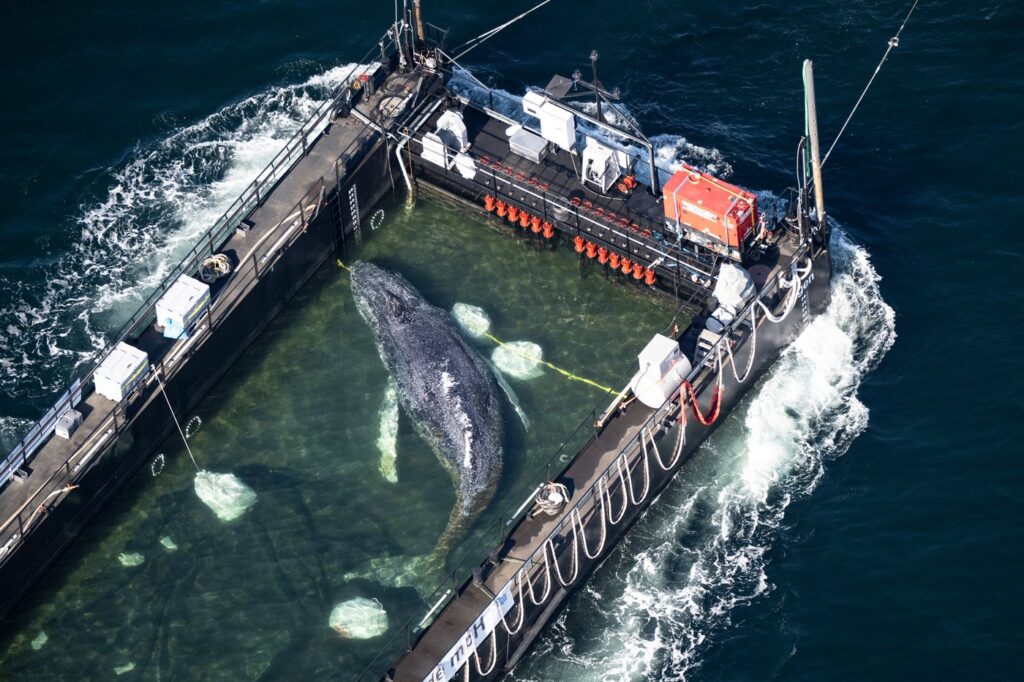
Ultimately, a private rescue initiative was authorized by the regional government in Germany's Mecklenburg-Western Pomerania state, leading to an ambitious operation to transport the whale onto a flooded barge. Reports confirm that the tracking device found on the deceased whale matched the one previously attached to it, although the precise cause of death remains undetermined.
Till Backhaus, the environment minister of Mecklenburg-Western Pomerania, stated that while the rescue effort aimed to provide the whale with a final chance at recovery, it ultimately could not take advantage of that opportunity. He emphasized the need to glean "the best possible lessons" from this ordeal, asserting that attempts at rescue do not equate to criticism of the scientific community. He expressed a fundamentally human inclination to seize any opportunity to preserve life.
Currently, authorities are deliberating the next steps regarding the deceased whale. Hansen noted that there are presently no concrete plans for its removal or examination through necropsy. However, she cautioned the public to steer clear of the whale due to potential disease risks and other safety concerns.








