

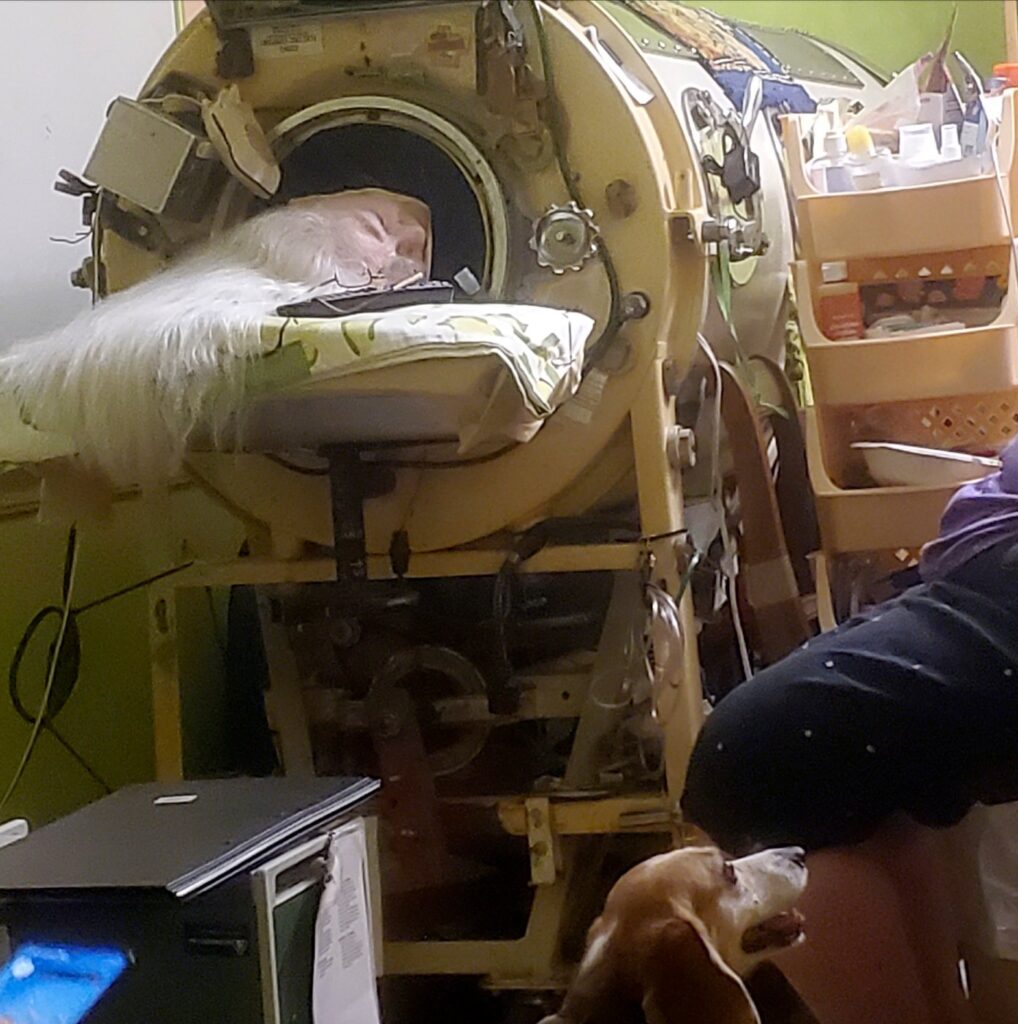
Martha Lillard, who turned 5 years old when she was diagnosed with polio, relied on an iron lung for survival. She passed away on June 26 in Oklahoma at the age of 78, marking her as the last known U.S. polio patient who utilized this life-supporting machine, according to her sister, Cindy McVey.
McVey shared with The Associated Press that medical professionals had predicted her sister would not live beyond 20 years. Yet, Lillard demonstrated remarkable tenacity and a zest for life that allowed her to thrive despite her condition. McVey attributed Lillard's death to complications arising from long-haul COVID-19, while the death certificate indicated chronic pulmonary failure and post-polio syndrome as contributing factors.
Throughout her life, Lillard was encased within the iron lung, which operated by altering air pressure to facilitate breathing. As a child, she attended grade school for two hours daily, receiving additional tutoring at home. In high school, Lillard adapted by using a phone system that enabled her to communicate with teachers and classmates through an intercom setup in her classrooms.
Her family made special accommodations during road trips to Missouri, utilizing a custom trailer while her father ensured hotel doors were wide enough to accommodate the iron lung. Remarkably, Lillard even managed to drive for a period, illustrating her determination to lead a fulfilling life. McVey reminisced, “To me, it was just normal,” emphasizing how Lillard adapted to her circumstances.
Polio was a once-dreaded illness in the United States, especially affecting children. The introduction of vaccines in 1955 led to a significant decline in cases, with the Centers for Disease Control and Prevention reporting fewer than 100 annual cases by the 1960s and fewer than 10 by the 1970s. Polio was officially declared eliminated in the U.S. in 1979, ceasing to spread routinely.
In her later years, Lillard utilized the internet to educate herself about various subjects, including her own condition, which had left her paralyzed from the neck down. With ongoing therapy, she regained partial movement in her left arm and the use of her legs, albeit with significant limitations. Lillard managed to live independently for many years, preparing her own meals despite her physical challenges.
Additionally, the internet played a pivotal role in Lillard’s personal life. After the September 11, 2001, terrorist attacks, she sought to understand the events and found a chat room where she connected with a man from Egypt. This online relationship flourished over two decades, culminating in their marriage in February after Baha Salh secured a visa to travel to Oklahoma. McVey described the couple as soul mates, highlighting Salh's profound grief following Lillard's passing.
During the COVID-19 pandemic, Lillard contracted the virus twice, which severely impacted her already limited lung capacity of less than 25%. In her final years, she faced increasing difficulties with breathing and spent nearly all her time in the iron lung. McVey noted that the last five years of Lillard's life were spent confined at home, unable to venture outside.
Described by McVey as an artistic and creative individual, Lillard expressed her talents through poetry and songwriting. She even took the initiative to write her own obituary, which is now published online by a funeral home. In her obituary, Lillard shared her volunteer work with the Humane Society and her passion for Beagle rescue efforts through social media.
In recent years, both sisters had been searching for someone capable of repairing the iron lung, one of several Lillard had used throughout her lifetime. However, with Lillard's passing, McVey acknowledged that there was no longer a need for the machine, expressing her sorrow over the loss of her sister.








