

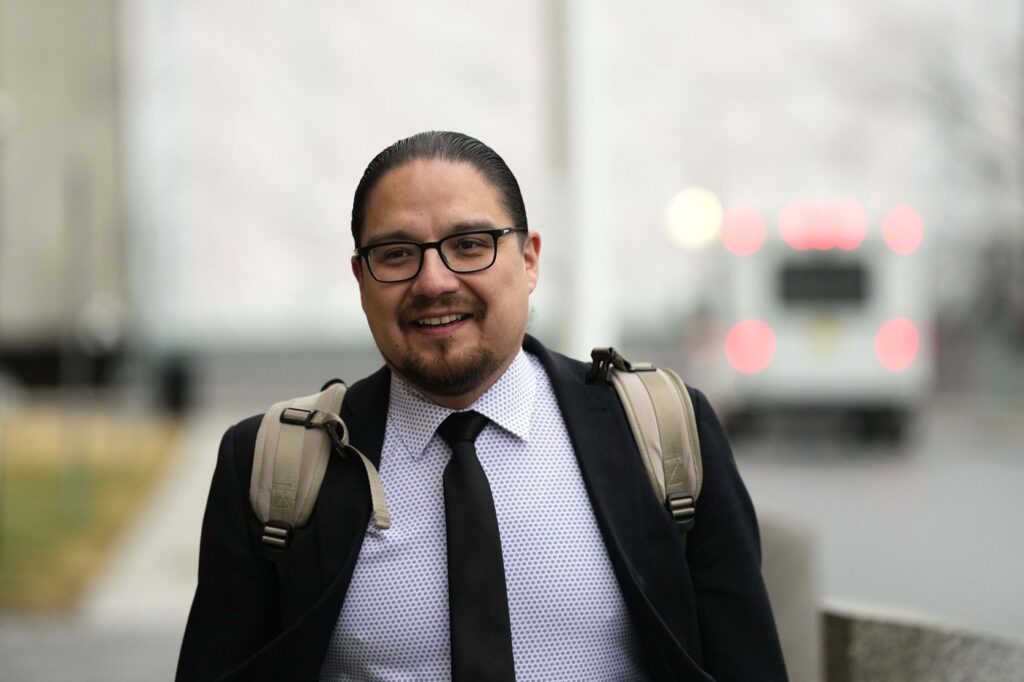
OTTAWA – A Conservative MP, Billy Morin, has stated that over 4,000 letters have been submitted to the House of Commons committee focused on Indigenous issues, urging the federal government to immediately reform First Nations status regulations under the Indian Act. Morin, who is the former chief of the Enoch Cree Nation and serves as the Conservative Party's critic for Indigenous Services, outlined these concerns in a recent letter to Prime Minister Mark Carney.
The committee, known as INAN (Indigenous and Northern Affairs Canada), is currently reviewing legislation aimed at modifying the criteria for determining who is eligible for First Nations status under the Indian Act. This legislation, designated as S-2, has initially garnered support from the governing Liberals upon its introduction in the Senate.
The proposed legislation strives to eliminate certain gender inequities present in the Indian Act and is projected to make approximately 3,500 individuals eligible for First Nations status. However, some senators and First Nations leaders believe that the bill does not extend far enough in its reforms. As a result, senators have voted to broaden the eligibility criteria to allow the transfer of status to children if one of their parents is registered, thereby eliminating the so-called "second-generation cutoff." The amended legislation has been passed on to the House of Commons for further examination.
Morin criticized the second-generation cutoff as discriminatory, asserting that the Senate has taken steps to remove it. He highlighted that hundreds of First Nations have called for this action, with thousands of individuals reaching out to Parliament regarding these issues. In his letter to the prime minister, Morin emphasized that the government now faces a decisive moment.
The current law employs a formula to ascertain whether an individual qualifies for "full" or "half" First Nations status. Some First Nations leaders argue that this formula unfairly penalizes individuals based on their choice of marriage partners. Changes initiated in the Indian Act in 1985 restrict status transfer to those with at least one grandparent and one parent who lack status, exemplifying the contentious second-generation cutoff.
According to several chiefs, failure to amend this law could lead to their communities losing all federally recognized members in the next generation, undermining their status as distinct peoples. Morin noted that over 500 First Nations support the Senate's amendments, and he criticized Indigenous Services Minister Mandy Gull-Masty and Parliamentary Secretary Jaime Battiste for not providing evidence of any dissenting First Nations that oppose these changes, despite claims to the contrary.
In his communication, Morin expressed concerns about the impact of delaying Bill S-2, highlighting that it could negatively affect the federal government’s already fragile relationship with Indigenous peoples. He cited reports indicating that Battiste had warned Liberal colleagues about the perception of the government's handling of this legislation within First Nations communities. Morin's comments underscored a sense of urgency regarding the need for action, noting that the Liberals have received calls from both First Nations leaders and the United Nations to eliminate the second-generation cutoff.
Indigenous Services Minister Mandy Gull-Masty, who identifies as Cree, has indicated that the federal government is not in favor of the amended Senate bill and prefers to engage in continued consultations with First Nations to determine a viable path forward. In his letter, Morin challenged this approach by stating, "Tokenizing your Indigenous members of Parliament does not mean you have a working relationship with First Nations, Inuit, or Métis peoples." He called for genuine engagement, emphasizing that reconciliation can only occur when Indigenous voices are genuinely included in discussions.
Morin concluded his letter by urging the government to cease delaying and pass Bill S-2 with the amended provisions from the Senate. This emphasis reflects the necessity of immediate action in addressing longstanding inequities faced by First Nations communities across the country.








