

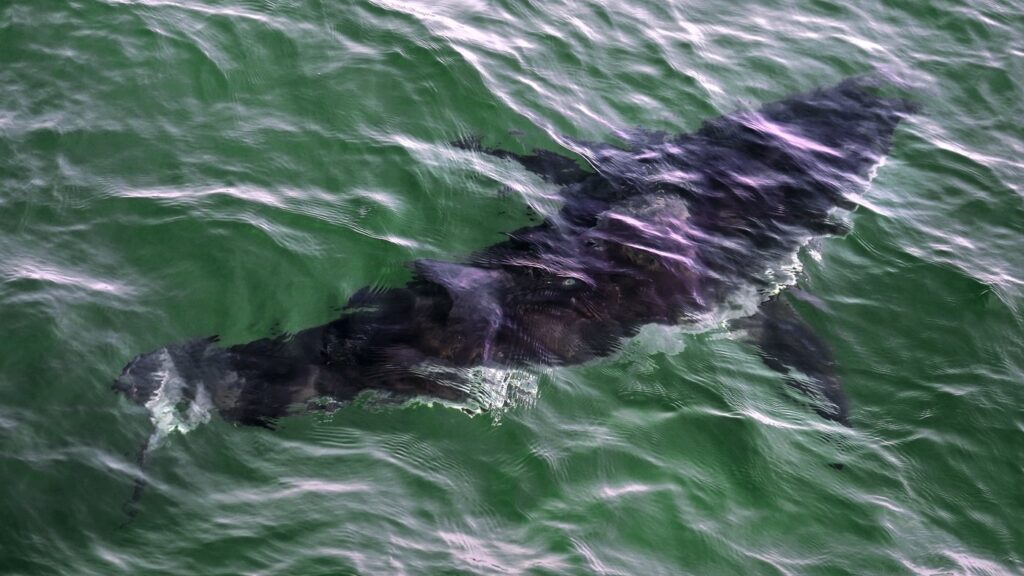
Researchers in northern Nova Scotia are investigating the cause of death of a large great white shark that was found washed ashore near Pictou. The Marine Animal Response Society reported that the 580-kilogram male shark was discovered on a beach on Friday, and researchers conducted a necropsy over the weekend to identify potential causes of death.
Dr. Laura Bourque from the Canadian Wildlife Health Co-operative in Prince Edward Island indicated that no immediate cause of death was evident during the initial examination. She mentioned that further testing is required to understand the circumstances surrounding the shark's demise.
Experts highlight that conservation measures implemented over the past few decades have significantly contributed to the recovery of the great white shark population, which faced a considerable decline during the 1970s and 1980s. Additionally, it has been observed that climate change is leading to warmer ocean temperatures, facilitating the northern migration of various marine species, including sharks.
According to the St. Lawrence Shark Observatory, the last confirmed fatal shark-related incident in Canadian waters occurred in July 1953. In that incident, a shark collided with a lobster boat, resulting in the vessel capsizing and one fisherman drowning, although he was not bitten by the shark.
The database maintained by the observatory documents 30 shark attack incidents in Canadian waters, dating back to 1691. Among these records, only four incidents are considered plausible fatalities, and there are an additional 24 cases that did not result in any injuries.
This incident involving the great white shark raises questions about marine health and the broader implications of environmental changes on marine life. As research continues, it will be crucial to monitor the conditions affecting both shark populations and marine ecosystems in the region.








