

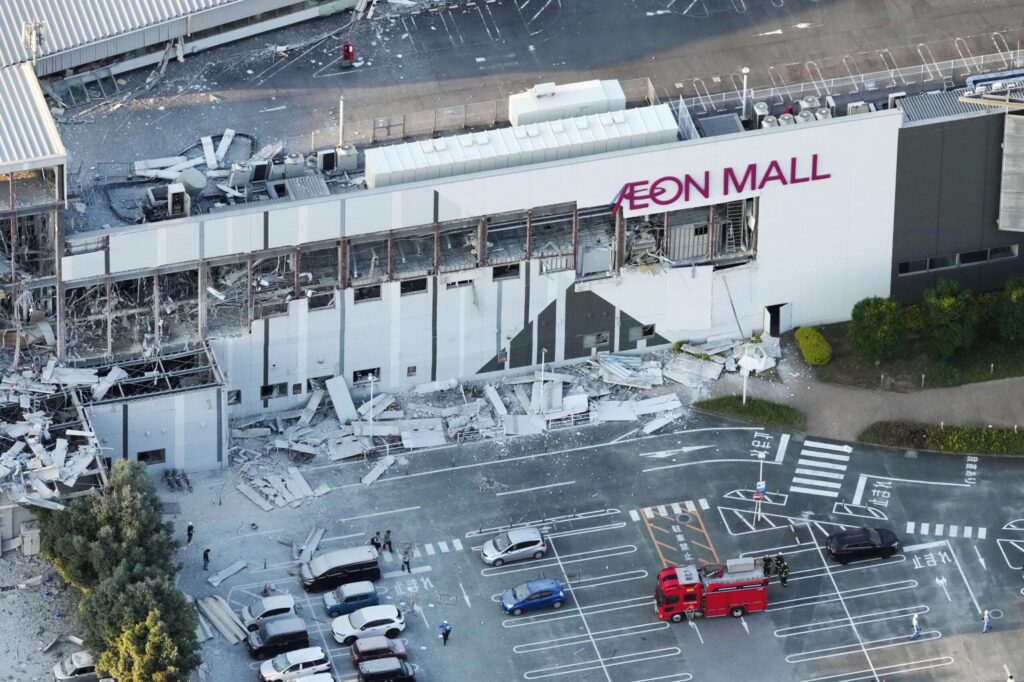
An earthquake with a magnitude of 7.1 struck Kumamoto, located on Japan's southern main island of Kyushu, late Tuesday afternoon. The seismic event caused injuries and damage, prompting officials to issue a tsunami advisory, which was lifted within two hours, according to the Japan Meteorological Agency (JMA).
The tsunami advisory was applicable to the Ariake and Yatsushiro Seas on the western coasts of Kumamoto as well as the adjacent Nagasaki, Fukuoka, and Saga prefectures, collectively situated about 900 kilometers (560 miles) southwest of Tokyo. Initially, the U.S. Geological Survey reported a magnitude of 7.1 but later revised it to 6.8.
In response to the earthquake, Japan's Prime Minister Sanae Takaichi announced the formation of a task force dedicated to gathering information, assessing damage, and coordinating potential rescue operations. Takaichi reported multiple injuries along with damage to infrastructure such as roads, bridges, buildings, and instances of blackouts and fire, although specific details were pending. She advised those cooking to exercise caution due to the risk of fire and broken glass shards.
According to Kyodo News agency, a hospital in Yatsushiro city treated around 40 individuals suffering injuries from the earthquake. A train was derailed at Yatsushiro station, and stone walls at Kumamoto Castle sustained damage. Yozo Kai, a priest at a local Shinto shrine in Mashiki, noted that several stone lanterns had fallen. He expressed concern about the structural integrity of the shrine, particularly the main hall and gate.
Hiroki Shimoda, an official at the Mifune town hall, reflected on his fear evoked by the shaking, recalling the deadly Kumamoto quake that occurred a decade earlier. He witnessed rooftiles from nearby homes crashing to the ground during the tremors.
The Japan Fire and Disaster Management Agency indicated that no significant damage was reported to major public facilities and infrastructure at this time. However, emergency calls regarding fires and home damage flooded local fire departments as the situation continued to be evaluated. Takaichi reiterated that prioritizing public safety was essential and urged residents in affected areas to remain cautious of potential aftershocks.
Shinji Kiyomoto, a JMA planning officer specializing in Earthquake and Tsunami Countermeasures, emphasized that the shallow earthquake was heightening seismic activity in the region, advising residents to take particular care over the subsequent two to three days. He reassured the public that no tsunami had been observed following the inland earthquake.
No abnormalities were reported at three nearby nuclear power plants, according to Japan’s Nuclear Regulation Authority. Additionally, the Shinkansen bullet trains and local trains operating in Kyushu were temporarily suspended for safety inspections. The runway at Aso Kumamoto Airport was closed, with no indication of when operations might resume, as detailed on the airport's website.
The Japanese Defense Ministry has dispatched aircraft to the affected area to assess the aftermath of the earthquake. Kumamoto has endured significant seismic events in the past, notably a deadly quake in 2016 that resulted in over 50 fatalities, 1,800 injuries, and extensive damage to thousands of homes.








