

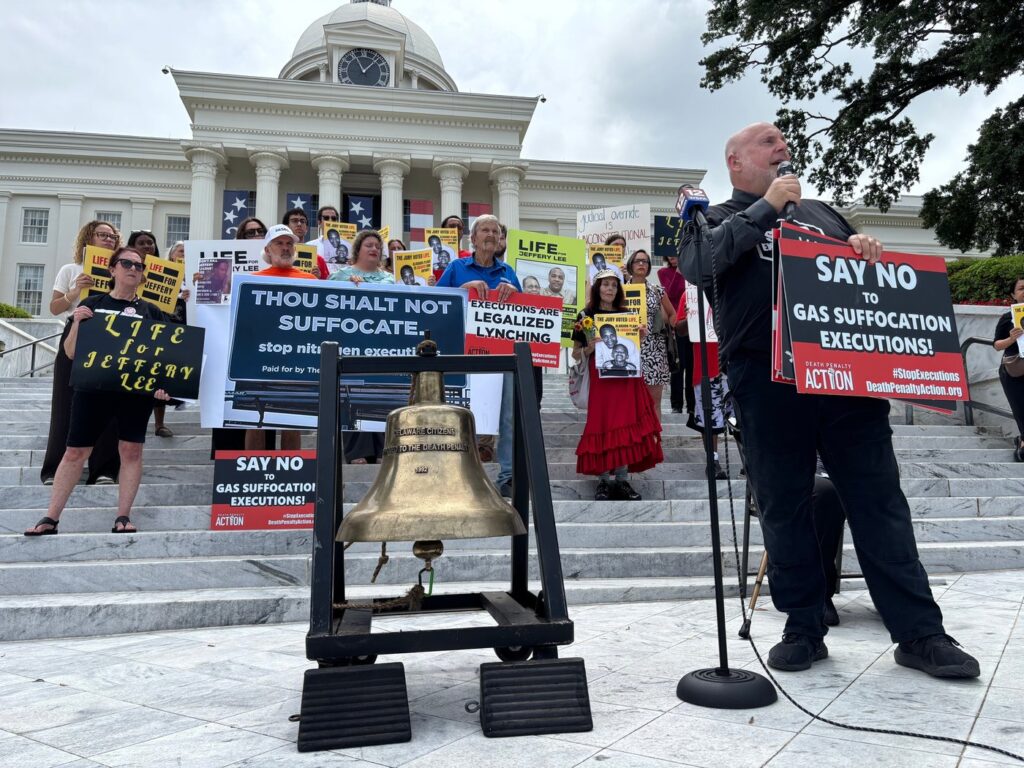
MONTGOMERY, Ala. (AP) — In a last-minute legal battle, Alabama is seeking to move forward with the execution of Jeffery Lee, 49, scheduled for Thursday night, using the controversial method of nitrogen gas. This comes after a federal judge ruled the state's protocol for using nitrogen gas unconstitutional, citing violations of the Eighth Amendment, which prohibits cruel and unusual punishment. The Alabama Attorney General's office is currently appealing this ruling to the U.S. Supreme Court.
The legal proceedings revolve around Lee's execution, which, if upheld, would mark a significant moment for Alabama's nitrogen execution protocol, introduced in 2024. The state's plans have drawn scrutiny and legal challenges, particularly after the ruling by U.S. District Judge Emily Marks, who concluded that the evidence presented by Lee indicated that nitrogen hypoxia—a method that replaces breathable air with pure nitrogen, leading to death by lack of oxygen—constitutes cruel and unusual punishment.
Following Marks' decision, the 11th U.S. Circuit Court of Appeals denied Alabama's request to pause her ruling, with a 2-1 decision highlighting the intolerable three-minute timeframe it might take an inmate to lose awareness under the nitrogen protocol. The appeals court expressed concern about the suffering that could ensue during this time period.
Mike Lewis, a spokesman for Alabama Governor Kay Ivey, confirmed that despite the legal obstacles, the governor is prepared to proceed with the execution as the state continues to defend its protocol. The execution method has been used in eight previous cases in the U.S. — seven in Alabama and once in Louisiana — and if carried out, Lee would be the ninth individual executed via nitrogen gas.
The method has already faced significant backlash, with accounts from previous executions indicating unsettling responses from inmates, such as shaking and labored breathing at the commencement of the process. During the last execution by nitrogen gas in Alabama, approximately 30 minutes elapsed between the inmate showing distress and the completion of the process, raising further concerns about the humanity of the method.
Alabama officials argue that nitrogen hypoxia is constitutional and does not inflict more suffering than other execution methods, positing that if the method is found unconstitutional, it sets a dangerous precedent for questioning the legality of all execution protocols, which also carry risks of pain. In a recent court filing, state lawyers urged that the inherent anxieties associated with nitrogen hypoxia do not constitute sufficient grounds to find it unconstitutional.
Conversely, Lee’s attorneys maintain that Alabama's pursuit to carry out his execution using nitrogen gas, a method declared unconstitutional by federal courts, presents serious ethical implications. Supporters of Lee have urged Governor Ivey to commute his death sentence to life imprisonment, which had been the jury's original recommendation. During his trial, Lee was convicted of two counts of capital murder for the 1998 robbery and killings of Jimmy Ellis, the owner, and Elaine Thompson, an employee, at Jimmy's Pawnshop in Montgomery.
While a jury voted 7-5 in favor of a life sentence, a judge overrode this recommendation, resulting in Lee's death sentence. The practice of judicial override was abolished by Alabama in 2017, though it is not retroactive, leaving Lee's case affected by older laws.








