

The U.N. refugee agency reported a notable decrease in forced displacement due to conflict or persecution for the first time in a decade, as stated in its annual report released on Thursday. While the total number of forcibly displaced individuals fell to 117.8 million at the end of 2025, a figure which includes refugees, asylum seekers, and internally displaced persons, the agency cautioned that this number remains alarmingly high.
According to the U.N.'s Global Trends Report, the decline in the displacement figures can be attributed to a combination of factors, including a rising number of individuals returning to their home countries and an increase in refugees obtaining citizenship in their host nations. Tarek Abou Chabake, the agency's chief statistician, acknowledged that while the decrease is a positive development, the overall figure still reflects an unacceptable global displacement scenario, primarily driven by conflict.
The report highlighted that children comprise 39% of the 41.6 million refugees recorded last year. Countries such as Colombia, Germany, and Turkey each hosted more than 2 million refugees, with the majority residing in low- to middle-income nations. Despite a 3% decrease from previous records, approximately 5.4 million individuals crossed international borders in search of refuge in 2025.
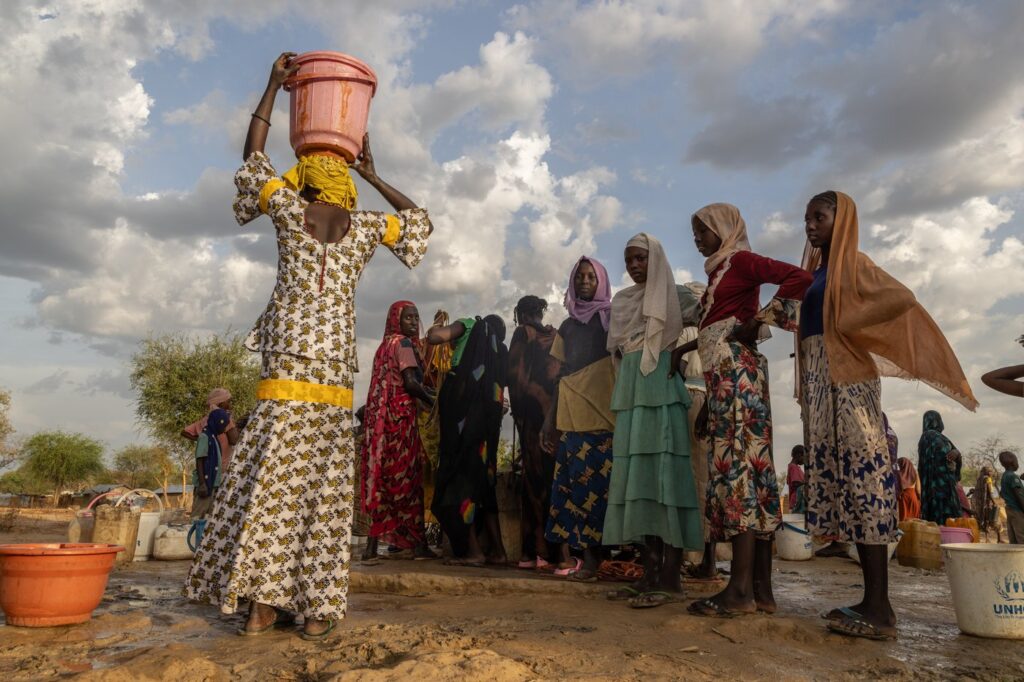
Moreover, seven out of ten refugees have remained in exile for over five years, often living in large camps within economically disadvantaged countries. U.N. High Commissioner for Refugees, Barham Salih, emphasized that while humanitarian aid has proven essential for survival, it should not be the long-term solution for entire generations. The agency is aiming to reduce by half the number of refugees in protracted displacement reliant on humanitarian support by 2035.
Internally displaced individuals accounted for 68.7 million of those displaced globally, with the ongoing conflict in Sudan causing significant disruption, as 9.1 million people were forced to flee their homes. Other regions contributing to substantial internal displacement include Colombia, Syria, Yemen, and Afghanistan. Projections for 2026 suggest that the situation may worsen, with the war in Iran leading to the displacement of 3.2 million individuals by March and an additional 1 million displaced in Lebanon by mid-May. Salih remarked on the urgency of addressing these crises, asserting that allowing such circumstances to become the status quo is unacceptable.
The data showed that three countries—Syria, Afghanistan, and Sudan—accounted for 90% of the 4.4 million refugees who returned home in 2025, marking the second-highest number of returns since the U.N. High Commissioner for Refugees began documenting these instances over six decades ago. In addition, 10.3 million internally displaced persons returned to their original areas last year, although Salih cautioned that many of these returns occurred under coercion and lacked the necessary infrastructure and conditions for dignified living. He stressed that voluntary returns to peaceful areas should not be conflated with forced repatriations to conflict zones.
Additionally, the report indicated that there are 4.5 million stateless individuals globally, with the Rohingya community from Myanmar being the largest group. Most stateless people currently reside in Bangladesh, Ivory Coast, Thailand, and Myanmar. Shockingly, only 46,000 individuals acquired citizenship in 2025. The number of refugees resettled was recorded at 82,000, falling steeply from 188,000 in 2024. Salih expressed concern over the severe gap between those in need of relocation and the actual resettlement figures, stating that every perilous sea crossing and every tragedy in the desert reflects a failure of the international community. He emphasized that the human cost of these failures should not be measured simply in numbers, but in lives affected.








