

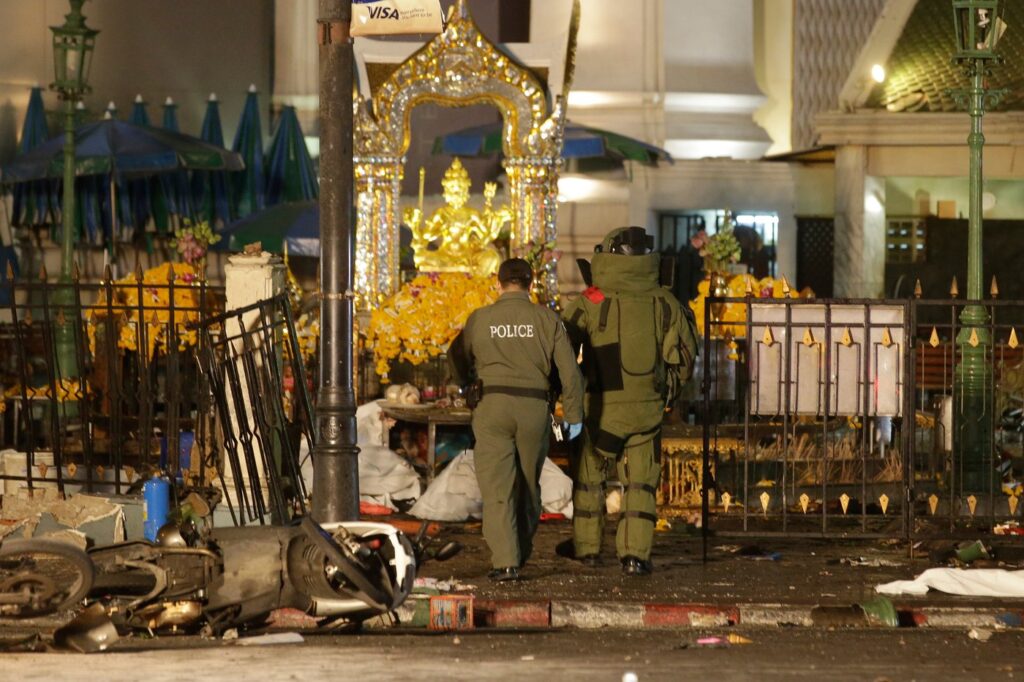
BANGKOK (AP) — A Thai court has sentenced two members of China's Muslim Uyghur minority, Yusufu Mieraili and Bilal Mohammad, to death for their involvement in a bombing at Bangkok's Erawan Shrine, which occurred on August 17, 2015. The attack resulted in the deaths of 20 individuals and more than 120 injuries, predominantly affecting Chinese tourists.
The two men were arrested shortly after the bombing and faced multiple charges, including murder, attempted murder, and illegal possession of explosives. Authorities linked them to the incident through substantial evidence, including video footage and fingerprint analysis. The trial took place at the Bangkok South Criminal Court, where four judges presided over the proceedings. The court concluded that the evidence against the defendants was overwhelming and that they failed to provide sufficient counter-evidence.
Upon hearing the verdict, Mieraili, who learned some Thai in detention and speaks English, vocally protested his innocence, expressing sorrow for Thailand and claiming he did not receive justice. He urged the Thai public to assist him in his plight. Despite their initial confession during police questioning, both defendants pleaded not guilty at the start of the trial in 2016. The military court initially handled the case before it was moved to a civilian court in 2019 due to various complications.
Defense lawyer Chuchart Kanpai stated that the legal team plans to appeal the ruling, noting that several key aspects of the case were overlooked. Mieraili and Bilal alleged that they experienced mistreatment and torture while in custody, but the judges dismissed these claims, citing a lack of evidence and asserting that the confessions secured from the defendants were not coerced.
The verdict was met with approval from Chinese authorities, with the Ministry of Foreign Affairs condemning the bombing as heinous and emphasizing the inhumane nature of the attackers. The ministry underscored China's support for Thailand's judicial processes and its commitment to punishing those responsible for the attack.
Human rights organizations have criticized the trial's conduct, raising concerns about due process violations and the lengthy nature of the proceedings. In 2023, the International Federation for Human Rights presented a petition to the United Nations, highlighting potential abuses and discrimination within the judicial process regarding the arrests.
Although 17 suspects were identified in connection to the bombing, only three individuals were apprehended. Charges against a Thai woman connected to the case were dropped in 2024 due to insufficient evidence. Thai police asserted that Mieraili detonated the bomb shortly after Bilal allegedly left a backpack containing the device at the shrine.
Authorities suggested that the bombing may have been motivated by revenge from a people-smuggling gang, disrupted by police efforts earlier in 2015. However, some analysts propose that Uyghur separatists may have orchestrated the attack in response to Thailand's previous forcible repatriation of Uyghurs to China in July 2015. The Erawan Shrine's appeal to Chinese tourists further supports theories of a political motivation behind the bombing.
In a controversial move, Thailand deported 40 Uyghur asylum seekers back to China in 2025, which drew significant international backlash. This aspect highlights the complexities surrounding the case and the broader issues stemming from China's treatment of the Uyghur population.
As the case progresses toward an appeal, the legal and political implications of the verdict continue to unfold, drawing attention to international human rights standards and the intricacies of justice in transnational contexts.








