

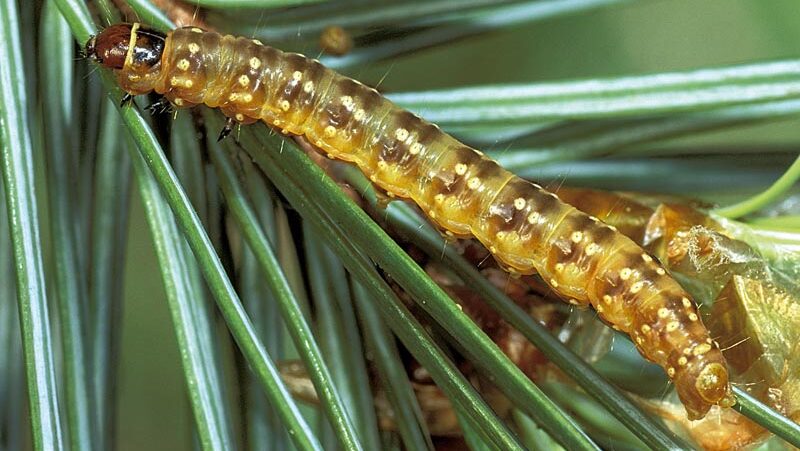
The province of Nova Scotia is currently addressing a concerning outbreak of the spruce budworm on Cape Breton Island. The rapid spread of this pest has prompted governmental action, leading to the application of insecticide in affected areas to mitigate the damage caused by this defoliator.
The spruce budworm is recognized by the Canadian government as the most widespread and damaging defoliator of coniferous trees across North America. Historical data indicates that Nova Scotia has experienced previous outbreaks, which have had devastating effects on the forest ecosystem. The government is now taking proactive measures to prevent a repeat of such extensive damage.
Sean Power, who serves as the manager of private land programs, scaling, and forest health within the Department of Natural Resources, provided insights on the issue. He noted that the last significant outbreaks of spruce budworm occurred during the early 1970s and late 1980s, during which approximately two million hectares of forest were severely damaged from Cape Breton to Digby. Power emphasized the cyclical nature of these outbreaks, stating, “We do have that natural population that stays very low, and then that cycle kicks in that 30 to 40-plus-year cycle. And then the population just starts, really starts rising.”
Power further elaborated on how spruce budworm populations can increase not only through natural cycles but also through migration events. These pests can travel significant distances via wind from other provinces or territories, compounding the challenge of managing their populations.
However, Power noted that for the current outbreak in 2026, the situation appears to stem from a local population growth rather than migration. This information highlights the necessity for timely intervention to prevent extensive damage to the province's forests.
In response to the outbreak, the province has decided to deploy bacillus thuringiensis kurstaki, commonly referred to as Btk, in targeted areas. This biological microbe has been utilized globally for several decades with proven efficacy. Dr. Robert Strang, Chief Medical Officer of Health, affirmed that Btk is safe, having undergone extensive studies and received approval from Health Canada for use in organic farming. He explained that Btk specifically targets insects in their larval stage due to their alkaline gut, making it harmless to humans and other animal species.
The application of Btk is a critical step for the Nova Scotia government in its efforts to manage the spruce budworm infestation. The province aims to protect the health of its forests and avoid the catastrophic consequences that previous outbreaks have inflicted on the landscape.
As the outbreak continues to evolve, the commitment of the provincial government to monitor and control the spruce budworm population will be essential in safeguarding the natural resources of Nova Scotia and ensuring the ecological balance of the region is maintained.








